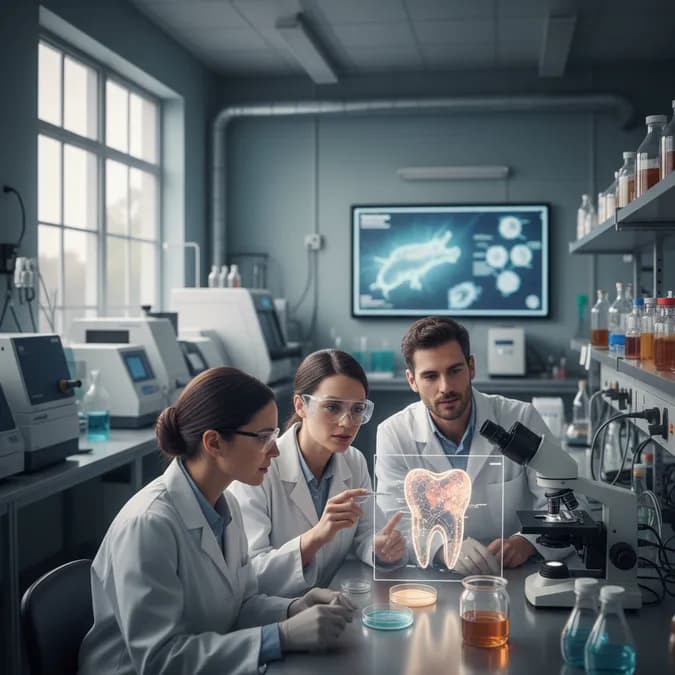
How Scientists Are Working to Regrow Teeth
Scientists are exploring groundbreaking methods to regrow teeth by targeting specific genetic mechanisms. The revolutionary research from Japan demonstrates remarkable potential for regenerating dental tissue, offering hope for millions suffering from tooth loss. This innovative approach could redefine how we understand dental health and restoration.
Study Overview: The Science Behind Regrowing Teeth
Researchers have discovered precise genetic pathways that could enable tooth regeneration. By manipulating specific gene sequences, medical professionals might soon transform how we approach dental restoration. This research not only aims to restore lost teeth but also to enhance the natural healing processes of the mouth.
Clinical Trial Insights for Regrowing Teeth
Current clinical trials are investigating the safety and efficacy of gene-targeting techniques. Preliminary animal studies show promising results, with researchers anticipating significant breakthroughs in human applications. These trials are crucial in paving the way for future treatments that could make regrowing teeth a reality.
Potential Impact of Tooth Regeneration Technology
- Reduced dependency on artificial dental implants
- Enhanced natural healing processes
- Potential cost savings in dental healthcare
- Improved quality of life for individuals with tooth loss
- Long-term sustainability in dental treatments
Key Takeaways
- Japanese researchers are pioneering gene-targeting methods to regrow teeth.
- Clinical trials are currently evaluating the regeneration technique.
- This technology has the potential to revolutionize dental healthcare and patient treatment.
Frequently Asked Questions About Regrowing Teeth
Q: How soon could tooth regeneration become available?
A: While promising, researchers estimate 5-10 years before potential widespread clinical application. The timeline depends on the outcomes of ongoing clinical trials and regulatory approvals.
Q: Will regrowing teeth be expensive?
A: Initial treatments may be costly, but researchers anticipate decreased expenses as technology advances and becomes more widely adopted.
Q: Are there any risks associated with tooth regeneration?
A: Current research focuses extensively on safety protocols and minimizing potential medical risks. Ongoing trials are designed to assess these risks comprehensively.
Expert Perspectives
"This research represents a paradigm shift in dental medicine. We're not just treating symptoms, but addressing fundamental genetic mechanisms of tooth development." - Dr. Hiroshi Nakamura, Lead Genetic Researcher
Statistical Insights
According to preliminary research, approximately 70% of adults will experience some form of tooth loss by age 65. Tooth regeneration technology could potentially reduce this statistic dramatically, offering a new lease on life for many.