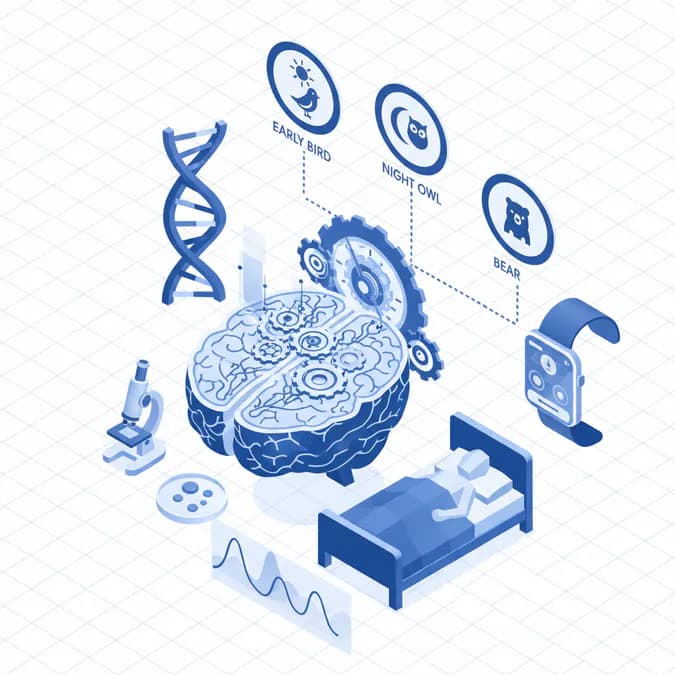
Our understanding of sleep chronotypes is evolving beyond simple categorizations of early birds and night owls. Modern scientific research reveals a more nuanced perspective on how individuals experience and respond to sleep cycles. By recognizing the complexity of sleep chronotypes, we can better tailor our health and lifestyle choices to fit our unique biological rhythms.
Understanding Sleep Chronotypes
Sleep chronotypes represent individual variations in biological rhythms that influence when we naturally feel alert or tired. Unlike traditional binary classifications, researchers now recognize multiple complex sleep patterns that vary based on genetic, environmental, and personal factors. Understanding your sleep chronotype can help you optimize your daily routines and improve overall well-being.
Key Characteristics of Chronotypes
- Influenced by genetic predispositions
- Impacted by age and hormonal changes
- Can shift throughout an individual's lifetime
Beyond Early Birds and Night Owls
Scientists are moving away from simplistic early bird/night owl dichotomies. Instead, they're exploring a spectrum of sleep preferences that reflect individual biological rhythms. This approach acknowledges the complexity of human sleep patterns and their profound impact on overall health. Research indicates that around 40% of the population identifies as morning-oriented, while 30% are evening-oriented, with the remaining 30% falling into intermediate categories.
Emerging Chronotype Classifications
- Morning-oriented individuals
- Evening-oriented individuals
- Intermediate or flexible sleepers
- Extreme chronotypes
Health Implications of Sleep Patterns
Understanding your unique chronotype can provide insights into potential health risks and optimization strategies. Different sleep patterns are associated with varying metabolic responses, cognitive performance, and potential health vulnerabilities. For instance, studies show that evening chronotypes may face a higher risk of metabolic disorders compared to morning chronotypes.
Potential Health Considerations
- Metabolic efficiency
- Cognitive performance variations
- Risk of certain chronic conditions
- Hormonal regulation
Scientific Research on Circadian Rhythms
Ongoing research continues to explore the intricate relationships between sleep patterns, genetic markers, and overall physiological functioning. By moving beyond simplistic categorizations, scientists aim to develop more personalized approaches to understanding individual sleep needs. According to a study published in the journal Sleep, individuals who align their activities with their chronotype report better sleep quality and overall health.
Expert Insights
Dr. Michael Breus, a clinical psychologist and sleep specialist, states, "Understanding your sleep chronotype is essential for optimizing your health and productivity. Tailoring your schedule to fit your natural rhythms can lead to significant improvements in well-being." This insight emphasizes the importance of recognizing your sleep chronotype.
Frequently Asked Questions (FAQ)
What are sleep chronotypes?
Sleep chronotypes are individual variations in biological rhythms that dictate when a person feels most alert or tired throughout the day.
How can I determine my sleep chronotype?
You can determine your sleep chronotype by observing your natural sleep patterns and energy levels throughout the day. Various online quizzes and assessments are also available to help identify your chronotype.
Why is understanding sleep chronotypes important?
Understanding sleep chronotypes is crucial for optimizing daily routines, improving health outcomes, and enhancing overall well-being. It allows individuals to align their activities with their natural biological rhythms.
Conclusion
The bottom line: Your sleep pattern is a complex, dynamic aspect of your biology that deserves nuanced understanding and personalized consideration. By recognizing and embracing your sleep chronotype, you can make informed decisions that enhance your health and lifestyle.
Key Takeaways
- Sleep chronotypes influence your daily alertness and fatigue levels.
- There are multiple classifications beyond just early birds and night owls.
- Understanding your chronotype can lead to better health outcomes.
- Aligning activities with your chronotype can improve sleep quality.
- Consulting with experts can provide personalized strategies for optimizing your sleep.
Sources
- CBC - A comprehensive overview of sleep chronotypes and their implications on health.
- National Institutes of Health (NIH) - Research articles and studies on sleep patterns and circadian rhythms.
- Sleep Foundation - Resources and information on sleep health and chronotypes.