Bioidentical Hormone Replacement Therapy: Benefits, Risks & Guide

Updated
Top takeaways
- Bioidentical Hormone Replacement uses hormones chemically identical to those your body produces, but that does not mean they are safer or more effective than conventional therapy
- The term covers both FDA-approved products and unregulated compounded preparations — the difference matters for safety and monitoring
- Most evidence evaluating hormone replacement therapy comes from testosterone studies in men; the data on other bioidentical hormones is thinner
- Before choosing any hormone therapy, you need baseline labs, a clear diagnosis, and an understanding of the trade-offs in cost, monitoring and long-term risks
Introduction
Bioidentical Hormone Replacement Therapy refers to therapies that use hormones chemically identical to those the human body produces. The term shows up in clinic marketing, compounding pharmacy websites, and patient forums, usually framed as a natural alternative to conventional hormone therapy. The chemistry part is accurate — the molecule matches. What the marketing leaves out is that molecular identity does not determine safety, efficacy, or regulatory oversight.
The category includes FDA-approved drugs and custom-compounded preparations made by individual pharmacies. FDA-approved bioidentical hormones come with standardized dosing, quality control, and published trial data. Compounded versions do not. Both are prescribed, both cost money, and both require monitoring. The difference is in what you know about what you are taking.
Testosterone replacement therapy is the most studied form of bioidentical hormone therapy. The trials measure total and free testosterone, symptom relief, and side effects like hematocrit elevation and fertility suppression. Alternative treatments — enclomiphene, clomiphene, hCG — attempt to raise endogenous testosterone while preserving the hypothalamic-pituitary-gonadal axis. Each option has a different profile for how to raise testosterone naturally versus using exogenous replacement, and the choice depends on your baseline labs and fertility goals.
This guide walks through how to evaluate whether Bioidentical Hormone Replacement Therapy fits your situation. It covers what the trials actually measured, what the regulatory distinctions mean, and what each option costs in money, time, and trade-offs. The goal is to give you the facts you need before signing up for a treatment plan.
Understanding the Problem
Low testosterone in men links to Type 2 diabetes, metabolic syndrome and other chronic conditions. The research shows strong associations between testosterone deficiency and these comorbidities, meaning the hormone decline is not just about symptoms — it is about disease risk.
Hypogonadism is the clinical term for testosterone deficiency. Testosterone replacement therapy treats it effectively, but the treatment carries trade-offs. Cardiovascular risk and fertility preservation are the two concerns that appear in the trials. Some men stay fertile on therapy; most do not. Some men see cardiovascular benefit; some studies flag risk.
What the Trials Do Not Settle
The safety and efficacy of testosterone therapy for age-related hypogonadism — the kind that comes with aging rather than a pituitary or testicular disease — have not been established in long-term controlled trials. That is the FDA's position, and it is the gap in the evidence. The studies that exist are often poorly designed: patients given testosterone without monitoring estradiol or dihydrotestosterone, which are the hormones testosterone converts into. When those levels go unchecked, side effects follow, and the therapy gets blamed.
Conventional testosterone therapy raises the number reliably. It also shuts down your own production in most cases, and it requires monitoring: hematocrit, PSA, estradiol, lipids. The alternative drugs — SERMs, aromatase inhibitors, hCG — raise testosterone by different mechanisms and preserve fertility more often, but they raise it less predictably. The evidence for those alternatives is thinner, and the dosing is less standardized.
Before choosing any option, you need two morning testosterone results, an LH level, and a full panel. Without them, nobody can tell you which treatment fits your situation or whether you need treatment at all. One low result is not a diagnosis.
Steps to Evaluate Bioidentical Hormone Replacement Therapy
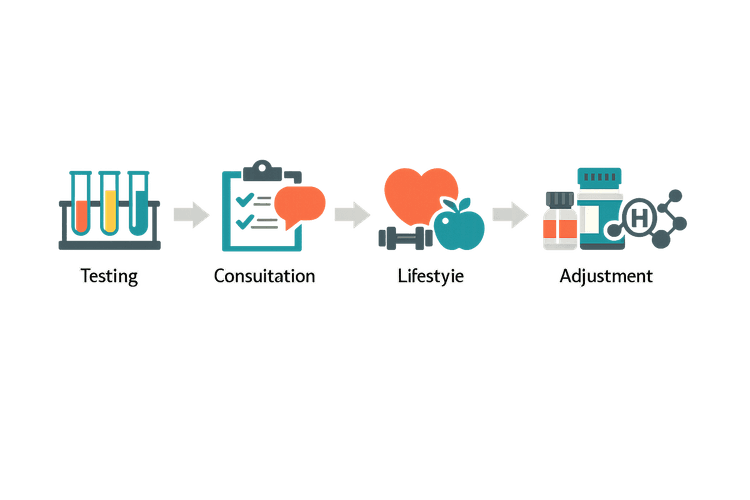
Before starting any hormone replacement, you need baseline numbers. Without them, you cannot tell if the treatment works or if it causes problems you need to catch early.
Step 1: Get the Right Tests Before You Start
Step 1
Order a full hormone panel
Test total testosterone, free testosterone, SHBG, LH, FSH, estradiol, hematocrit and PSA if you are over 40. One morning result is not a diagnosis. Test twice, fasting, before 10 AM, at least a week apart. The reference range on the lab report tells you normal for the population, not optimal for you.
The numbers you need depend on what symptoms brought you in. Low energy, low libido and difficulty building muscle point to testosterone. Hot flashes, mood swings and sleep problems in women point to estrogen and progesterone. Your doctor orders the panel that fits your presentation.
Step 2: Find a Provider Who Monitors
Step 2
Ask about monitoring frequency
Bioidentical Hormone Replacement Therapy requires regular follow-up. Serum testosterone, hematocrit and prostate-specific antigen levels should be measured at baseline and at least annually in men 40 years or older receiving testosterone replacement therapy. Clinics that do not mention monitoring in the first visit are selling a prescription, not managing your care.
Ask the provider what they measure, how often, and what range they target. If they say "we will figure it out as we go," find a different provider. Patients receiving testosterone replacement therapy require close monitoring due to potential adverse effects and contraindications.
Step 3: Review Non-Medication Options First
Before adding hormones, address the factors that suppress your own production. Weight loss, sleep apnea treatment, reduced alcohol intake and adjusted training volume all raise testosterone without a prescription. For more on these levers, see How to Raise Testosterone Naturally: Evidence-Based Methods.
If those changes move your numbers into a comfortable range, you may not need hormone replacement at all. If they do not, you have a clearer picture of what the treatment needs to accomplish.
Step 4: Understand the Monitoring Schedule
Once you start, expect labs at 3 months, 6 months, and then annually if stable. The first follow-up catches early problems: hematocrit climbing too fast, estradiol rising unexpectedly, or no symptom improvement despite a higher testosterone number. The annual check ensures nothing drifts out of range over time.
Clinicians should monitor men receiving testosterone replacement therapy for symptom improvement, potential adverse effects, and adherence. If your symptoms do not improve in the first 3 to 6 months, the dose may need adjustment, or the diagnosis may need revisiting.
Tips and Tricks for Consideration
Before you sign up with a clinic or start any hormone protocol, ask how they monitor estradiol and dihydrotestosterone. Many poorly designed programs skip these levels, and that oversight drives most of the controversy around testosterone therapy. If the provider cannot name the tests or the frequency, walk away.
Choosing a Provider
Ask for the full monitoring panel upfront: total and free testosterone, SHBG, LH, FSH, estradiol, hematocrit and PSA. The clinic that lists these without prompting is the one that read the guidelines. The clinic that says "we'll test testosterone" and stops there is guessing. You want the former.
Ask about contraindications and adverse effects before the first prescription. Use of testosterone replacement therapy is limited by both, and patients receiving this therapy require close monitoring. A provider who skips that conversation is selling, not treating.
Questions to Ask
What formulation do you use, and what does it cost? Compounded testosterone troches cost around $82 for a six-month supply in one published example. Injectable and gel protocols vary widely. Get the number before the first visit, not after.
How often do you retest, and what triggers a dose adjustment? The answer should include estradiol and dihydrotestosterone levels, not just total testosterone. If the provider adjusts based on how you feel without retesting, that is not monitoring — that is guessing.
What is your plan if my hematocrit climbs or my PSA moves? These are known risks. The provider should name the threshold and the action, not defer the question.
Monitoring Treatment Effectiveness
Retest at the interval your provider names — usually six to twelve weeks after starting, then every six months. Compare each result to your baseline, not to the reference range alone. The goal is your symptom relief at a stable, safe level, not a number that looks good on paper.
Track more than the lab. Note energy, mood, sleep quality and any new symptoms between tests. Bring that log to each follow-up. The provider who ignores it and reads only the printout is missing half the data.
If you are on testosterone replacement therapy, understand the cardiovascular relationship. Current evidence shows a link between testosterone therapy and cardiovascular disease risk, and the data is still accumulating. Ask your provider how they weigh that risk for you specifically, and retest lipids and blood pressure on the same schedule as your hormone panel.
The clinic that names the monitoring tests without prompting is the one that read the guidelines.
For a structured approach to raising testosterone without medication, see How to Raise Testosterone Naturally: Evidence-Based Methods.
Conclusion
Bioidentical Hormone Replacement Therapy is not a decision you make from a clinic ad or a podcast clip. It is a decision you make after testing twice, reading the trials yourself, and asking your doctor what the monitoring schedule costs in time and money. The evidence on cardiovascular risk is still being sorted out, and the compounded formulations most clinics sell are not FDA-approved. That does not mean they are unsafe, but it does mean you are responsible for understanding what you are signing up for.
Before you choose a provider, test your baseline levels in the morning. Get total testosterone, free testosterone, LH, FSH, estradiol, hematocrit and PSA. Test again two weeks later. If both results are low and your symptoms match, then you have something to treat. If they are borderline or normal, you are chasing a number that may not fix what you feel.
The short answer is this: Bioidentical Hormone Replacement Therapy works when the diagnosis is clear, the monitoring is consistent, and the trade-offs are stated plainly before you pay. It does not work when the clinic skips the second test, sells you a protocol before the labs come back, or tells you there are no side effects. Nobody selling it will tell you that most men stay on it, that fertility usually drops, and that stopping can be harder than starting. Those are the facts that matter before you sign up.
If you want to try non-medication levers first, how to raise testosterone naturally covers weight, sleep apnea, alcohol and training—options that cost you nothing and require no prescription. If your levels are genuinely low and you have decided to treat them, read the trial data, ask for the monitoring protocol in writing, and make sure the price includes labs. That is how you make an informed choice.
Sources(27)
- The Journal of clinical endocrinology and metabolism (2026)
- U.S. Food and Drug Administration — Drug Safety Communication: FDA cautions about using testosterone products for low testosterone due to aging; requires labeling change to inform of possible increased risk of heart attack and stroke with use (2015)
- American Urological Association — Evaluation and Management of Testosterone Deficiency (AUA Guideline) (2018)
- International journal of pharmaceutical compounding (2015)
- Quest Diagnostics (questhealth.com) (2026)
- The journal of sexual medicine (2022)
- The Journal of the American Board of Family Practice (2001)
- European urology focus (2017)
- UnitedHealthcare Commercial Medical Benefit Drug Policy 2026D0076J: Testosterone Replacement or Supplementation Therapy
- Asian journal of andrology (2016)
- Expert opinion on pharmacotherapy (2005)
- International journal of impotence research (2023)
- Internal medicine journal (2020)
- The Journal of clinical endocrinology and metabolism (2018)
- Annals of internal medicine (2020)
- European journal of endocrinology (2024)
- The world journal of men's health (2026)
- Journal of Clinical Endocrinology & Metabolism — Testosterone Therapy in Men With Hypogonadism: An Endocrine Society Clinical Practice Guideline (2018)
- Cureus (2022)
- Centers for Disease Control and Prevention — Steroid Hormones Standardization Programs (HoSt) (2024)
- F&S reviews (2020)
- The journal of sexual medicine (2021)
- Andrology (2019)
- International journal of general medicine (2022)
- The New England journal of medicine (2026)
- Sexual medicine reviews (2021)
- Maturitas (2012)