Enclomiphene Cost: Monthly Expenses Explained
Updated
Top takeaways
- Enclomiphene is not FDA-approved, so most prescriptions come from compounding pharmacies, which affects pricing and insurance coverage
- Monthly costs vary widely depending on clinic membership fees, lab monitoring requirements, and whether you're paying cash or trying insurance
- The drug itself is only part of the expense—initial and follow-up lab panels, telehealth visit fees, and shipping can double the total
- Understanding the full cost structure before signing up helps you compare clinics and avoid surprise charges
- Enclomiphene raises testosterone by blocking estrogen receptors in the brain, preserving fertility unlike TRT, but the cost-benefit calculation depends on your baseline labs and goals
Introduction
Enclomiphene citrate raises your own testosterone production by blocking estrogen feedback to the hypothalamus and pituitary. It usually preserves sperm production, which makes it an alternative to testosterone replacement therapy for men who want to maintain fertility. The trade-off is regulatory: enclomiphene is not FDA-approved for secondary hypogonadism, so nearly all prescriptions are compounded off-label. That status shapes everything about what it costs you.
Compounded drugs don't have standardized pricing the way brand-name or generic FDA-approved medications do. Clinics set their own fees for the drug, the membership, the labs, and the visits. One clinic might charge $99 per month all-in; another might list the drug at $50 but add $150 in monthly platform fees and require quarterly lab panels at $300 each. Without knowing the full structure, the advertised price tells you almost nothing.
Before choosing enclomiphene or any testosterone treatment, you need two morning testosterone results, an LH level, and a full hormone panel to confirm secondary hypogonadism. If your LH is already high, enclomiphene won't help—it works by raising LH and FSH to stimulate the testes. If your baseline testosterone is above 300 ng/dL, some clinics won't prescribe it at all. The initial labs alone can cost $200 to $400 out of pocket if insurance doesn't cover them, and that happens before you pay for a single dose.
This guide walks through the real monthly expenses: the drug, the clinic fees, the lab monitoring, and the hidden costs that show up after you sign up. It covers what insurance does and doesn't pay for, how compounding pharmacy pricing works, and what questions to ask a telehealth clinic before you hand over a credit card. The goal is to give you the numbers you need to compare options and budget accurately.
The Cost Problem with Enclomiphene
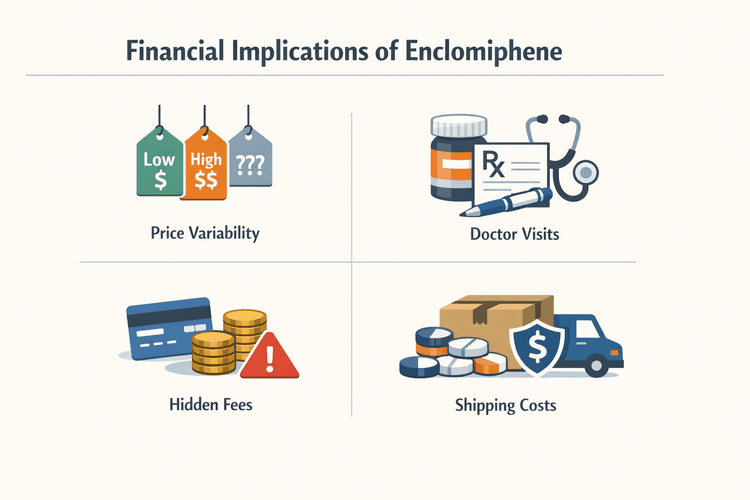
Enclomiphene is not FDA-approved, which means the drug you get is compounded — made by a pharmacy rather than a manufacturer. That changes how it is priced, regulated and covered. No insurance plan pays for compounded enclomiphene, and the monthly cost varies by clinic, dose and how often you refill.
Why Pricing Varies So Much
Compounding pharmacies set their own prices. One clinic charges $50 per month, another $150, and both are selling the same 12.5 mg or 25 mg daily dose. The difference is not the drug; it is the clinic's membership structure, consultation fees and whether labs are bundled or billed separately.
The FDA reviewed enclomiphene citrate for compounding but declined to add it to the approved bulk substances list. That means every prescription is off-label, and every pharmacy compounds it under state rules rather than federal manufacturing standards. You are paying for a custom preparation each time, not a factory-sealed bottle with a fixed wholesale price.
The Hidden Costs Beyond the Prescription
The monthly drug cost is one line item. Most clinics also charge for the initial consultation, follow-up visits every three to six months, and lab work before and during treatment. A $60-per-month enclomiphene prescription becomes $150 per month when you add quarterly labs at $200 and a $99 follow-up visit.
Some clinics bundle labs and visits into a flat monthly fee; others bill each separately. Before you sign up, ask for the total annual cost in writing: drug, labs, visits and any membership or platform fees. The cheapest drug price is not the cheapest treatment if the clinic charges $300 for each follow-up panel.
Dosing and Drug Accumulation
Enclomiphene has a half-life of approximately 10 hours, but serum levels do not return to baseline 24 hours after a dose. That means the drug accumulates in your system over days. Clinics typically start at 12.5 mg daily and may increase to 25 mg if your testosterone response is insufficient.
The mean peak concentration increases more than proportionally when the dose doubles — the 25 mg dose produces roughly 4.5 times the blood levels of the 12.5 mg dose. That is not a linear cost relationship; doubling the dose does not double the price at most compounding pharmacies, but it does mean more drug per month and a higher likelihood of side effects that require monitoring.
Serum levels of enclomiphene did not return to baseline 24 hours after administration, indicating drug accumulation in the serum.
Comparing the Side-Effect Cost
Adverse effects were reported in 47% of patients taking clomiphene and 13.8% taking enclomiphene in one comparative study. Lower side-effect rates mean fewer follow-up visits, fewer dose adjustments and less time troubleshooting symptoms with your clinic. That is a cost in money and hassle.
Regression analysis showed lower odds of adverse events with enclomiphene, with an odds ratio of 0.18. Decreased libido, reduced energy and mood changes were all statistically less frequent. If you are choosing between clomiphene and enclomiphene, the lower side-effect profile may offset a higher monthly drug price by reducing the total cost of managing treatment.
For a detailed comparison of enclomiphene and other testosterone treatments, including how each option affects fertility and monitoring requirements, see our full research review.
What You Pay For vs. What You Get
You are paying for a compounded preparation with no long-term safety data and no FDA approval. The clinical trials that support enclomiphene's use enrolled patients for 26 weeks at most. The drug raises testosterone and preserves sperm production in most men, but nobody knows the cost in safety or efficacy after a year or two of daily use.
The price you see advertised is the drug only. The total cost includes labs every three to six months, follow-up consultations, dose adjustments if your levels do not respond, and the risk that your clinic stops compounding enclomiphene if regulatory guidance changes. That is the cost problem: you are buying a treatment with variable pricing, no insurance coverage and an uncertain regulatory future.
Steps to Understand Enclomiphene Costs
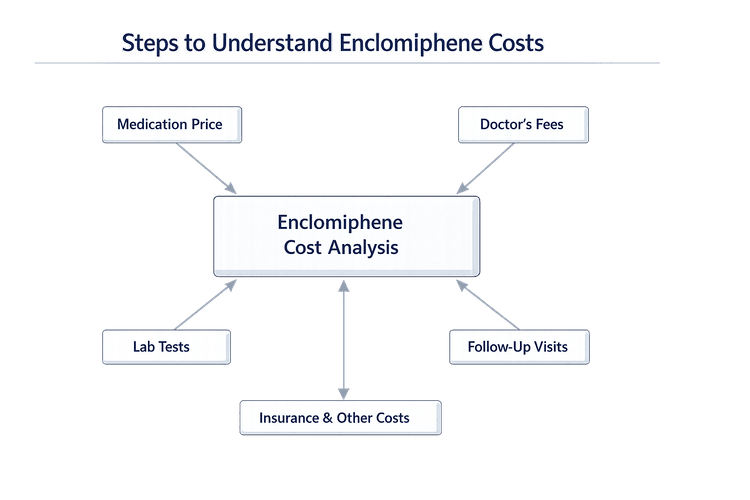
Before you compare prices, you need to know what you are actually paying for. Enclomiphene is not a single line item. The monthly number includes the drug, the clinic visit structure, the lab work schedule, and sometimes hidden fees that only appear after you sign up.
Step 1: Identify Whether You Are Getting Compounded or Brand-Name Enclomiphene
Step 1
Check the regulatory status
Enclomiphene citrate is not FDA-approved as a finished drug product. Clinics prescribe it as a compounded medication under section 503A of the Federal Food, Drug, and Cosmetic Act. That means a compounding pharmacy makes it to order. You will not find it at a retail pharmacy with an insurance copay card.
Compounded drugs cost what the pharmacy and clinic decide to charge. There is no manufacturer list price and no negotiated insurance rate. If a clinic tells you the price is set by the manufacturer, that is not accurate for compounded enclomiphene.
Step 2: Ask for the Full Monthly Breakdown
A transparent clinic will list:
- Enclomiphene capsules: cost per month at your prescribed dose (commonly 12.5 mg or 25 mg daily)
- Clinic membership or visit fee: monthly or per-consultation charge
- Lab work: what tests are required and how often (baseline, follow-up at 4–6 weeks, then periodic monitoring)
- Shipping: whether the drug cost includes delivery or adds a separate fee
If the clinic bundles everything into one monthly price, ask what happens if you need to pause treatment or if your dose changes. Bundled pricing can hide cost increases when you move from 12.5 mg to 25 mg.
Step 3: Compare Lab Monitoring Requirements Across Clinics
Enclomiphene works by blocking estrogen receptors in the hypothalamus, which increases luteinizing hormone and raises your own testosterone production. Monitoring requires a testosterone panel at minimum: total testosterone, free testosterone, LH, and estradiol. Some clinics also check hematocrit and PSA.
Lab frequency varies by clinic. Common schedules:
- Baseline labs before starting
- Follow-up at 4–6 weeks to confirm response
- Every 3–6 months during stable treatment
If your clinic requires labs every month, your total cost is higher even if the drug price looks competitive. Ask whether the clinic uses a contracted lab with a flat rate or sends you to a third-party lab where you pay retail or file insurance.
| Lab Model | Typical Cost per Panel | Who Pays |
|---|---|---|
| Clinic in-network lab | $50–$150 flat rate | You, as part of membership |
| Third-party retail lab | $200–$400 | You, or insurance if accepted |
| At-home kit (mail-in) | $100–$200 | You, included in some memberships |
Step 4: Check the Dose and Capsule Count
Enclomiphene is typically prescribed at 12.5 mg or 25 mg once daily. A 30-day supply is 30 capsules at your prescribed strength. Some clinics dispense 12.5 mg capsules and tell you to take two for a 25 mg dose. That doubles your capsule count and sometimes the price.
Ask:
- What strength capsule am I getting?
- How many capsules per month?
- If I need to adjust my dose, does the price change?
If you start at 12.5 mg and later move to 25 mg, the cost may double if the clinic charges per capsule rather than per milligram. This is worth knowing before you commit to a membership.
Step 5: Understand the Membership vs. Pay-per-Visit Model
Some clinics charge a flat monthly membership that includes the drug, visits, and labs. Others charge separately for each component. Neither model is automatically cheaper; it depends on how often you need adjustments and how stable your labs stay.
Membership model pros:
- Predictable monthly cost
- Unlimited messaging or follow-up visits included
- Labs often bundled at a discount
Membership model cons:
- You pay every month even if you pause treatment
- Canceling mid-month may forfeit the full month's fee
- Price increases apply to everyone, not just new patients
Pay-per-visit model pros:
- You pay only when you need a consultation or refill
- Easier to pause without losing money
- Drug cost is transparent and separate
Pay-per-visit model cons:
- Each visit fee adds up if you need frequent adjustments
- Lab work is usually billed separately at retail rates
- Total cost is less predictable month to month
If you are stable on enclomiphene and only need quarterly check-ins, pay-per-visit may cost less. If you are still dialing in your dose or have questions between visits, membership can be cheaper. For more on evaluating clinic structures, see Best Online TRT Clinic: How to Choose and What to Avoid.
The cheapest advertised drug price is not the cheapest total cost if the clinic charges separately for every email and every lab draw.
Step 6: Factor in Shipping and Refill Timing
Compounded enclomiphene ships from the pharmacy, not from the clinic. Shipping fees range from $0 to $20 per order depending on the pharmacy and the speed you choose. Some clinics include standard shipping in the membership; others charge it separately.
Refill timing matters for cost. If you order a 30-day supply and shipping takes 5 days, you may need to reorder every 25 days to avoid a gap. That adds up to 14–15 shipments per year instead of 12. If the clinic charges per shipment, your annual cost is higher than the monthly price times twelve.
Ask:
- Is shipping included or added per order?
- How far in advance can I reorder to avoid gaps?
- Does the clinic auto-refill, and can I pause it without a cancellation fee?
Step 7: Verify What Happens if Enclomiphene Does Not Work for You
Enclomiphene raises testosterone in some men and not in others. The clinical trials showed response rates around 60–75%, meaning 25–40% of men do not reach normal testosterone levels on enclomiphene alone. If you are a non-responder, you may switch to hCG, clomiphene, or TRT.
Before you start, ask:
- If enclomiphene does not raise my testosterone after 6 weeks, what is the cost to switch to another treatment?
- Do I forfeit the membership fee or the drug cost if I stop early?
- Does the clinic require a minimum commitment period?
Some clinics let you switch treatments within the same membership. Others charge a new consultation fee or require you to cancel and re-enroll under a different plan. Knowing this before you pay the first month prevents surprise costs if enclomiphene does not work for you.
Tips and Tricks for Managing Enclomiphene Costs
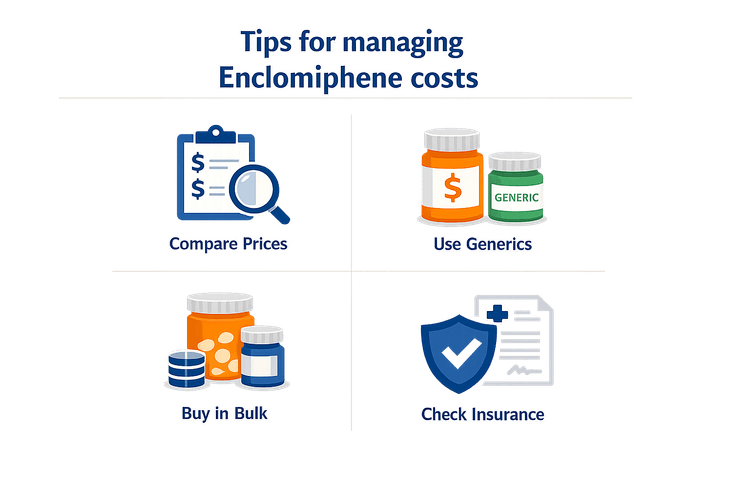
The monthly cost is what it is, but you can control what you pay for around it. Start by asking for itemized billing before you sign anything. Clinics bundle consultation, labs, shipping and the drug itself into different packages. If you see one flat monthly fee with no breakdown, ask for the line items. You need to know what you are paying for and what happens when you pause or stop.
Compare Telehealth Clinic Structures
Some clinics charge a membership fee plus the drug. Others roll everything into one subscription. Neither is automatically cheaper. The membership model can cost less per month if you stay on treatment for a year, but it locks you in. The pay-per-prescription model costs more each month but lets you stop without losing a membership fee. Run the math for six months and twelve months before choosing.
Before signing up for any telehealth service, read how to evaluate a clinic's billing and monitoring structure so you know what questions to ask up front.
Reduce Lab Costs
You do not have to use the clinic's lab partner. If your insurance covers lab work, ask your primary care doctor to order the testosterone panel: total testosterone, free testosterone, LH, and estradiol. Bring those results to the telehealth consult. The clinic may still require a follow-up panel through their partner, but you have saved one round of out-of-pocket labs.
If you pay cash for labs, shop around. A testosterone panel through a clinic partner often costs $200–$300. The same panel at a walk-in lab or through a direct-to-consumer lab service can cost $80–$150. The results are the same. Make sure the lab report includes reference ranges for each marker.
Watch for Hidden Fees
Shipping, "care coordination," and follow-up visits add up. Some clinics include shipping in the monthly fee. Others charge $15–$30 per shipment. If you are paying monthly, that is another $180–$360 per year. Ask whether follow-up appointments are included or billed separately. A quarterly check-in that costs $75 each time is another $300 per year.
The cheapest advertised price is rarely what you pay after twelve months — add up every line item before comparing clinics.
Consider the Side-Effect Cost
Enclomiphene has a lower rate of side effects than clomiphene, which matters if side effects force you to stop treatment or add another medication. In a 66-patient comparison, overall adverse effects were reported in 13.8% of enclomiphene users versus 47% of clomiphene users. Decreased libido occurred in 8.6% of enclomiphene recipients compared to 33.3% on clomiphene. Reduced energy was noted in 5.2% versus 16.7%.
If a cheaper option doubles your chance of needing to switch drugs or add a second medication to manage side effects, it is not cheaper. Factor in the cost of restarting the process: new consult, new labs, new prescription.
Conclusion
Enclomiphene cost breaks down into three layers: the drug itself, the clinic membership, and the monitoring labs. Telehealth platforms typically charge $150 to $250 per month for the medication plus membership, with quarterly blood work adding another $100 to $300 depending on the panel. The total first-year expense usually lands between $2,200 and $3,500 when you include the initial workup and follow-up testing.
The price you pay depends on whether the clinic compounds enclomiphene in-house, sources it from a specialty pharmacy, or uses clomiphene citrate as a substitute. Compounded enclomiphene sits in regulatory gray space—it is not FDA-approved as a standalone treatment—so insurance rarely covers it, and out-of-pocket pricing varies widely. Before signing up, ask what form of the drug you will receive, where it comes from, and what the refill and cancellation terms look like.
Research shows enclomiphene raises testosterone with fewer reported side effects than clomiphene, but the evidence base remains small and short-term. Adverse effects were documented in 13.8% of enclomiphene patients versus 47% of clomiphene patients in one comparative study, with decreased libido occurring in 8.6% versus 33.3% respectively. Longer trials are still needed to confirm durability and safety beyond six months.
If cost is the deciding factor, compare the total annual outlay—not just the monthly drug price—across at least two clinics. Include labs, shipping, and any required visits in your calculation. The cheapest advertised rate often excludes monitoring, which is where the bill grows. For a detailed breakdown of what to verify before choosing a telehealth provider, see Best Online TRT Clinic: How to Choose and What to Avoid.
Test first, test twice, and read the fine print before you pay.
Learn about the actual monthly costs of Enclomiphene treatment, including hidden fees and what affects pricing.
Related reading
Sources(9)
- Translational andrology and urology (2024)
- Translational andrology and urology (2024)
- IDrugs : the investigational drugs journal (2009)
- BJU international (2013)
- U.S. Food and Drug Administration — Enclomiphene Citrate: FDA presentation to the Pharmacy Compounding Advisory Committee, June 8, 2022 (Madeline Wolfert, MD, CDER)
- Operation Supplement Safety (U.S. Department of Defense) — Clomiphene and Enclomiphene: Drugs, Not Dietary Supplements (2026)
- Expert review of endocrinology & metabolism (2019)
- BJU international (2015)
- BJU international (2013)