Testosterone and Weight Loss: How Weight Loss Affects Testosterone

Updated
Top takeaways
- Low testosterone levels are associated with increased fat mass, particularly around the midsection, and reduced lean muscle mass in men
- A bidirectional relationship exists between testosterone and obesity — low testosterone contributes to weight gain, and excess weight suppresses testosterone production
- Weight loss can lead to increased testosterone levels, though the mechanisms behind this restoration are still being studied
- Understanding this connection matters for metabolic health, not just sexual function or muscle mass
Introduction
How weight loss affects testosterone levels is a question backed by measurable data: reducing body fat raises testosterone by reversing the mechanisms that suppress it.
How Weight Loss Affects Testosterone Levels
Testosterone is a key hormone in the pathology of metabolic diseases such as obesity. Low testosterone levels are associated with increased fat mass, particularly central adiposity, and reduced lean mass in males. These morphological features are linked to metabolic dysfunction, and testosterone deficiency is associated with energy imbalance, impaired glucose control, reduced insulin sensitivity and dyslipidaemia.
A bidirectional relationship between testosterone and obesity underpins this association. Evidence shows weight loss can lead to increased testosterone levels. Men with obesity often have low total and, with increasing adiposity, also low free testosterone levels, which can partially restore during weight loss.
Testosterone plays a crucial role in men, maintaining muscle mass and bone density and regulating sexual function. This hormone is associated with the inhibition of obesity and the prevention of obesity-related diseases, such as type 2 diabetes, impaired glucose tolerance, dyslipidemia, hypertension, coronary artery disease, and non-alcoholic fatty liver disease. For men looking at the full picture of testosterone optimization, how to increase testosterone naturally covers the non-medication levers that move the number.
The degree to which testosterone levels restore during weight loss varies. It is still not fully understood whether changes in androgen metabolism contribute to this phenomenon. What matters is that the connection is measurable and reproducible in studies.
The Problem of Low Testosterone and Obesity
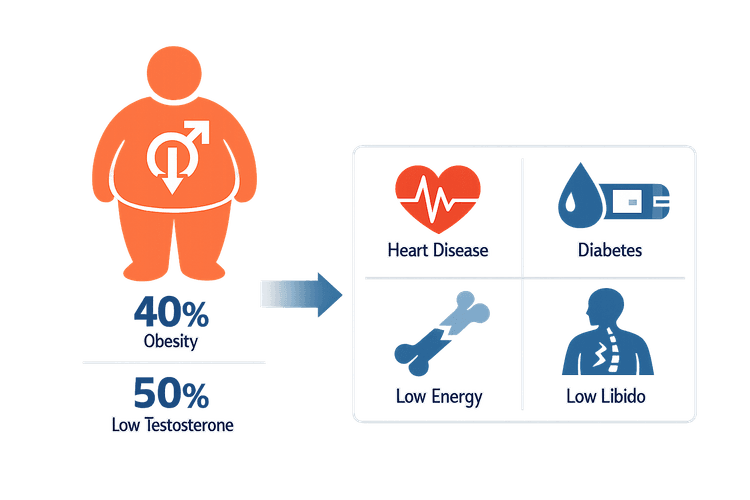
Men with obesity often have low total testosterone. As body weight climbs, free testosterone drops too. This is not a permanent condition — it is functional, meaning the hypothalamic-pituitary-testicular axis is suppressed by the metabolic environment, not broken. Substantial weight loss can reverse it.
Moderate obesity lowers total testosterone primarily by reducing sex hormone binding globulin (SHBG), which is driven by insulin resistance. Severe obesity goes further: it suppresses the HPT axis directly, cutting both total and free testosterone. The result is a cycle — low testosterone increases fat storage, which further lowers testosterone.
How Does Obesity Disrupt Testosterone Production?
Chronic inflammation and hormones associated with obesity interfere with the signals that tell the testes to produce testosterone. The hypothalamus and pituitary gland receive feedback that dampens their output. At the same time, fat tissue converts testosterone to estradiol through aromatase activity, which further suppresses the axis.
This is not a single mechanism. It is a cascade: insulin resistance, inflammatory cytokines, altered SHBG, increased aromatase activity, and HPT axis downregulation all contribute. The more severe the obesity, the more layers of suppression stack up. Understanding how weight loss affects testosterone levels means understanding this cascade can reverse.
Health Risks Beyond the Number
Low testosterone in men with obesity is not just a lab finding. It is associated with type 2 diabetes, impaired glucose tolerance, dyslipidemia, hypertension, coronary artery disease, and non-alcoholic fatty liver disease. These conditions share metabolic roots with obesity itself, and low testosterone appears to both result from and contribute to the cluster.
The relationship runs both ways. Obesity lowers testosterone, and low testosterone promotes visceral fat accumulation, insulin resistance, and loss of lean mass. Breaking the cycle requires addressing the weight, not just the hormone. For men considering testosterone supplements or other approaches, weight loss is the most direct lever.
What Steps Increase Testosterone Through Weight Loss?
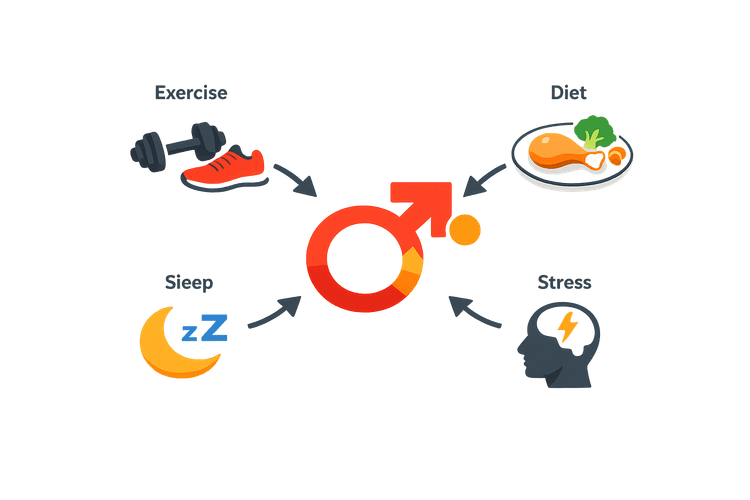
Weight loss raises testosterone by reversing the mechanisms that suppress it. The path is straightforward: reduce body mass index, lower fat tissue that converts testosterone to estrogen, improve insulin sensitivity, and cut systemic inflammation. Here is what the trials measured and what worked.
Start with Dietary Changes
Dietary interventions produce measurable testosterone increases in men with obesity. Low-carbohydrate and Mediterranean diets show the strongest association with improved hormonal profiles. These patterns reduce insulin resistance and decrease aromatase activity in fat tissue — the enzyme responsible for converting testosterone to estrogen.
Calorie restriction matters more than the specific macronutrient split. Studies that tracked testosterone alongside weight loss found increases in both bound and unbound testosterone when participants achieved sustained reductions in BMI. The hormone response tracks fat loss, not just scale weight.
Add Resistance Training
Resistance training improves testosterone levels by lowering fat mass and directly stimulating hormonal production. The effect compounds when combined with dietary changes. Trials that measured exercise alongside calorie restriction found larger testosterone increases than diet alone.
The protocol does not require advanced programming. Consistent strength work — compound movements, progressive load — produces the metabolic stress that signals hormonal adaptation. Frequency and adherence beat intensity for men starting from obesity.
Step 1
Track your baseline
Test total testosterone, free testosterone, SHBG and body weight before starting. Retest at 12 weeks and 6 months. Weight loss affects testosterone gradually; one data point tells you nothing about the trend.
Step 2
Target moderate, sustained loss
Both moderate and significant BMI reductions produce notable testosterone increases. Crash diets that strip lean mass can suppress hormones short-term. Aim for 0.5–1% body weight per week with adequate protein.
Step 3
Combine diet and movement
The combination of calorie restriction and resistance training produces larger hormonal improvements than either alone. Schedule strength work 3–4 days per week alongside your calorie deficit.
Consider Bariatric Surgery for Severe Obesity
Bariatric surgery is one of the most effective methods for increasing testosterone in morbidly obese individuals, with improvements sustained over time. The normalization of sex hormones induced by surgical weight loss contributes to the broader metabolic benefits seen after the procedure.
This option applies to a narrow population: men with BMI over 40 or over 35 with obesity-related comorbidities who have not responded to lifestyle intervention. The testosterone increase follows the dramatic reduction in fat mass and the reversal of insulin resistance that surgery produces.
For men exploring enclomiphene or boron supplementation, weight loss through diet and exercise remains the first-line, evidence-backed lever before considering medication or more invasive options.
Tips and Tricks for Effective Weight Loss
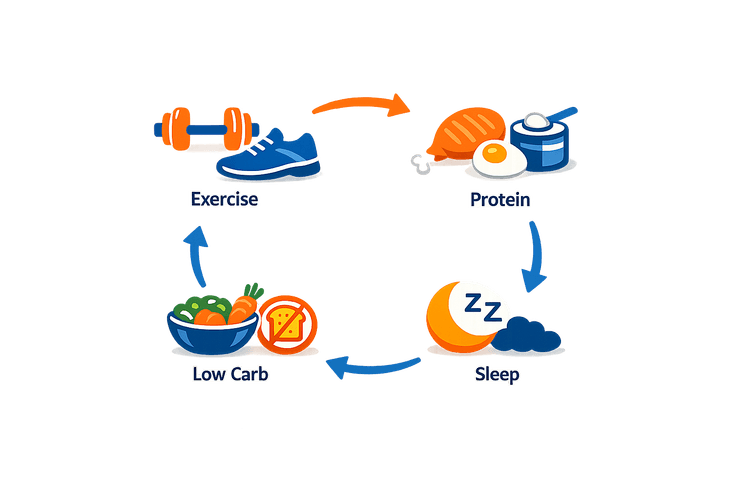
Weight loss that moves testosterone requires fat reduction, not just a lower scale number. The interventions that work in the trials — dietary changes, resistance training, and in some cases bariatric surgery — share a focus on reducing body fat percentage and improving insulin sensitivity. Here is what the evidence shows about making those changes stick.
Start with Diet: Low-Carbohydrate and Mediterranean Patterns
Dietary interventions, particularly low-carbohydrate and Mediterranean diets, have been linked to increased testosterone production in men with obesity. These patterns reduce insulin spikes, lower inflammation, and create the calorie deficit needed for fat loss. The effect on testosterone comes from the fat reduction itself, not from any single food or macronutrient ratio.
Consistency matters more than perfection. A diet you can follow for six months beats a restrictive plan you abandon in three weeks.
Add Resistance Training to Lower Fat Mass
Exercise, particularly resistance training, has been shown to improve hormonal profiles by lowering fat mass and boosting testosterone levels. Lifting weights three to four times per week builds or maintains muscle while you lose fat, which improves body composition and insulin sensitivity.
Cardio helps create a calorie deficit, but resistance training preserves the muscle that keeps your metabolic rate from dropping. The combination works better than either alone.
Step 1
Set a sustainable training schedule
Three full-body resistance sessions per week is enough to see results. Focus on compound movements — squats, deadlifts, presses, rows — that recruit large muscle groups. Progressive overload (adding weight or reps over time) drives adaptation.
Step 2
Monitor recovery and sleep
Testosterone production happens during sleep. Aim for seven to nine hours per night. Poor sleep undermines both fat loss and hormonal recovery, even when diet and training are dialed in.
For men who need to explore how to increase testosterone naturally, combining weight loss with sleep and training creates the largest non-medication effect.
Address Insulin Sensitivity and Inflammation
The relationship between weight loss and testosterone is mediated by improvements in insulin sensitivity, reduced inflammation, and lower levels of aromatase activity. Aromatase is the enzyme that converts testosterone to estrogen in fat tissue. More fat means more aromatase, which lowers circulating testosterone.
Losing fat reduces aromatase activity and improves insulin sensitivity, which in turn supports testosterone production. This is why moderate and significant reductions in body mass index are associated with notable increases in serum testosterone levels. How weight loss affects testosterone levels is directly tied to these metabolic improvements.
| Intervention | Mechanism | Evidence Strength |
|---|---|---|
| Dietary changes (low-carb, Mediterranean) | Calorie deficit, reduced insulin spikes | Moderate (multiple trials) |
| Resistance training | Preserves muscle, lowers fat mass | Moderate (multiple trials) |
| Bariatric surgery | Large, sustained fat loss | Strong (long-term follow-up) |
Track Progress with Body Composition, Not Just Weight
The scale measures total mass, not fat versus muscle. A man who loses ten pounds of fat and gains five pounds of muscle has improved his hormonal profile even if the scale only dropped five pounds. Body composition changes — measured by waist circumference, belt notches, or DEXA scan — are better markers of progress than weight alone.
Testosterone levels respond to fat reduction, not to the number on the scale. Focus on the metrics that reflect body composition.
Conclusion
Weight loss raises testosterone in men who carry excess fat. The mechanism is clear: adipose tissue converts testosterone to estradiol, and reducing fat mass slows that conversion. Studies on bariatric surgery and sustained calorie restriction both show increases in total and free testosterone after body weight drops. The effect is not small—meta-analyses report mean increases of several nanomoles per liter in men who lose significant weight and keep it off.
The short answer: if you test low and you carry extra weight, dropping 10 to 15 percent of body mass is the intervention with the strongest evidence behind it. It costs nothing, requires no prescription, and improves the numbers that matter for metabolic and cardiovascular health at the same time. The research does not promise that weight loss alone will normalize every low result, but it moves the needle more reliably than most supplements and without the monitoring burden of medication.
What we don't know yet: whether the testosterone increase from weight loss is durable over decades, and whether it translates to the same clinical outcomes as exogenous therapy in men with primary hypogonadism. The trials that tracked men for a year or more show sustained improvement as long as weight stays off, but few studies follow participants beyond that window. For men considering testosterone therapy or alternatives, weight loss is the free option worth attempting first—test, lose the weight, test again, then decide.
The evidence is consistent: body composition drives hormone levels in both directions. Gain fat, testosterone falls. Lose fat, testosterone rises. The relationship is not perfectly linear, and individual variation is real, but the pattern holds across populations and study designs. If your goal is a higher number on the panel and you have weight to lose, that is where the data says to start.
Frequently asked questions
How much weight loss is needed to increase testosterone?
Studies show that a 10–15% reduction in body weight produces measurable testosterone increases. Men who achieve sustained BMI reductions through diet and exercise see improvements in both total and free testosterone, with the effect tracking fat loss rather than scale weight alone.
Does weight loss permanently raise testosterone?
Testosterone levels remain elevated as long as the weight stays off. Trials that followed men for 12 months or more show sustained hormonal improvement with maintained weight loss, but regaining the weight reverses the testosterone increase.
Can weight loss replace testosterone therapy?
For men with obesity-related low testosterone, weight loss is the first-line intervention. It may normalize levels without medication, but men with primary hypogonadism (testicular failure) will not see the same response and may still require therapy.
What type of exercise best supports testosterone during weight loss?
Resistance training combined with calorie restriction produces larger testosterone increases than diet alone. Three to four full-body strength sessions per week, focusing on compound movements, preserves muscle mass and supports hormonal recovery.
Sources(26)
- The Journal of urology (2020)
- The Journal of clinical endocrinology and metabolism (2018)
- The aging male : the official journal of the International Society for the Study of the Aging Male (2015)
- U.S. Food and Drug Administration — Drug Safety Communication: FDA cautions about using testosterone products for low testosterone due to aging; requires labeling change to inform of possible increased risk of heart attack and stroke with use (2015)
- The Journal of clinical endocrinology and metabolism (2026)
- JAMA (2017)
- American Urological Association — Evaluation and Management of Testosterone Deficiency (AUA Guideline) (2018)
- Obesity (Silver Spring, Md.) (2013)
- The journal of nutrition, health & aging (2016)
- The Journal of clinical endocrinology and metabolism (2024)
- Andrology (2023)
- Journal of chiropractic medicine (2013)
- Andrology (2020)
- BMC cancer (2016)
- Internal medicine journal (2020)
- The world journal of men's health (2026)
- Journal of Clinical Endocrinology & Metabolism — Testosterone Therapy in Men With Hypogonadism: An Endocrine Society Clinical Practice Guideline (2018)
- F&S reviews (2020)
- European journal of endocrinology (2013)
- Current opinion in endocrinology, diabetes, and obesity (2014)
- Cureus (2024)
- Reviews in endocrine & metabolic disorders (2022)
- Clinical endocrinology (2017)
- Journal of endocrinological investigation (2016)
- Obesity reviews : an official journal of the International Association for the Study of Obesity (2015)
- European journal of endocrinology (2023)