Injection Sites and Technique: Where to Inject Testosterone Safely
Updated
Top takeaways
- Proper injection sites and technique reduce complications and improve testosterone absorption
- The FDA-approved site for long-acting testosterone undecanoate is the gluteus medius muscle in the upper outer quadrant of the buttock
- Aspiration, slow injection over 60 to 90 seconds, and alternating injection sites between left and right are standard safety steps
- Subcutaneous administration is gaining use for some testosterone esters because it is easier to self-administer
- Following the label instructions matters more than what a clinic's marketing materials emphasize
Introduction
Injection sites and technique directly affect both safety and effectiveness when administering testosterone replacement therapy. The FDA label for testosterone undecanoate outlines specific protocols that govern site selection, needle positioning, aspiration and injection speed — requirements often overlooked in clinic marketing materials.
For intramuscular injections, the gluteus medius muscle in the upper outer quadrant of the buttock is the approved site for testosterone undecanoate. Care must be taken to avoid the superior gluteal arteries and sciatic nerve. Between consecutive injections, you alternate the injection site between left and right buttock.
Subcutaneous injections have become more common for shorter-acting testosterone esters. This route is easier to self-administer and may improve adherence. Available data, though limited, support the feasibility of subcutaneous administration. For a detailed comparison of these two routes, see Subcutaneous vs Intramuscular Testosterone Injections.
Proper technique includes antiseptic skin preparation, entering the muscle at a 90-degree angle, and aspirating to ensure no blood appears before injecting. If blood is drawn into the syringe, you immediately withdraw and discard the syringe and prepare another dose. The injection itself should be slow — over 60 to 90 seconds — with the plunger depressed at a constant rate using sufficient controlled force.
Understanding these nuances ensures that testosterone therapy is both safe and tailored to individual needs. The specific choice of site and technique should be guided by clinical advice and the product label, not by what is easiest to sell.
Understanding the Challenges
Injecting testosterone sounds straightforward until you start reading the label. The FDA-approved instructions for AVEED specify the gluteus medius muscle, the upper outer quadrant of the buttock, and warn you to avoid the superior gluteal arteries and the sciatic nerve. That is not decorative language. Hit the wrong spot and you introduce risk that does not appear in clinic marketing.
What Goes Wrong With Poor Injection Sites and Technique?
Injection site reactions are common. In trials of XYOSTED, 36 of 283 patients — 12.7% — reported bruising, hemorrhage, erythema or induration at the injection site over one year. None discontinued treatment because of these reactions, but they are a measurable cost of poor or unlucky technique.
Blood aspiration is the other risk. The label for AVEED instructs you to aspirate for several seconds after entering the muscle. If blood appears in the syringe, you withdraw and discard the dose. That is not optional. Injecting into a blood vessel can trigger pulmonary oil microembolism or anaphylaxis, which is why the label requires 30 minutes of observation in a healthcare setting after each AVEED injection.
Technique Errors That Increase Complications
Needle angle matters. The label specifies a 90° angle to the skin, deeply embedded in the muscle. Shallow injections miss the target tissue. Moving the needle during aspiration or injection increases tissue trauma and the chance of hitting a vessel.
Injection speed is controlled: 60 to 90 seconds for full delivery. Rushing increases pressure, discomfort and the risk of medication leaking back along the needle track. Alternating injection sites between left and right buttock reduces cumulative tissue stress.
For more on how injection method affects treatment outcomes, see Subcutaneous vs Intramuscular Testosterone Injections.
Steps for Safe Injection
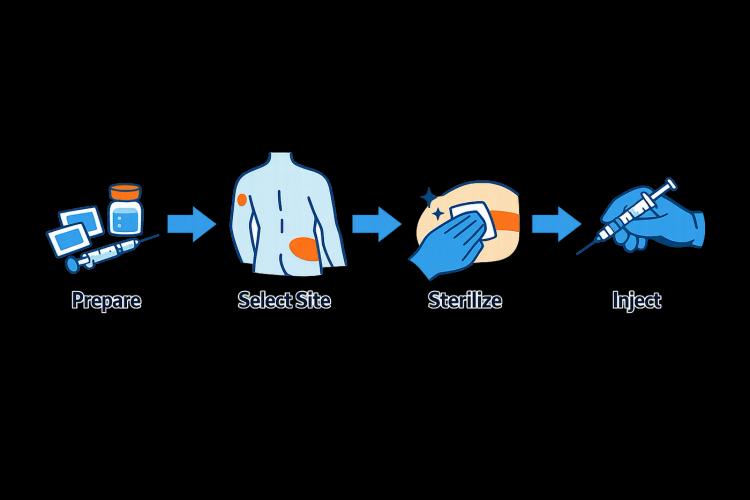
The FDA label for testosterone undecanoate (AVEED) specifies the gluteus medius muscle site in the upper outer quadrant of the buttock. Care must be taken to avoid the superior gluteal arteries and sciatic nerve. Between consecutive injections, alternate the injection site between left and right buttock.
Before you inject, gather all supplies: syringe, needle, testosterone vial, alcohol swabs, sterile gauze, and a bandage. Check the vial for expiration date and clarity. Wash your hands thoroughly.
Preparation and Site Selection
Step 1
Prepare the injection site
Perform antiseptic skin preparation on the selected area. For intramuscular injections, the gluteus medius is the labeled site for long-acting formulations. Subcutaneous administration has been studied with testosterone enanthate using a five-eighths-inch 27-gauge needle, though this is a different formulation and route.
Step 2
Position the needle
Enter the muscle and maintain the syringe at a 90° angle with the needle in its deeply embedded position. Grasp the barrel of the syringe firmly with one hand.
Aspiration and Injection
Step 3
Aspirate to check for blood
With the other hand, pull back on the plunger and aspirate for several seconds to ensure that no blood appears. If any blood is drawn into the syringe, immediately withdraw and discard the syringe and prepare another dose.
Step 4
Inject the medication
If no blood is aspirated, reinforce the current needle position to avoid any movement of the needle. Slowly depress the plunger carefully and at a constant rate over 60 to 90 seconds until all the medication has been delivered. Depress the plunger completely with sufficient controlled force. Withdraw the needle.
Post-Injection Care
Immediately upon removal of the needle from the muscle, apply gentle pressure with a sterile pad to the injection site. If there is bleeding at the site of injection, apply a bandage. For AVEED, the label requires observation in the healthcare setting for 30 minutes after each injection to provide appropriate medical treatment in the event of serious pulmonary oil microembolism (POME) reactions or anaphylaxis.
A study of subcutaneous testosterone enanthate delivered via a prefilled autoinjector system showed that weekly dosing restored testosterone levels to normal range in men with hypogonadism and was well-tolerated. This represents a different administration route and formulation from the intramuscular products described above.
For more on different injection routes and their trade-offs, see our comparison of subcutaneous versus intramuscular administration.
Tips and Tricks for Effective Injections
The mechanics of injection matter more than most clinic marketing suggests. Here is what the label says and what the published trials measured.
Depress the Plunger Slowly and Completely
The FDA label for testosterone undecanoate specifies injecting over 60 to 90 seconds and depressing the plunger completely with sufficient controlled force. Rushing the injection or stopping short leaves medication in the syringe. If you feel resistance, maintain steady pressure rather than forcing it — a clogged needle means you start over with a fresh draw.
Aspirate Before You Inject
After the needle enters the muscle at a 90-degree angle, pull back on the plunger and hold for several seconds. If blood appears in the syringe, withdraw immediately, discard everything, and prepare a new dose. The label is explicit: any blood in the barrel means you hit a vessel, and injecting into a vein sends oil directly into circulation.
Subcutaneous vs Intramuscular: What the Trials Show
Subcutaneous injection is easier to self-administer than intramuscular, but a 2019 trial found it produced greater pain 24 hours after injection. The pharmacokinetics — testosterone, DHT and estradiol levels — did not differ substantially between the two routes. Most patients in that trial still preferred intramuscular, likely because of the delayed pain. The subcutaneous route is an option when intramuscular is not desired or recommended, but the evidence is thin and no dose adjustment has been validated.
For a detailed comparison of how these routes differ in practice, see Subcutaneous vs Intramuscular Testosterone Injections.
Rotate Injection Sites
The label for gluteal injections specifies alternating between left and right buttock with each dose. Repeated injections into the same site cause scar tissue, which makes future injections harder and absorption less predictable. If you are injecting weekly, that means left this week, right next week.
Apply Pressure After Withdrawal
Immediately after removing the needle, apply gentle pressure with a sterile pad. If the site bleeds, apply a bandage. The label for certain formulations requires 30 minutes of observation in a healthcare setting after each injection to monitor for serious reactions, so if you are injecting at home, confirm with your prescriber that your formulation does not carry that requirement.
The cheapest mistake is the one you catch before the needle goes in: check the dose, check the site, aspirate, and inject slowly.
What We Don't Know Yet
Direct safety comparisons between subcutaneous and intramuscular testosterone are limited. The existing trials measured pain and pharmacokinetics in small groups over short periods. Long-term data on injection-site reactions, scar tissue formation, and patient adherence across different formulations and frequencies are not yet published.
Conclusion
Proper injection sites and technique are not negotiable. The label says 90-degree angle, aspiration to check for blood, and slow controlled depression of the plunger over 60 to 90 seconds. Skipping steps raises the risk of injection site reactions, which occurred in 12.7% of patients in one trial, or worse complications if the needle hits a blood vessel.
The gluteus medius is the FDA-approved site for long-acting testosterone formulations, and you alternate sides between injections. The deltoid and other sites appear in some protocols, but the label for AVEED specifies the upper outer quadrant of the buttock and warns to avoid the superior gluteal arteries and sciatic nerve.
If you are using a different formulation or considering subcutaneous administration, read Subcutaneous vs Intramuscular Testosterone Injections for the evidence on absorption and site reactions. No patients in the trial discontinued because of injection site reactions, but that does not mean you skip antiseptic prep, aspiration, or the 30-minute observation window the label requires for certain products.
Test first, follow the labeled technique, and ask your prescriber which monitoring schedule applies to your formulation. The free option is doing it right the first time.
FAQ
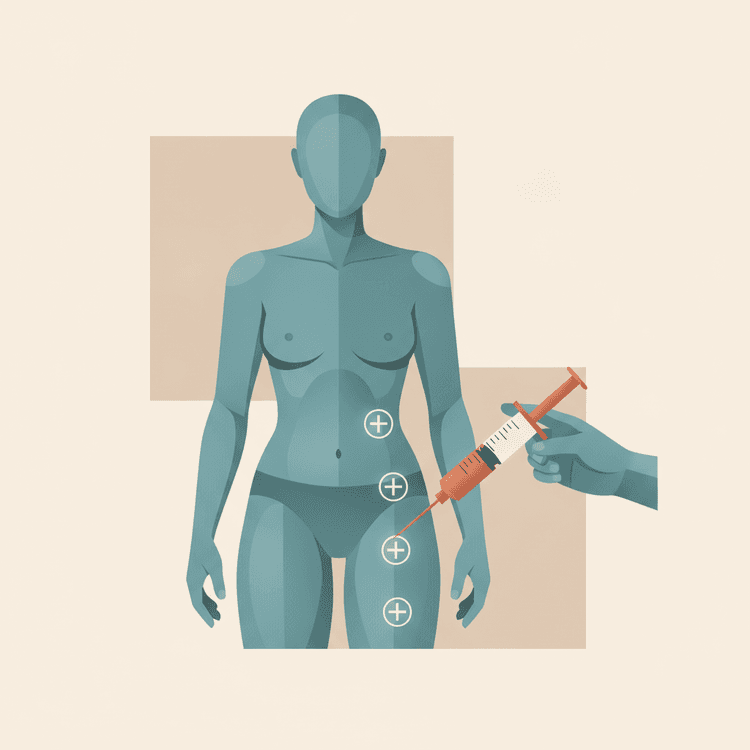
What are the safest injection sites for testosterone?The FDA-approved site for long-acting testosterone undecanoate is the gluteus medius muscle in the upper outer quadrant of the buttock. Subcutaneous sites in the abdomen or thigh are used for some shorter-acting esters.
How do I know if I've chosen the correct injection site?Follow your product's label. For gluteal injections, locate the upper outer quadrant of the buttock to avoid the superior gluteal arteries and sciatic nerve. Alternate between left and right sides with each injection.
What should I do if blood appears during aspiration?Immediately withdraw the needle, discard the syringe and dose, and prepare a fresh injection at a different site. Injecting into a blood vessel can cause serious complications.
How long should a testosterone injection take?The FDA label specifies 60 to 90 seconds for intramuscular injections. Depress the plunger at a constant, controlled rate to minimize tissue trauma and medication leakage.
Can I switch between subcutaneous and intramuscular injection sites?Only if your prescriber approves and adjusts your protocol. The two routes have different absorption profiles, and switching without guidance may affect your testosterone levels.