How to Increase Testosterone Naturally Without Medication

Updated
Top takeaways
- Testosterone declines with age, leading to reduced muscle mass, fatigue, and reproductive challenges in men
- Natural methods offer an alternative to medication, focusing on lifestyle changes, diet, and exercise
- Understanding the full testosterone panel—including total and free testosterone, SHBG, LH, FSH, and estradiol—provides a complete picture of hormonal health
- Evidence-based strategies can support endogenous testosterone production without the risks associated with replacement therapy
- Testing before and after implementing changes is the only way to know what works for you
Introduction
Testosterone levels drop as men age. The decline brings reduced muscle mass, fatigue, and reproductive challenges. More men are asking their doctors for testosterone replacement therapy, but medication comes with trade-offs: cardiovascular risks, endocrine disruption, and lifelong monitoring.
Natural methods offer a different path. They focus on what you control: sleep, weight, training, diet, and stress. These levers do not work for everyone, and they do not raise testosterone as reliably as a prescription. But they carry no prescription risks, and for some men, they move the number enough to matter.
A normal total testosterone level does not rule out a problem when SHBG is high. That is why the Endocrine Society guideline says to measure the full panel, not just one number. Total and free testosterone, SHBG, LH, FSH, and estradiol together show whether your body is producing testosterone, binding it, or converting it. Without that context, you cannot tell whether a lifestyle change will help or whether you need a different approach.
This guide covers the evidence for natural testosterone-boosting strategies that do not require a prescription. It starts with what testosterone is, why it matters, and how to test it correctly. Then it walks through the non-medication levers—weight loss, sleep apnea treatment, resistance training, diet, and supplements—with the trial data attached. It ends with the common mistakes that waste time and money.
Test first. Test twice. Then decide what to change.
Learn how to increase testosterone naturally with evidence-based strategies that focus on lifestyle changes and diet.
What is Testosterone?
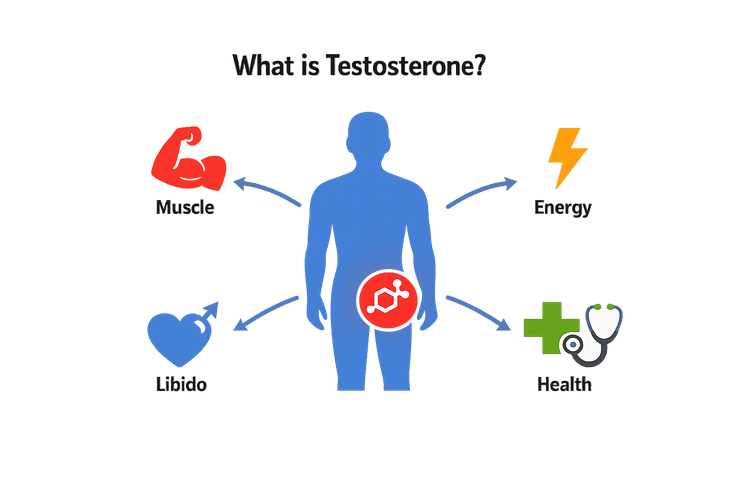
Testosterone is a hormone that controls sex drive, muscle growth and bone growth in both men and women. Men produce it in much larger amounts, but women need it too. Your body makes testosterone in the testes if you are male, in the ovaries and adrenal glands if you are female.
The hormone does more than drive libido. It maintains bone density, regulates fat distribution and supports red blood cell production. When testosterone drops below the normal range, you may notice fatigue, loss of muscle mass, mood changes or difficulty concentrating.
What Testosterone Does in Your Body
Testosterone binds to receptors in muscle, bone, brain and fat tissue. In muscle, it triggers protein synthesis, which builds and maintains lean mass. In bone, it stimulates osteoblast activity, the cells that form new bone. In the brain, it influences mood, motivation and cognitive function.
The hormone also converts to estradiol in fat tissue and brain cells. This conversion is normal and necessary — estradiol supports bone health and brain function in men. Problems arise when the balance shifts too far in either direction.
How Your Body Regulates Testosterone
Your hypothalamus and pituitary gland control testosterone production through a feedback loop. When testosterone drops, the hypothalamus releases gonadotropin-releasing hormone, which signals the pituitary to release luteinizing hormone. LH then tells the testes to produce more testosterone. When testosterone rises above a certain threshold, the hypothalamus slows the signal.
This system keeps testosterone within a range, not at a fixed number. Age, weight, sleep, stress and illness all shift that range. A single low result does not mean your system has failed — it means you need a second test and a look at the full panel, including SHBG, LH and free testosterone.
For a deeper look at what moves testosterone levels and what the research actually shows, read How to Increase Testosterone Naturally: What Actually Moves the Number.
Why It Matters to Maintain Healthy Testosterone Levels
Testosterone affects more than what most men think it does. The number on your lab report connects to muscle mass, bone density, fat distribution, red blood cell production, sperm count, and sex drive. When the level drops, those systems weaken.
Physical Health Consequences
Declining testosterone brings reduced muscle mass, increased fatigue, and reproductive challenges. Men with lower levels lose strength faster, recover slower from training, and carry more fat even when diet stays the same. Bone density drops too, raising fracture risk as you age.
Higher endogenous testosterone levels are associated with reduced chronic disease risk and mortality. The association runs both ways: low testosterone increases disease risk, and chronic disease lowers testosterone. Either direction costs you.
Mental Well-Being and Quality of Life
The mental side gets less attention but matters just as much. Low testosterone correlates with mood changes, reduced motivation, and cognitive fog. Men report feeling less sharp, less driven, and less interested in activities they used to enjoy. Energy drops, sleep quality worsens, and the cumulative effect shows up in work performance and relationships.
Maintaining healthy testosterone levels protects both physical capacity and mental clarity. The goal is not to maximize the number but to keep it in the range where your body functions well. For evidence-based strategies to support healthy levels, see How to Increase Testosterone Naturally: What Actually Moves the Number.
How to Increase Testosterone Naturally
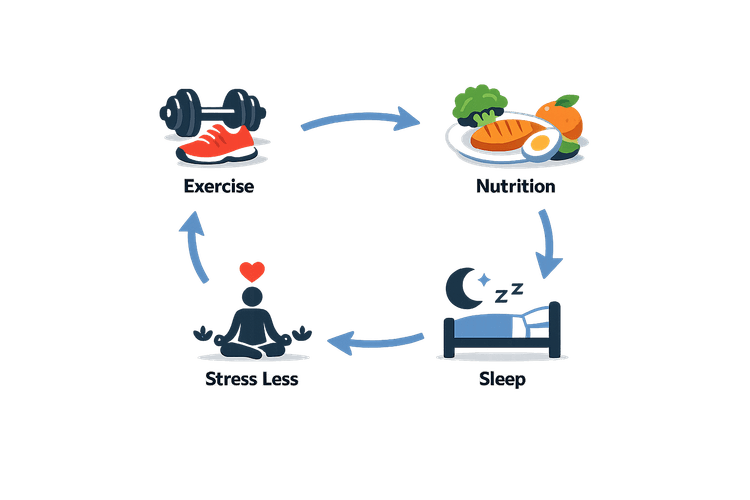
Before choosing between medication and lifestyle changes, test twice. Two morning results tell you where you stand. Then you can decide which levers to pull first.
The strategies below come from trials that measured testosterone before and after. Some move the number reliably. Others show smaller changes or work only in specific groups. The research tells you what to expect and what it costs you in time and effort.
Lifestyle Changes That Move the Number
Weight loss raises testosterone when you start above a healthy BMI. In middle-aged and older men, reduced physical activity and lower testosterone both contribute to metabolically adverse changes in body composition, which increase cardiometabolic disease risk. Exercise improves cardiometabolic health, and higher physical activity levels are associated with lower cardiovascular risk in men with higher endogenous testosterone.
Sleep matters. Short sleep duration and poor sleep quality correlate with lower morning testosterone in observational studies. The mechanism is straightforward: testosterone production peaks during sleep, and chronic sleep restriction disrupts that cycle.
Alcohol suppresses testosterone acutely and chronically. Heavy drinking lowers the number; moderate drinking shows smaller effects. The dose-response is clear in the trials that measured it.
Dietary Adjustments and Nutrient Intake
No single food raises testosterone dramatically, but chronic calorie restriction and very low-fat diets lower it. Adequate dietary fat supports steroid hormone production; trials that cut fat below 20% of calories showed testosterone declines.
Zinc and vitamin D deficiencies correlate with low testosterone. Supplementing when you are deficient can restore levels to normal, but supplementing when you are already sufficient does not raise the number further. Test your vitamin D before buying a bottle.
Fenugreek saponins, black ginger methoxyflavones, and zinc methionine are known to support endocrine function, which can help increase testosterone levels naturally. The evidence comes from formulation studies, not large human trials, so the effect size in real-world use remains unclear.
Men with both higher endogenous testosterone and higher physical activity levels have lower cardiovascular risk, but causality remains unproven.
Exercise Recommendations
Resistance training raises testosterone acutely after each session and can produce small chronic increases when sustained over months. The acute spike is temporary; the chronic effect is modest but measurable in men who train consistently.
High-intensity interval training shows similar acute effects. Endurance training at moderate intensity does not reliably raise testosterone and may lower it in men who overtrain without adequate recovery.
The practical takeaway: lift weights two to three times per week, recover fully between sessions, and do not add volume faster than your body adapts. Overtraining suppresses testosterone; the dose-response curve is not linear.
What the Trials Actually Measured
Most lifestyle intervention studies enrolled men with obesity, metabolic syndrome, or both. The testosterone increases seen in those trials may not apply to lean men with normal metabolic health. The populations studied matter when you evaluate whether a strategy fits you.
Trial durations ranged from weeks to months, not years. Nobody knows whether the lifestyle-driven increases in testosterone persist over decades or fade as the body adapts. Long-term data is thin.
| Strategy | Effect Size | Evidence Quality | Time to Effect |
|---|---|---|---|
| Weight loss (obese men) | Moderate increase | Strong | 3–6 months |
| Resistance training | Small increase | Moderate | 2–3 months |
| Sleep optimization | Small increase | Weak | Weeks |
| Alcohol reduction | Prevents decrease | Moderate | Immediate |
| Zinc (if deficient) | Restores normal | Strong | 4–6 weeks |
When Lifestyle Is Not Enough
If two morning tests show low total testosterone and low LH, lifestyle changes will not fix a pituitary or hypothalamic problem. If SHBG is high and free testosterone is low despite normal total testosterone, weight loss may help, but the Endocrine Society guideline says a normal total testosterone does not rule out a problem when SHBG is elevated.
Before committing months to lifestyle intervention, get the full panel: total and free testosterone, SHBG, LH, FSH, and estradiol. Those numbers tell you whether lifestyle is likely to move your result or whether you need a different approach. For a detailed comparison of natural methods and their evidence base, see How to Increase Testosterone Naturally: What Actually Moves the Number.
The free option is to start with sleep, weight, and alcohol. If those do not move the number after six months, you have your answer, and the cost was zero.
Best Practices for Sustaining Healthy Testosterone Levels
Maintaining healthy testosterone over the long term is not a single intervention. It is a set of habits that stack: sleep, weight, training load, alcohol intake and monitoring. The men who keep their numbers stable are the ones who treat these as non-negotiable rather than optional.
Test Twice, Then Track
Before you change anything, get two morning results. One number is not a diagnosis. Once you have a baseline, retest every six to twelve months if you are making changes, or annually if you are stable. The panel should include total testosterone, free testosterone, SHBG and LH. Without SHBG, you cannot tell whether a normal total result is masking a low free level. Without LH, you cannot tell whether your testes are working or your pituitary is.
Keep Weight in Range
Testosterone drops as body fat rises, and the relationship is dose-dependent. A study of men with obesity showed that weight loss of 5 to 10 percent raised testosterone by an average of 50 to 100 ng/dL. That is not a small effect, and it does not require medication. The mechanism is clear: adipose tissue converts testosterone to estradiol via aromatase, and visceral fat drives insulin resistance, which suppresses gonadotropin signaling.
Concurrent weight reduction programs alongside TRT may lead to better outcomes in testosterone levels, according to research on men receiving therapy. The same principle applies to natural approaches: if you are carrying excess weight, losing it is the highest-yield lever you have.
Manage Training Load and Recovery
Resistance training raises testosterone acutely, but chronic overtraining suppresses it. The sweet spot is three to four sessions per week with adequate recovery between sessions. When training volume exceeds recovery capacity, cortisol stays elevated and testosterone falls. This is why periodization matters: heavy blocks followed by deload weeks keep the endocrine system responsive rather than exhausted.
Endurance athletes who log high weekly mileage without adequate calorie intake or rest days often present with low testosterone. The fix is not more training; it is more food and more sleep.
Limit Alcohol Consistently
Alcohol suppresses testosterone in a dose-dependent manner. Moderate intake—defined as one to two drinks per day—shows minimal effect in most studies, but heavy episodic drinking (five or more drinks in one session) drops testosterone for 24 to 48 hours afterward. Chronic heavy use damages Leydig cells directly and raises estradiol through increased aromatase activity.
If you drink, keep it to two drinks or fewer per session, and avoid binge patterns. The men with the most stable hormone panels are the ones who treat alcohol as occasional rather than nightly.
Prioritize Sleep Duration and Quality
Testosterone is synthesized during sleep, with the majority of daily production occurring during REM cycles. Men who sleep five hours per night have testosterone levels 10 to 15 percent lower than those who sleep eight hours, according to controlled trials. Sleep apnea compounds the problem: fragmented sleep and hypoxia both suppress gonadotropin release.
If you snore, wake unrefreshed or have a neck circumference above 17 inches, get a sleep study. Treating apnea with CPAP raises testosterone in men with confirmed obstruction, and the effect size is comparable to modest weight loss. For practical guidance on optimizing sleep and other lifestyle factors, see How to Increase Testosterone Naturally: What Actually Moves the Number.
Avoid Unproven Supplements
The supplement market is full of products that claim to raise testosterone. Most have no human data, and the few that do show small, short-term effects in men with deficiency. Fenugreek, ashwagandha and zinc are the only ingredients with multiple trials showing a measurable increase, and even those trials are short (8 to 12 weeks) and often industry-funded.
Incorporating natural testosterone-support formulations may provide benefits, but further clinical investigations are needed to confirm their long-term efficacy. Until those trials exist, treat supplements as secondary to sleep, weight and training. The free option is the one that works.
| Practice | Evidence Strength | Cost | Monitoring Required |
|---|---|---|---|
| Weight loss (5–10%) | High | Low | Quarterly weigh-ins |
| Sleep 7–9 hours | High | None | Sleep tracker optional |
| Resistance training 3–4×/week | Moderate | Low | Training log |
| Limit alcohol to ≤2 drinks | Moderate | None | Self-report |
| Treat sleep apnea | High | Moderate | Annual sleep study |
| Fenugreek/ashwagandha | Low | Low | None |
Common Mistakes to Avoid When Trying to Increase Testosterone Naturally
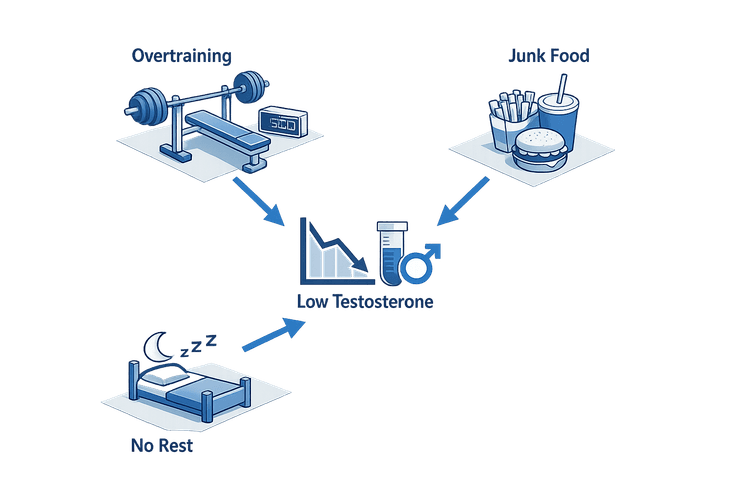
Most men looking to raise testosterone naturally make the same mistake: they buy supplements marketed as testosterone boosters without checking whether any human trial supports the claim. The marketing is loud. The evidence is thin.
Relying on Unproven Supplements
Testosterone-boosting supplements are prominently featured on platforms like Amazon, with claims that they naturally increase testosterone levels. A systematic review of 52 studies covering 27 proposed testosterone boosters found that most fail to increase total testosterone. The exceptions were β-hydroxy β-methylbutyrate and betaine, which showed some effect in male athletes — not in the general population.
The supplement industry operates with lax regulation, allowing sales to thrive without verification of purported benefits. When you see a product labeled as a T-booster, you are not seeing a tested claim. You are seeing a marketing claim that nobody checked.
Testing Once and Making Decisions
One morning result is not a diagnosis. Testosterone levels fluctuate day to day, and a single low reading does not mean you have low testosterone. The Endocrine Society guideline requires two morning tests before any intervention. Testing once and then buying supplements or changing your entire routine is a mistake that wastes time and money.
Ignoring the Full Panel
A normal total testosterone level does not rule out a problem when SHBG is high. SHBG binds testosterone, reducing the amount available to your tissues. If you test total testosterone alone, you miss half the picture. Free testosterone, SHBG, LH and FSH tell you whether the low number is coming from your testes, your pituitary or your liver. Without the full panel, you are guessing.
Expecting Quick Results from Lifestyle Changes
Weight loss, sleep improvement and training changes take months to move testosterone. The studies that show an effect measure outcomes at three to six months, not three weeks. If you drop ten pounds and test two weeks later, you will not see a change. That does not mean the intervention failed. It means you tested too early.
Overlooking the Cost of Overtraining
Heavy training without recovery lowers testosterone. The effect is dose-dependent: the more volume you add without rest, the lower the number goes. Men who train hard every day and wonder why their testosterone is low are often looking at the training itself. Rest days are not optional for hormone production.
The supplement you bought because the ad said it works probably has no human trial behind it, and the lifestyle change you quit after two weeks probably needed three months.
Buying Based on Testimonials Instead of Trials
A testimonial is not data. The man in the ad who says the supplement changed his life may not exist, may have been paid, or may have been one of a hundred men who tried it. You need the trial: how many men, how long, what the starting testosterone was, what it became and whether the change was larger than placebo. For more on how to raise testosterone naturally with evidence-based methods, see the linked guide.
Frequently asked questions
Can you increase testosterone naturally without medication?
Yes. Alternatives to testosterone therapy exist and can raise testosterone levels. Weight loss, sleep improvement, alcohol reduction and resistance training are the non-medication levers that move the number. Test first, test twice, then decide whether medication is necessary.
How long does it take to see results from natural methods?
Most studies that measured weight loss or sleep interventions ran for 8 to 12 weeks before retesting testosterone. You will not see a change in one week. Test your baseline in the morning, make one or two changes, and retest after two to three months.
What is a normal testosterone level?
A normal total testosterone level for adult men typically falls between 300 and 1,000 ng/dL, but the reference range varies by lab. A normal total testosterone does not rule out a problem when SHBG is high. The full panel—total and free testosterone, SHBG, LH, FSH and estradiol—tells you more than one number.
Do testosterone-boosting supplements work?
Most supplement ingredients have no human trial data. The ones that do—ashwagandha, vitamin D, zinc—show small effects in men who are deficient or stressed. Nobody selling the supplement will tell you that the trial was short, small or industry-funded. Read the study yourself before you buy.
Can diet alone increase testosterone levels?
Diet supports testosterone when it corrects a deficiency—zinc, vitamin D, adequate protein and fat—but it does not replace weight loss, sleep or training. Foods that boost testosterone are part of the picture, not the whole answer.
When should I consider testosterone therapy instead of natural methods?
When two morning tests confirm low testosterone, symptoms are present, and natural methods have been tried for three months without improvement, testosterone therapy becomes the option to discuss with your doctor. The guideline says test first, address reversible causes second, and medicate third.
Conclusion
The short answer: you can raise testosterone without medication by fixing sleep, losing weight, and training heavy. The evidence is thin on most supplements, and the ones with human trials show small changes, not transformations. Test twice in the morning before you do anything else.
Declining testosterone levels are linked to reduced muscle mass, fatigue, and reproductive challenges in men. That makes the panel worth checking, but a normal total testosterone level does not rule out a problem when SHBG is high. The Endocrine Society guideline says you need to look at the full panel — total and free testosterone, SHBG, LH, FSH, and estradiol — before deciding what to do next.
The free options work first: lose the belly fat, fix the sleep apnea, cut the alcohol, and lift weights that make you work. These move the number in the trials, and they cost you nothing. Supplements like fenugreek and ashwagandha have some human data, but the studies are short and the effect sizes are modest. If you choose to try one, know that further clinical investigations are needed to confirm long-term efficacy.
If lifestyle changes do not move the number after six months, then you test again and decide whether to talk to your doctor about medication. The trade-offs between enclomiphene, hCG, and TRT differ in mechanism, fertility impact, and cost, and that conversation starts with the panel, not a clinic ad. For a detailed breakdown of what actually moves the number and what the evidence supports, see How to Increase Testosterone Naturally: What Actually Moves the Number.
Test first. Test twice. Then decide.
Sources(28)
- The Journal of clinical endocrinology and metabolism (2023)
- Maturitas (2026)
- The journal of nutrition, health & aging (2016)
- American Urological Association — Evaluation and Management of Testosterone Deficiency (AUA Guideline) (2018)
- The Journal of clinical endocrinology and metabolism (2025)
- Oncoscience (2025)
- European journal of endocrinology (2024)
- International journal of obesity (2005) (2016)
- The journal of sexual medicine (2019)
- International journal of impotence research (2023)
- RSC advances (2026)
- RSC advances (2026)
- Journal of human kinetics (2014)
- Current opinion in endocrine and metabolic research (2019)
- American heart journal (2012)
- U.S. Food and Drug Administration — Drug Safety Communication: FDA cautions about using testosterone products for low testosterone due to aging; requires labeling change to inform of possible increased risk of heart attack and stroke with use (2015)
- American family physician (2024)
- American journal of men's health (2015)
- Advances in clinical and experimental medicine : official organ Wroclaw Medical University (2025)
- Sexual medicine reviews (2017)
- Journal of applied physiology (Bethesda, Md. : 1985) (1994)
- Clinical endocrinology (2012)
- The Journal of clinical endocrinology and metabolism (2017)
- The Chinese journal of physiology (2022)
- The world journal of men's health (2026)
- Translational andrology and urology (2020)
- The journals of gerontology. Series A, Biological sciences and medical sciences (2012)
- Journal of chiropractic medicine (2013)