Zinc and Testosterone: When Zinc Helps and When It Doesn't
Updated
Top takeaways
- Zinc and Testosterone are linked through deficiency: supplementation only helps if you are actually deficient
- Severe and moderate zinc deficiency is associated with hypogonadism in men
- Adding zinc when your levels are normal does not raise testosterone further
- The research shows a threshold effect: correcting deficiency restores function, overshooting it does not add benefit
- Testing zinc status before supplementing tells you whether zinc is your problem
Introduction
Zinc and Testosterone connect when zinc levels fall below normal. When dietary zinc was restricted in healthy young men, serum testosterone dropped significantly after twenty weeks—from 39.9 to 10.6 nmol/L. When marginally deficient older men received zinc supplementation for six months, testosterone levels rose. The pattern is consistent: deficiency lowers testosterone, correction restores it, and supplementation beyond that point does not keep pushing the number higher.
The distinction matters because zinc deficiency is common in some populations and rare in others. Severe and moderate deficiency of zinc is associated with hypogonadism in men, but the effect of marginal deficiency on testosterone is less clear-cut. Most men eating a varied diet with animal protein get enough zinc from food. Most men taking a multivitamin get enough from that. The men who benefit from standalone zinc supplementation are the ones whose intake or absorption falls short, and that is a smaller group than the marketing suggests.
Understanding how to increase testosterone naturally starts with knowing which levers actually move your number. Zinc is one of those levers, but only if deficiency is present. This article walks through when zinc helps, when it does not, what the trials measured, and how to tell which category you fall into before you buy a bottle.
How Does Zinc and Testosterone Deficiency Occur?
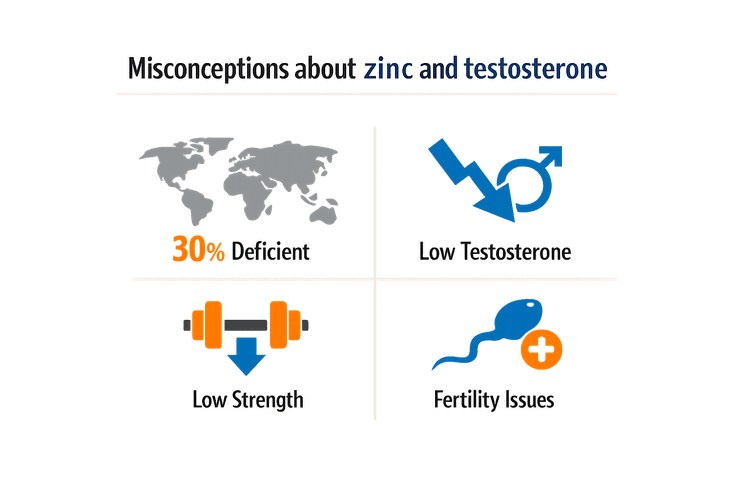
Every supplement ranking puts zinc near the top for testosterone support. Most articles skip the part where the benefit depends entirely on whether you are deficient. The trials that show a testosterone increase studied men with documented low zinc levels—dietary restriction, dialysis patients, or confirmed marginal deficiency. When baseline zinc is normal, supplementation does not raise testosterone.
Severe and moderate zinc deficiency is associated with hypogonadism in men. One study restricted dietary zinc in healthy young men for 20 weeks and measured serum testosterone drop from 39.9 to 10.6 nmol/L—a 73% decline. Supplementing marginally zinc-deficient elderly men for six months raised testosterone back toward normal. That is the evidence: zinc corrects a deficiency-driven drop. It does not push a normal level higher.
When Zinc Deficiency Actually Occurs
Zinc deficiency is not rare worldwide, but it is not the default explanation for low testosterone in a Western diet either. Deficiency shows up in chronic kidney disease, malabsorption conditions, strict vegetarian diets without legumes or nuts, and prolonged diarrhea. Dialysis patients with low plasma zinc showed improved potency and raised testosterone after zinc therapy. The population studied had a documented, reversible cause.
Most men buying a zinc supplement do not have low zinc. They have low testosterone and read that zinc helps. Without a serum or plasma zinc test, you are guessing. The trials that worked started with a measured deficiency.
The Gap Between Marketing and Evidence
Supplement labels list zinc as a testosterone booster without the qualifier. The research says something narrower: zinc corrects gonadal dysfunction caused by zinc deficiency. One review concluded that in many cases, zinc supplements are insufficient, and surgery or drugs are required for effective treatment of hypogonadism. Zinc is not a standalone fix when the root cause is primary testicular failure, pituitary dysfunction, or another endocrine issue.
If you are considering zinc for low testosterone, the first question is whether you have low zinc. The second is whether low zinc is the reason your testosterone is low. Most men skip both questions and dose based on a generic recommendation. That is where the misconception lives.
For a broader look at what actually moves testosterone when diet and lifestyle are optimized, see How to Increase Testosterone Naturally: What Actually Moves the Number.
Solution Steps
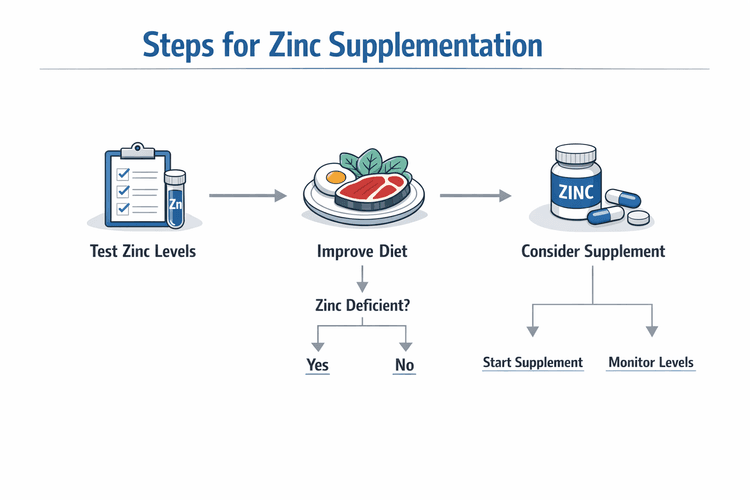
Before buying a zinc supplement, you need two pieces of information: whether you are deficient, and whether your testosterone is actually low. Without both, you are guessing.
Step 1
Test testosterone first
Get a morning blood draw for total testosterone, free testosterone, and LH. One result below the reference range is not a diagnosis. If the first result is low, repeat it on a different morning. The number that matters is the average of two tests, not a single snapshot.
Step 2
Check for zinc deficiency
Ask your doctor for a serum or plasma zinc test. The reference range is typically 70–120 µg/dL. If you are below 70, you are deficient. If you are above 90, supplementation is unlikely to change your testosterone. The correlation between cellular zinc and serum testosterone is modest—a study of 40 men found r = 0.43 for lymphocyte zinc—but it only holds when zinc is actually low.
Step 3
Try dietary zinc before pills
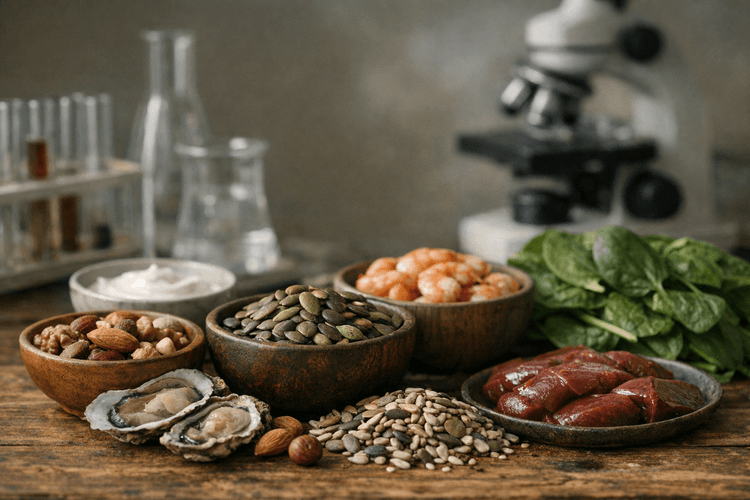
If your zinc is borderline, start with food. Oysters, beef, pumpkin seeds, and fortified cereals deliver zinc without the risk of overdosing. A 3-ounce serving of cooked oysters gives you 74 mg of elemental zinc, which is more than the daily upper limit of 40 mg. Most men need 11 mg per day. Track your intake for a week before deciding you need a supplement.
Step 4
Use the studied dose if supplementing
The common recommendation from trials in men with hypogonadism is 220 mg of zinc sulfate twice daily, which delivers 50 mg of elemental zinc per dose, over one to four months. That is above the daily upper limit; it was used in studies of deficient men, not healthy controls. If your zinc level is normal, this dose will not raise your testosterone and may cause nausea or copper deficiency. Start at 15–25 mg of elemental zinc per day and retest after 8–12 weeks.
Step 5
Retest after three months
Repeat the morning testosterone panel and the zinc level after 12 weeks. If your testosterone has not moved and your zinc is now normal, zinc was not the limiting factor. If your testosterone improved, continue the dose that brought your zinc into range and retest every six months. If your testosterone is still low despite normal zinc, you need a different intervention—not more zinc. Consider exploring online TRT clinics if deficiency correction does not resolve the issue.
One trial in elderly men with marginal zinc deficiency showed that six months of supplementation increased serum testosterone. Another trial restricted dietary zinc in young men and saw testosterone drop after 20 weeks, then recover with supplementation. Both studies enrolled men with confirmed low zinc. Nobody has shown that giving zinc to men with normal zinc levels raises testosterone.
For more on non-supplement levers that move testosterone, see How to Increase Testosterone Naturally: What Actually Moves the Number.
Tips and Tricks
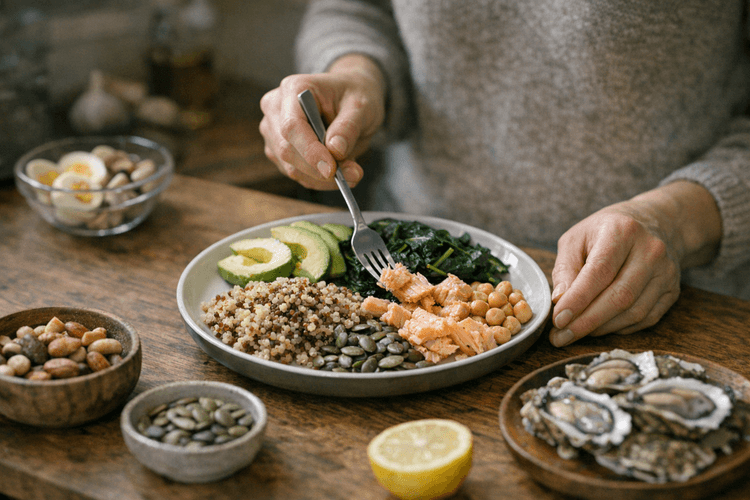
Start with food before you buy a bottle. Oysters, beef, pumpkin seeds and chickpeas deliver zinc in forms your body recognizes. Three ounces of cooked oysters give you around 74 mg—well above the daily requirement—while a serving of beef provides 7 mg. If your diet already includes these regularly, a supplement may add nothing.
Test Before You Supplement
A serum zinc test costs less than a month of pills and tells you whether deficiency is real. Without a number, you are guessing. Most men with normal zinc levels see no testosterone benefit from extra zinc, and the evidence for supplementation in non-deficient populations is thin.
Dosing and Upper Limits
The tolerable upper intake level for zinc is 40 mg per day for adults. Chronic intake above that threshold interferes with copper absorption and can suppress immune function. If you supplement, 15 to 30 mg per day is the range used in most trials. Higher doses do not produce better results and raise the risk of side effects.
Timing does not matter much—zinc absorbs whether you take it with food or on an empty stomach. Taking it with a meal reduces the chance of nausea, which some people report at higher doses.
Monitor Testosterone, Not Just Zinc
If you correct a zinc deficiency, retest testosterone after eight to twelve weeks. The improvement, if it happens, shows up in that window. One small trial in hemodialysis patients with low plasma zinc found that zinc therapy raised testosterone and improved potency, while the placebo group saw no change. That was a deficiency-correction study, not a performance-enhancement trial.
Zinc supplementation is insufficient in many cases, with surgery and drugs required for effective treatment of hypogonadism.
For a broader look at supplement ingredients and the strength of evidence behind each, see Testosterone Supplements for Men: Ingredients and Evidence. Other supplements like boron show similar threshold effects.
When Zinc Is Not Enough
If your testosterone remains low after correcting zinc status, the problem lies elsewhere. Zinc does not override primary hypogonadism, pituitary dysfunction or the suppressive effects of obesity and poor sleep. In those cases, zinc is a supporting actor, not the lead.
Avoid stacking high-dose zinc with testosterone therapy unless a physician directs it. Animal data show that combining supraphysiologic doses of both can produce epithelial cell proliferation and stromal changes in androgen-sensitive tissues. Human trials have not replicated those doses, but the principle holds: more is not always better, and combinations carry risks that single interventions do not.
Conclusion
Zinc and testosterone connect when zinc is low—not when it is already normal. If you are deficient, supplementation can restore levels. If you are not deficient, adding zinc does not raise testosterone further. The difference matters, and testing is how you know which side of that line you are on.
The studies that show benefit used men with marginal or severe zinc deficiency. One trial restricted dietary zinc in young men and measured a significant drop in serum testosterone after 20 weeks. Another supplemented marginally zinc-deficient elderly men for six months and measured an increase. Those results do not transfer to men whose zinc status is already adequate. If your diet includes meat, shellfish, legumes and whole grains, you are likely meeting the recommended intake without a supplement.
Before adding a supplement, test your testosterone twice in the morning and ask your doctor whether zinc deficiency is a plausible contributor. If it is, a trial of 15 to 25 mg elemental zinc daily for three to six months is reasonable, followed by retesting. If testosterone does not move, zinc was not the lever. If it does, you have corrected a deficiency, not discovered a performance enhancer.
Zinc also plays a role in sperm function and semen quality. Low seminal plasma zinc correlates with impaired sperm motility and is influenced by endogenous free testosterone. If fertility is part of your concern, addressing zinc deficiency may help, but it is one variable among many—weight, sleep, alcohol, varicocele and other factors often matter more.
The short answer: zinc helps when you need it and does nothing when you don't. Test first, supplement if indicated, retest to confirm. If you want a broader look at what moves testosterone and what doesn't, see How to Increase Testosterone Naturally: What Actually Moves the Number.
Frequently asked questions
Does zinc raise testosterone if I'm not deficient?
No. Studies show that zinc supplementation only raises testosterone in men with documented zinc deficiency. When baseline zinc levels are normal, adding more zinc does not increase testosterone further.
How do I know if I'm zinc deficient?
Ask your doctor for a serum or plasma zinc test. The reference range is typically 70–120 µg/dL. Values below 70 indicate deficiency. Without testing, you are guessing whether zinc is your limiting factor.
What dose of zinc should I take for testosterone?
If you are deficient, 15–25 mg of elemental zinc per day is a reasonable starting dose. The tolerable upper limit is 40 mg per day. Higher doses used in some studies (50 mg twice daily) were for severely deficient men and carry risks of copper depletion and nausea.
How long does it take for zinc to raise testosterone?
In deficiency-correction trials, testosterone changes became measurable after 8–12 weeks of supplementation. Retest both zinc and testosterone after three months to confirm whether the intervention worked.
Can I get enough zinc from food?
Yes. Three ounces of cooked oysters contain 74 mg of zinc, and a serving of beef provides about 7 mg. Most men eating a varied diet with animal protein, legumes, and whole grains meet the daily requirement of 11 mg without supplementation.
Sources(25)
- F&S reviews (2020)
- International journal of pharmaceutical compounding (2015)
- Sexual medicine reviews (2017)
- The Journal of urology (2020)
- The journal of sexual medicine (2013)
- Medicines (Basel, Switzerland) (2025)
- International journal of general medicine (2022)
- International journal of impotence research (2023)
- The journal of sexual medicine (2019)
- RSC advances (2026)
- Journal of human kinetics (2014)
- RSC advances (2026)
- European journal of endocrinology (2024)
- The world journal of men's health (2026)
- JAMA (2017)
- Translational andrology and urology (2025)
- Annals of internal medicine (2020)
- American journal of cardiovascular drugs : drugs, devices, and other interventions (2025)
- Journal of Clinical Endocrinology & Metabolism — Testosterone Therapy in Men With Hypogonadism: An Endocrine Society Clinical Practice Guideline (2018)
- Nutrition (Burbank, Los Angeles County, Calif.) (1996)
- International journal of urology : official journal of the Japanese Urological Association (2023)
- Journal of clinical and diagnostic research : JCDR (2016)
- The aging male : the official journal of the International Society for the Study of the Aging Male (2019)
- BMC cancer (2025)
- Journal of dairy science (1984)