Does Insurance Cover TRT? What You Need to Know

Updated
Top takeaways
- Insurance covers TRT only when the FDA-approved diagnosis is documented — classic hypogonadism with low lab values and symptoms
- Most plans require two morning testosterone tests, a full symptom checklist, and prior authorization before they pay
- Off-label prescriptions and compounded formulations usually trigger denials; the label matters more than your number
- Telehealth clinics often bypass insurance entirely and charge cash, which changes your cost comparison
- Verifying your specific plan's criteria before testing saves you from surprise bills and resubmission loops
Introduction
Does insurance cover TRT? The short answer is: sometimes, and only when the diagnosis matches what the FDA approved the drug to treat. Testosterone replacement therapy is approved for hypogonadism in men — a condition defined by persistently low testosterone levels and clinical symptoms. Does insurance cover TRT for fatigue, low libido, or age-related decline? Plans do not cover prescriptions written for those symptoms unless the lab work and symptom documentation meet their medical-necessity threshold.
Prescriptions for TRT in the United States have increased substantially over the past several years, but that growth has not translated into automatic coverage. Marketing and off-label use have expanded the patient pool faster than payer policies have adapted, leaving many men with a prescription in hand and a denial letter in the mail.
This guide walks through what insurers require, how to verify your benefits before you test, and what to expect when the answer is no. If you are comparing clinic options, read Best Online TRT Clinic: How to Choose and What to Avoid for a breakdown of how telehealth pricing and insurance billing differ. For patients considering alternatives, Enclomiphene Citrate: What the Research Actually Shows explains a medication some plans require before approving TRT.
The sections that follow explain the documentation trail your plan expects, the steps to check coverage before you commit, and the cost trade-offs when insurance says no.
Does Insurance Cover TRT? Understanding the Requirements
Most insurance plans do cover TRT when the diagnosis is documented hypogonadism, but the path from symptom to reimbursement is narrow. You need two morning testosterone results below the plan's cutoff, usually 300 ng/dL, and a documented symptom list that matches the policy's criteria. Miss one element and the claim denies.
The confusion starts with what qualifies. Plans distinguish between primary hypogonadism—testicular failure with elevated LH—and secondary hypogonadism, where the pituitary signal is low. Some policies require both low testosterone and elevated LH before they approve TRT. Others accept secondary hypogonadism but want proof that nonhormonal causes—obesity, sleep apnea, medication side effects—have been addressed first. The policy language rarely explains this clearly, and the telehealth clinic that writes the prescription may not know your plan's rules.
Adverse effects and monitoring add another layer. TRT can raise hematocrit, suppress sperm production, and in rare cases increase the risk of venous thromboembolism. The FDA has issued warnings about these risks, and insurers use them to justify prior authorization and step therapy. Your plan may require you to try clomiphene or lifestyle modification first, or it may cap the number of covered injections per month. The policy does not advertise these limits; you find them when the pharmacy bill arrives.
Why Coverage Denials Happen
The most common denial reasons are incomplete lab work, missing symptom documentation, or a testosterone level that falls just above the cutoff. A result of 310 ng/dL will deny on most plans even if you have fatigue, low libido, and difficulty concentrating. Plans also deny when the prescribing provider is out of network or when the drug formulation—compounded cream, for example—is not on the formulary.
Another issue is the gap between what a telehealth clinic prescribes and what your plan covers. Many online providers use compounded testosterone, which is not FDA-approved and rarely reimbursed. The clinic may tell you the prescription is covered, but that claim refers to the diagnosis code, not the specific drug. When you submit the pharmacy receipt, the insurer sees a non-formulary compound and denies it.
The cheapest monthly price means nothing if your insurance will not reimburse the formulation the clinic actually dispenses.
Some plans require step therapy: you must fail a trial of clomiphene or hCG before TRT is approved. Others require periodic monitoring—hematocrit, PSA, testosterone level—at intervals the policy specifies. If your provider does not order those labs on schedule, the insurer can retroactively deny coverage for months of treatment. The rules are in the member handbook, but the handbook is not written to be read.
Steps to Determine Insurance Coverage for TRT
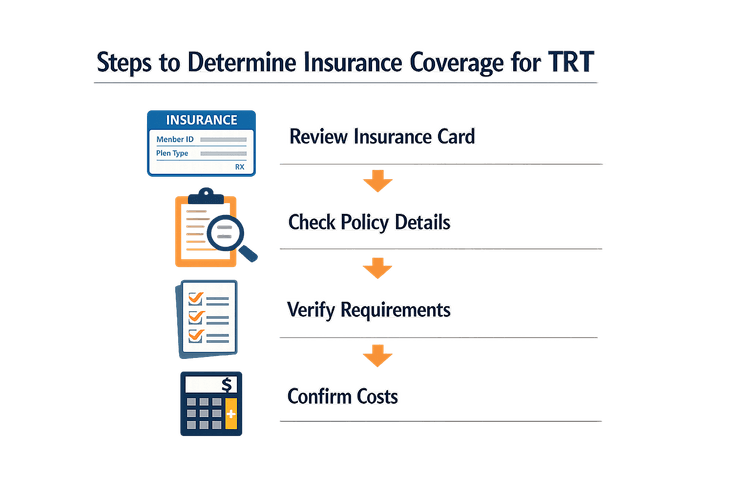
Before you call the insurance company or commit to a clinic, you need two things: a diagnosis on paper and the exact name of the drug or formulation your doctor plans to prescribe. Without both, you are asking a hypothetical question and you will get a hypothetical answer.
Step 1: Get the Diagnosis and Treatment Plan in Writing
Insurance companies do not cover symptoms. They cover conditions with diagnostic codes. Your doctor must document low testosterone with at least two morning blood draws showing total testosterone below the lab's reference range, plus symptoms consistent with hypogonadism. The code most plans recognize is ICD-10 E29.1 for testicular hypogonadism.
Request copies of both testosterone lab results and the signed diagnostic note from your physician. The note should state the ICD-10 code, symptom history, and the specific treatment recommended — brand-name TRT, generic testosterone cypionate, enclomiphene, or another option.
If your doctor plans to prescribe a compounded formulation or an off-label drug like enclomiphene citrate, write that down separately. Many plans exclude compounded medications entirely, and off-label prescriptions trigger additional review.
Step 2: Call Your Insurance Company With Specifics
Call the member services number on the back of your insurance card. Have your member ID, the diagnosis code, and the exact drug name ready. Ask three questions in this order:
- Does my plan cover [drug name] for diagnosis code E29.1?
- Is prior authorization required, and what documentation does my doctor need to submit?
- What is my copay or coinsurance after prior authorization is approved?
Write down the representative's name, the date, and a reference number for the call. If the answer changes later, this record is your starting point for an appeal.
Step 3: Verify Prior Authorization Requirements
Most plans require prior authorization for TRT. This means your doctor submits your lab results, diagnosis, and treatment rationale to the insurer before the pharmacy will fill the prescription. The insurer reviews it against their medical policy — usually a set of criteria published on their website under "medical policies" or "coverage determinations."
Prior authorization can take 3 to 14 days. If the insurer denies it, your doctor can appeal with additional documentation or peer-to-peer review. Patients receiving TRT require close monitoring, and insurers often want to see that follow-up labs and clinical visits are part of the treatment plan.
Log in to your insurance member portal and search for "testosterone" or "androgen replacement." Download the medical policy PDF. It will list the diagnostic criteria, required lab values, and any exclusions such as age limits or fertility preservation.
Step 4: Compare Costs Across Formulations and Clinics
If your plan covers TRT, compare what you will pay for different formulations: generic testosterone cypionate vials, brand-name injections, gels, or pellets. Generics are usually tier 1 or 2 with lower copays. Gels and pellets are often tier 3 or non-preferred, with higher out-of-pocket costs.
If your plan does not cover TRT, or if prior authorization is denied, price the medication without insurance. GoodRx and similar discount cards sometimes bring the cash price for a 10 mL vial of testosterone cypionate below $50. Telehealth clinics bundle labs, prescriptions, and follow-up visits into a monthly subscription, which can cost less than fighting a denial.
For more on how to evaluate a telehealth clinic's pricing and structure, see Best Online TRT Clinic: How to Choose and What to Avoid. If you are exploring natural methods to raise your levels first, How to Increase Testosterone Naturally: What Actually Moves the Number reviews lifestyle interventions backed by research.
Step 5: Document Everything and Keep Copies
Save every explanation of benefits (EOB), denial letter, prior authorization form, and lab result. If you need to appeal a denial or dispute a bill, this paper trail is the only thing that moves the process forward. Insurers and clinics lose records; you should not.
Tips and Tricks for Navigating TRT Insurance Coverage
Insurance companies process TRT claims the same way they process any other prescription: they check the diagnosis code, they check the policy exclusions, and they check whether the prescriber submitted the paperwork they asked for. Most denials happen because one of those three steps failed, not because the insurer has a vendetta against testosterone.
Get the denial reason in writing
When a claim is denied, call the number on your insurance card and ask for the specific denial code and the written explanation of benefits. "Not covered" can mean the drug is excluded, the diagnosis doesn't match the policy criteria, or the prior authorization was never filed. You cannot appeal what you do not understand.
Submit lab results with the prior authorization
Many plans require two morning testosterone results below a threshold, plus documentation of symptoms. If your doctor submits the prior authorization without attaching the labs, the insurer will deny it and ask for them later. That adds weeks. Send everything the first time.
The prior authorization form will list what the plan needs. If your doctor's office says "we'll handle it," ask them to confirm they are including the lab reports and the diagnosis code for hypogonadism.
Know what your plan calls "medically necessary"
Plans define medical necessity in the policy documents, usually under the pharmacy or endocrine section. Some require a total testosterone below 300 ng/dL on two separate mornings. Others require symptoms plus a number below 264 ng/dL. A few exclude TRT entirely if the diagnosis is age-related decline.
Read the policy language before you test. If your result is 310 ng/dL and the threshold is 300 ng/dL, the claim will be denied even if your symptoms are severe.
A claim denied for "not medically necessary" usually means the lab number was above the plan's cutoff, not that the insurer doubts your symptoms.
Use the appeal process
If the denial was wrong—your labs were below the threshold, the diagnosis code was correct, and the prior authorization included everything—file a written appeal within the timeframe stated in the denial letter. Most plans give you 180 days. Include copies of the labs, the prescription, and a letter from your doctor explaining why the treatment meets the policy criteria.
Appeals that restate the same information rarely succeed. Appeals that point to a specific policy clause the insurer missed sometimes do.
Consider the cash price before appealing
Testosterone cypionate costs $30 to $60 per vial without insurance at many pharmacies. If your copay after prior authorization is $50 and the appeal process takes two months, paying cash may be faster and cheaper. Run the numbers before you spend time on paperwork.
For patients comparing clinics and coverage options, understanding how to choose an online TRT provider can clarify which models work with insurance and which operate entirely outside it. Some patients also explore testosterone supplements for men as an alternative or adjunct to prescription therapy.
Ask about the formulary tier
Some plans cover testosterone but place it on a high-cost tier with a $100+ copay. Others cover it on tier 2 with a $20 copay. The formulary—your plan's drug list—shows the tier. If the tier is unaffordable, ask your doctor if a different formulation (injection versus gel) sits on a lower tier. Not all testosterone products are priced the same.
Conclusion
Does insurance cover TRT? It depends on documentation, diagnosis codes and your plan's specific requirements. Most plans will cover it when you have two morning testosterone results below the reference range, clear symptoms and a diagnosis that matches their medical policy. Without those pieces, you pay cash or appeal.
The steps are straightforward: get the full panel tested twice, ask your insurer for the prior authorization criteria before you schedule the appointment, and keep copies of every lab report and denial letter. If your plan denies coverage, you have the appeals process and the option to compare what online TRT clinics charge for cash-pay treatment against your out-of-pocket maximum.
The research shows TRT improves quality of life, libido and mood in men with confirmed low testosterone, but most trials were short and at high risk of bias. That evidence is enough for FDA approval and guideline support, but it also means insurers will scrutinize your diagnosis closely. Start with the labs, verify your benefits in writing, and know what you will pay before you commit to treatment.
FAQ
Does insurance cover TRT for low testosterone?Insurance covers TRT when you have documented hypogonadism: two morning testosterone tests below the plan's threshold (usually 300 ng/dL) plus symptoms. Off-label use for age-related decline or wellness typically is not covered.
What documentation do I need for insurance to cover TRT?You need two separate morning testosterone lab results below the reference range, a signed diagnosis with ICD-10 code E29.1, documented symptoms consistent with hypogonadism, and prior authorization submitted by your physician.
Will my insurance cover compounded testosterone?Most insurance plans exclude compounded medications because they are not FDA-approved. Generic testosterone cypionate or brand-name formulations on the formulary are more likely to be covered.
How long does prior authorization take for TRT?Prior authorization typically takes 3 to 14 days. If your insurer denies it, your doctor can appeal with additional documentation or request a peer-to-peer review, which adds more time.
What if my testosterone level is just above the cutoff?If your result is above your plan's threshold—for example, 310 ng/dL when the cutoff is 300 ng/dL—the claim will be denied even if you have symptoms. Some patients retest or appeal with additional clinical documentation.
Sources(23)
- U.S. Food and Drug Administration — Drug Safety Communication: FDA cautions about using testosterone products for low testosterone due to aging; requires labeling change to inform of possible increased risk of heart attack and stroke with use (2015)
- International journal of pharmaceutical compounding (2015)
- Public health reports (Washington, D.C. : 1974) (2015)
- The Journal of urology (2020)
- The journal of sexual medicine (2022)
- European urology focus (2017)
- Andrology (2025)
- The Journal of arthroplasty (2025)
- American family physician (2024)
- Current sexual health reports (2014)
- The Journal of clinical endocrinology and metabolism (2026)
- UnitedHealthcare Commercial Medical Benefit Drug Policy 2026D0076J: Testosterone Replacement or Supplementation Therapy
- F&S reviews (2020)
- The world journal of men's health (2026)
- U.S. Food and Drug Administration — Enclomiphene Citrate: FDA presentation to the Pharmacy Compounding Advisory Committee, June 8, 2022 (Madeline Wolfert, MD, CDER)
- Journal of Clinical Endocrinology & Metabolism — Testosterone Therapy in Men With Hypogonadism: An Endocrine Society Clinical Practice Guideline (2018)
- European journal of endocrinology (2024)
- Annals of internal medicine (2020)
- The Cochrane database of systematic reviews (2024)
- International journal of impotence research (2023)
- The journal of sexual medicine (2021)
- International journal of general medicine (2022)
- American Urological Association — Evaluation and Management of Testosterone Deficiency (AUA Guideline) (2018)