Peptides vs TRT: Evidence-Based Insights vs Marketing Claims
Updated
Top takeaways
- Testosterone replacement therapy (TRT) is FDA-approved for male hypogonadism; peptides marketed for testosterone support are not
- TRT prescriptions have expanded dramatically over two decades, driven largely by off-label use and direct-to-consumer advertising
- Nonhormonal alternatives exist for men who cannot or choose not to use exogenous testosterone
- Marketing claims around both peptides and TRT often outpace the published evidence
- Understanding the regulatory status and trial data behind each option matters before choosing
Introduction
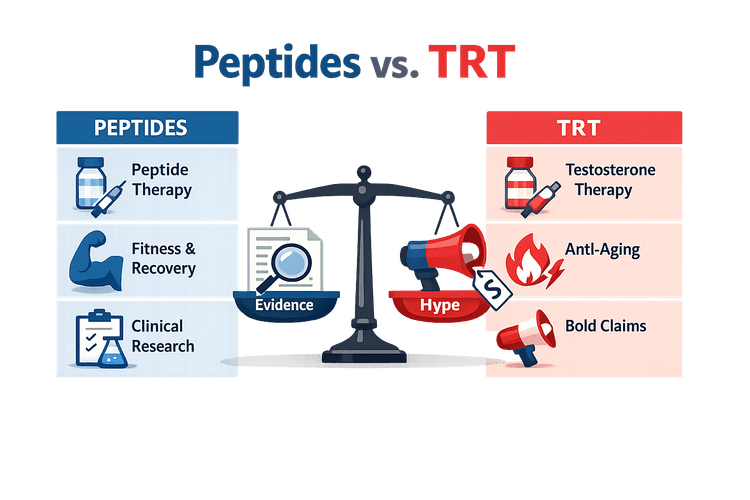
When comparing Peptides vs TRT, the distinction comes down to regulatory approval and evidence quality. Testosterone replacement therapy (TRT) is FDA-approved for male hypogonadism—a condition where the body produces insufficient testosterone. Peptides vs TRT is not a straightforward comparison because most peptides marketed for testosterone support lack FDA approval for that indication and operate in a regulatory gray zone through compounding pharmacies.
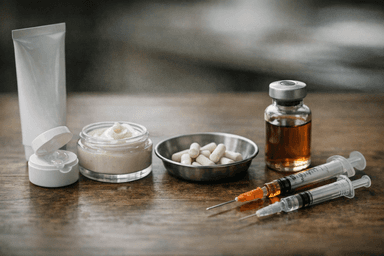
TRT prescriptions are available in creams, gels, patches, injections and pellet implants. Over the last two decades, TRT prescriptions have expanded dramatically, driven not by a rise in diagnosed hypogonadism but by off-label indications and aggressive direct-to-consumer advertising.
Peptides occupy a different space. They are marketed for testosterone support, recovery, fat loss and performance, often through telehealth clinics and compounding pharmacies. The gap between what the ads promise and what the trials actually measured is often wide.
For men trying to decide between Peptides vs TRT, the first question is not which one works better—it is what each one is approved to do, what the evidence shows it does, and what trade-offs come with it. That starts with understanding how to choose a reputable provider and knowing which claims to verify before signing up.
For patients who wish to avoid exogenous hormones, are not candidates for TRT, or cannot tolerate its side effects, nonhormonal pharmacotherapies are available. The choice between Peptides vs TRT, or alternatives, depends on your labs, your goals, and what you are willing to monitor and pay for.
What Makes Peptides vs TRT a Confusing Choice?
The testosterone market has expanded far beyond its approved indication. Over the last two decades, TRT prescriptions in the United States grew dramatically, driven largely by off-label use. Many men now receive testosterone without meeting the diagnostic criteria for hypogonadism—the condition TRT is FDA-approved to treat.
Marketing is the driver. Direct-to-consumer advertising, unbranded "disease-awareness" campaigns, sponsored continuing medical education, and ghostwritten content have all pushed testosterone into a wider population than the clinical guidelines support. A recent analysis found that exposure to both unbranded and branded television advertising correlated with increased insurance claims for TRT, even among men who had not been properly diagnosed.
The Peptide Parallel
Peptides marketed for testosterone support or hormone optimization follow a similar playbook. They are sold through telehealth platforms, compounding pharmacies, and wellness clinics with language that emphasizes benefits while sidestepping the regulatory and evidence gaps. Most peptides used in this context are not FDA-approved for the indications they are marketed for. The trials that do exist are often small, short, and funded by parties with a commercial interest in the outcome.
The confusion is structural. Patients see the same marketing channels—social media testimonials, influencer endorsements, clinic ads promising "natural" or "advanced" hormone optimization—and assume the evidence base is equivalent to that of TRT. It is not. TRT has decades of large-scale human data. Most peptides do not.
What Gets Lost in the Marketing
The marketing does not mention that TRT suppresses your own testosterone production and usually shuts down sperm production. It does not explain that peptides sold for hormone support are often compounded, unregulated, and priced at a premium with no long-term safety data. It does not tell you that the "Low T" campaigns were designed to expand the addressable market, not to improve diagnostic accuracy.
If you are comparing Peptides vs TRT, the first question is not which one is better. It is whether you have been diagnosed correctly, what the evidence actually shows for each option, and what trade-offs you are willing to accept in cost, monitoring, and fertility.
The short answer: inadequate regulation of marketing has made it nearly impossible to separate evidence from promotion. The next section walks through how to evaluate the data yourself.
Solution Steps
Before you choose between Peptides vs TRT, you need data. That means two morning testosterone tests, drawn before 10 a.m., at least a week apart. One result is not a diagnosis. The second number tells you whether the first was noise or signal.
Step 1: Get the Full Panel
Step 1
Order the complete hormone panel
Ask your doctor for total testosterone, free testosterone, SHBG, LH, FSH, estradiol, hematocrit and PSA. A total testosterone number alone does not tell you whether your axis is suppressed, whether you have primary or secondary hypogonadism, or whether a treatment will work for you. LH and FSH show whether your pituitary is signaling. SHBG affects how much testosterone is bioavailable. Hematocrit and PSA are your safety monitors.
If your doctor orders only total testosterone, you are missing the numbers that determine which treatment fits you and how to monitor it.
Step 2: Read the Trial Population and Duration
Step 2
Check who was studied and for how long
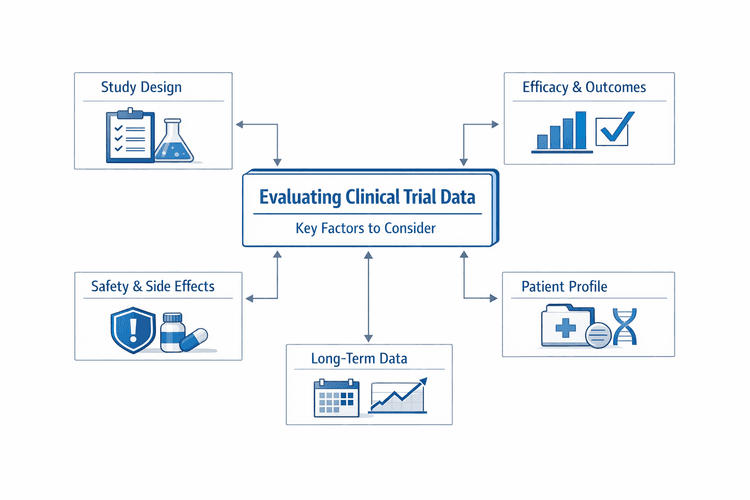
When a peptide seller cites a study, open the abstract. Look for sample size, participant age, baseline testosterone, treatment duration and endpoints measured. A 12-week trial in 30 men with normal testosterone at baseline does not support a claim about long-term use in hypogonadal men. The population studied is the population the data describes.
Most peptide trials are short-term comparisons with small sample sizes. TRT has been studied in randomized controlled trials involving thousands of participants over multiple years. A meta-analysis of 22 RCTs covering 2,351 patients found that TRT administered by injection, transdermal or oral routes did not promote prostate cancer development or progression in short-term use, but noted that long-term data with justifiable endpoints are still needed.
Step 3: Identify the Endpoint That Matters to You
Clinical trials measure specific outcomes: testosterone levels, lean mass, bone density, sexual function, mood, hematocrit, PSA. A trial showing that a peptide raises growth hormone does not mean it raises testosterone. A trial showing that TRT raises testosterone does not mean it preserves fertility. The endpoint measured is the endpoint you can trust.
If fertility is your priority, you need a treatment that preserves or stimulates LH and FSH. TRT suppresses both. If stable testosterone levels are your priority, you need a treatment with consistent pharmacokinetics. Peptides with short half-lives and variable absorption do not deliver that. For men seeking alternatives that preserve fertility, enclomiphene citrate represents a nonhormonal option that stimulates natural testosterone production.
Step 4: Ask About Regulatory Status and Compounding
TRT formulations approved by the FDA have undergone testing for purity, potency and stability. Compounded peptides do not. Compounding pharmacies are regulated by state boards, not the FDA, and product consistency varies. If your clinic is selling a compounded peptide, ask what testing the batch underwent, where it was manufactured, and whether it is covered by your insurance.
Most compounded peptides are not covered. Most FDA-approved TRT formulations are, though prior authorization may be required. Best Online TRT Clinic: How to Choose and What to Avoid covers how telehealth pricing and membership structures work when insurance does not apply.
Step 5: Plan Your Monitoring Schedule
Step 5
Set up follow-up labs before starting
Before you start any treatment, agree on a monitoring schedule with your provider. For TRT, that typically means testosterone, hematocrit, PSA and estradiol at 3 months, 6 months and annually thereafter. For peptides, monitoring protocols are less standardized because the evidence base is thinner. If your provider does not mention follow-up labs, ask why.
In contemporary practice, the objective is precision: select the right patient, aim for stable exposure, and follow a protocol that catches problems early. If your clinic does not require follow-up labs, that is a red flag.
Step 6: Compare Cost, Monitoring and Fertility Impact
| Treatment | Typical Cost | Monitoring Frequency | Fertility Impact |
|---|---|---|---|
| TRT (generic) | $30–$100/month | Every 3–6 months | Suppresses sperm production |
| TRT (brand) | $200–$500/month | Every 3–6 months | Suppresses sperm production |
| Compounded peptides | $150–$400/month | Variable, often less frequent | Varies by peptide; data limited |
The cheapest option is not always the one that delivers stable levels or preserves fertility. The most expensive option is not always the one with the best evidence. The option that fits you is the one that matches your lab results, your goals and your willingness to monitor.
Tips and Tricks
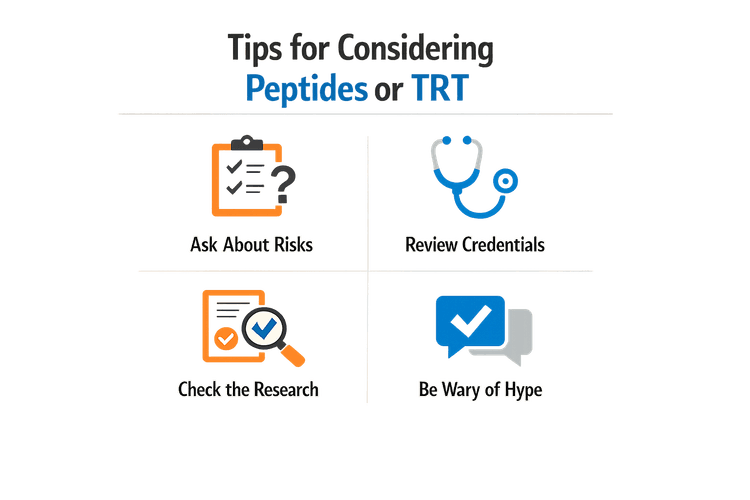
Before you commit to any treatment, test first and test twice. Get two morning testosterone measurements at least a week apart, along with LH, FSH, SHBG, estradiol, hematocrit and PSA. Without that baseline panel, nobody can tell you whether your testosterone is actually low or what treatment fits your physiology. One morning result is not a diagnosis.
Questions to Ask Your Provider
Ask your doctor for the trial data behind any peptide they recommend. If they cannot name the study, its population size, and its duration, the evidence is thin. For TRT, ask about monitoring frequency: hematocrit every three months in the first year, then every six months. Ask what happens to fertility and whether sperm banking makes sense for you. Ask about the cost breakdown: drug, labs, follow-up visits. The number that matters is what you pay over twelve months, not the first month's teaser rate.
For peptides marketed as alternatives to TRT, ask whether the compound is FDA-approved for testosterone deficiency or prescribed off-label. Ask whether it is pharmacy-grade or compounded. The regulatory status tells you how much post-market surveillance exists and whether insurance might cover it. Nobody selling it will tell you this up front.
How to Assess Credibility of Claims
When a clinic or supplement ad cites "studies," look for three things: sample size, study duration, and whether the endpoint was actually testosterone or something softer like "vitality." A twelve-week trial in twenty men is not the same as a year-long trial in two hundred. If the claim says "but the fine print says "supports healthy testosterone," that is marketing, not a measured effect.
The cheapest way to evaluate a treatment claim is to ask for the PubMed ID and read the abstract yourself—if they cannot provide it, the claim is unsupported.
Check whether the trial was industry-funded and whether the authors disclosed financial ties to the manufacturer. Funding does not invalidate a study, but it tells you to read the methods section carefully. Look at dropout rates: if more than twenty percent of participants left the trial early, ask why.
Before signing up with a telehealth clinic, read the membership terms. Some bill monthly and require three months' notice to cancel. Some charge separately for labs, follow-up consults, and medication adjustments. Some include medication in the membership fee, others bill it separately. The total cost over a year varies by hundreds of dollars depending on how these are structured. Worth knowing before you sign up.
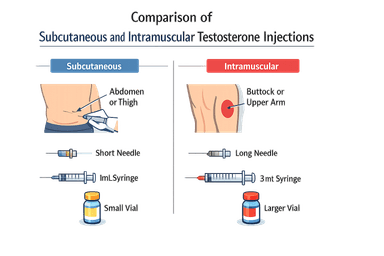
If you are considering subcutaneous testosterone injections, ask your provider for guidance on self-administration technique and injection-site rotation. Subcutaneous is less painful than intramuscular and easier to do at home, but it still requires proper instruction. Do not assume the clinic will walk you through it after you have paid.
For a detailed breakdown of what to look for when choosing a provider, see our guide on how to choose an online TRT clinic and what to avoid. Before committing to either option, consider whether natural testosterone optimization strategies might address your levels without pharmacological intervention.
Conclusion
The question of Peptides vs TRT comes down to what the trials measured versus what the marketing promised. TRT has decades of human data showing it raises testosterone reliably, with known trade-offs in fertility, monitoring requirements and cardiovascular risk profiles that are still being studied. Peptides marketed for testosterone or anti-aging have thin human evidence—small studies, short durations, endpoints that often measure intermediate markers rather than clinical outcomes.
Before you choose either path, test twice. Two morning testosterone results, plus LH and FSH, tell you whether your body is making enough signal or enough hormone. That distinction determines which intervention fits your biology. A clinic that skips those tests or rushes you into a subscription before the labs come back is selling a product, not diagnosing a condition.
The physician should discuss with you the potential benefits and risks of TRT. The same standard applies to peptides, even though most sellers skip that conversation. Ask for the trial: population size, duration, what it actually measured and who funded it. If the answer is a rodent study or a white paper from the compound's distributor, you are reading marketing. For guidance on evaluating online providers before you sign up, start with their lab requirements and whether they separate diagnosis from sales.
The short answer: TRT is a prescription drug with known effects and known risks. Peptides are investigational compounds with sparse human data and regulatory ambiguity. Neither is risk-free, and neither replaces the free interventions—weight loss, sleep apnea treatment, alcohol reduction—that move the number without a needle. Test first, read the trial, and make the decision with a provider who will monitor you through it.
Frequently asked questions
How do Peptides vs TRT differ in FDA approval status?
TRT formulations are FDA-approved for treating male hypogonadism. Most peptides marketed for testosterone support are prescribed off-label through compounding pharmacies and lack FDA approval for that specific indication.
What is the main evidence difference between Peptides vs TRT?
TRT has decades of large-scale randomized controlled trials with thousands of participants. Peptide trials are typically small (often fewer than 50 participants), short-duration studies with limited long-term safety data.
Does Peptides vs TRT impact fertility differently?
TRT suppresses natural testosterone production and typically shuts down sperm production. Peptide effects on fertility vary by compound and are less documented, though some peptides claim to preserve natural hormone production.
How do monitoring requirements compare for Peptides vs TRT?
TRT requires standardized monitoring: testosterone, hematocrit, PSA and estradiol every 3-6 months initially, then annually. Peptide monitoring protocols are less standardized because the evidence base is thinner and regulatory oversight is limited.
What cost difference exists between Peptides vs TRT?
Generic TRT costs $30-$100/month and is often insurance-covered. Compounded peptides typically cost $150-$400/month and are rarely covered by insurance, making them significantly more expensive over time.
Sources(30)
- International journal of impotence research (2023)
- Archivio italiano di urologia, andrologia : organo ufficiale [di] Societa italiana di ecografia urologica e nefrologica (2025)
- Food & nutrition research (2021)
- Food & nutrition research (2021)
- International journal of pharmaceutical compounding (2015)
- The world journal of men's health (2026)
- Journal of cachexia, sarcopenia and muscle (2024)
- Journal of the International Society of Sports Nutrition (2008)
- The Journal of arthroplasty (2025)
- FP essentials (2023)
- American journal of cardiovascular drugs : drugs, devices, and other interventions (2025)
- BMJ open (2017)
- European urology focus (2017)
- Prostate cancer and prostatic diseases (2014)
- International journal of impotence research (2023)
- The Journal of clinical endocrinology and metabolism (2026)
- The aging male : the official journal of the International Society for the Study of the Aging Male (2015)
- Translational andrology and urology (2020)
- Clinical endocrinology (2004)
- Current opinion in endocrine and metabolic research (2019)
- European journal of endocrinology (2024)
- The Cochrane database of systematic reviews (2024)
- The aging male : the official journal of the International Society for the Study of the Aging Male (2026)
- International braz j urol : official journal of the Brazilian Society of Urology (2025)
- JAMA internal medicine (2026)
- Endocrine practice : official journal of the American College of Endocrinology and the American Association of Clinical Endocrinologists (2023)
- Thrombosis research (2021)
- The world journal of men's health (2015)
- BMJ open (2017)
- The Journal of clinical endocrinology and metabolism (2018)