TRT Hematocrit: Why It Rises and What Clinics Do About It

Updated
Introduction
Hematocrit on TRT rises because testosterone replacement therapy raises your testosterone. It also raises your red blood cell count. The second effect is predictable, common, and the reason your clinic checks a complete blood count every few months. Hematocrit on TRT rises because exogenous testosterone stimulates erythropoiesis — the process that makes new red blood cells. More red cells mean thicker blood, and past a threshold, thicker blood carries cardiovascular risk.
Elevated hematocrit represents the most common adverse event related to TRT. It shows up in labs as a hematocrit percentage above the reference range, typically above 52–54 percent depending on the lab. When it happens, clinics pause, adjust or switch your protocol. The goal is to keep your testosterone in range without pushing your blood count into the danger zone.
This article explains why hematocrit rises on TRT, what level triggers concern, and the steps clinics take to manage it. Before starting therapy, it helps to know what monitoring looks like and what your options are if your count climbs. If you are comparing clinics, ask how often they check hematocrit and what their threshold is for intervention — the answer tells you whether they are reading the research or running a prescription mill. For a broader view of how to choose an online TRT clinic, including lab frequency and safety protocols, that guide walks through the questions worth asking before you sign up.
What Hematocrit Measures
Hematocrit is the percentage of your blood volume occupied by red blood cells. A normal range for adult men is roughly 38–50 percent, though labs vary. When you start TRT, testosterone signals your bone marrow to produce more red cells. Over weeks to months, your hematocrit climbs. For some men it stays in range; for others it crosses 52 or 54 percent, the threshold where most guidelines recommend action.
The benefit of more red cells is better oxygen transport. The risk is increased blood viscosity, which may raise the chance of clot formation. The evidence on cardiovascular outcomes is mixed — some evidence suggests no increased event rate, others suggest a signal — but the precautionary principle is to monitor and intervene when hematocrit exceeds guideline cutoffs.
The Problem of Elevated Hematocrit on TRT
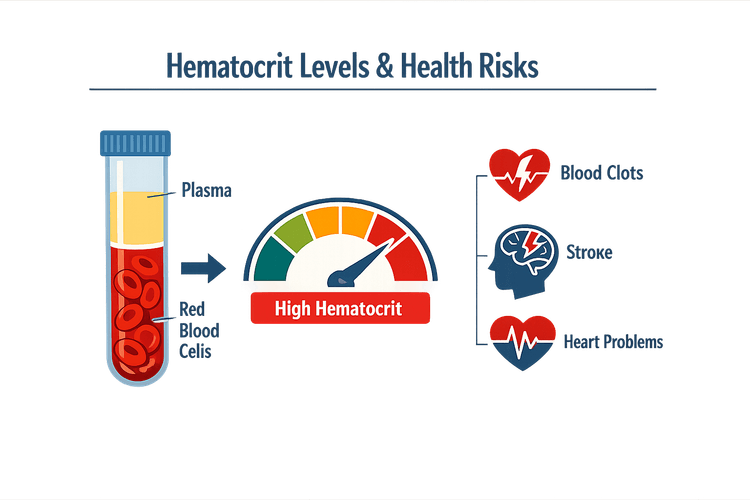
Hematocrit measures the percentage of your blood volume occupied by red blood cells. A normal range for adult men sits between 38.3% and 48.6%, depending on the lab. When you start TRT, that number climbs. Elevated hematocrit is the most common adverse event related to testosterone replacement — not mood swings, not acne, not gynecomastia.
Testosterone drives erythropoiesis, the process that tells your bone marrow to produce more red blood cells. More red blood cells mean better oxygen transport to tissues, which sounds like a performance win. The trade-off is thicker blood. Thicker blood moves slower, clots more easily, and raises the risk of venous thromboembolism, heart attack, stroke, and pulmonary embolism. The FDA issued a warning on this exact mechanism.
Why Does Hematocrit on TRT Matter?
Your clinic monitors hematocrit because the line between therapeutic and risky is narrow. A hematocrit of 52% might feel fine. A hematocrit of 54% puts you in the range where clotting risk starts to climb measurably. The problem is that symptoms lag behind the lab value — you won't feel the difference between 50% and 54% until something goes wrong.
Clinics typically check hematocrit at baseline, then again at three months, six months, and annually after that. If your hematocrit crosses 54%, most protocols call for dose adjustment or therapeutic phlebotomy. Some clinics set the threshold at 52%. The exact cutoff varies, but the principle does not: elevated hematocrit on TRT is manageable only if you catch it early.
The Cardiovascular Risk You Don't Feel
Increased red blood cell production improves oxygen delivery, which is why some athletes chase it. But the same mechanism that boosts performance also thickens blood viscosity. Thicker blood strains the cardiovascular system, especially in men over 50 or those with pre-existing hypertension, sleep apnea, or smoking history.
The published trials show that hematocrit increases are dose-dependent. Higher testosterone doses produce higher hematocrit levels. Injectable testosterone tends to raise hematocrit more than transdermal gels, likely because peak serum levels are higher. If you are on 200 mg per week of testosterone cypionate and your hematocrit is climbing, the first intervention is usually dose reduction, not adding another drug.
Before starting TRT, ask your provider what their hematocrit threshold is and what they do when you cross it. If the answer is vague or missing, that is worth knowing before you sign up. For a detailed breakdown of how to evaluate a clinic's monitoring protocols, see Best Online TRT Clinic: How to Choose and What to Avoid.
Steps Clinics Take to Manage Hematocrit Levels
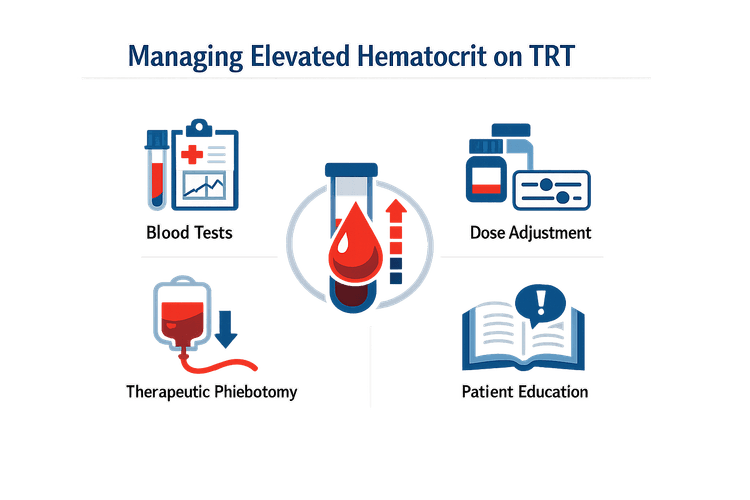
Clinics that prescribe testosterone replacement therapy monitor hematocrit because the drug raises red blood cell production. The way they manage elevated levels varies by protocol, patient response, and how high the number climbs. Here is what most clinics do when hematocrit rises above the reference range.
Regular Blood Work and Monitoring
Clinics typically order a complete blood count at baseline, then again at three months, six months, and annually after that. Some order it more often if the patient's hematocrit climbs quickly or starts near the upper limit. The number that matters is hematocrit itself—the percentage of blood volume occupied by red blood cells. Most labs flag values above 54 percent in men.
Monitoring catches the rise early. Testosterone stimulates erythropoiesis through an initial increase in erythropoietin and a parallel decrease in hepcidin, the master iron regulator protein. The effect is dose-dependent and varies by delivery method—injections tend to produce larger swings than gels or patches.
Dose Adjustment
When hematocrit climbs above 54 percent, many clinics reduce the testosterone dose by 20 to 30 percent and recheck in six to eight weeks. Lowering the dose often brings hematocrit back into range without stopping therapy entirely. Some clinics also switch the patient from weekly injections to twice-weekly or every-other-day protocols, which smooth out peak testosterone levels and may reduce the erythropoietic stimulus.
Dose adjustment is the first-line response in most protocols. It preserves the benefits of TRT while addressing the side effect. Not every clinic follows the same threshold—some wait until hematocrit exceeds 55 percent, others act at 52 percent if the patient has cardiovascular risk factors.
Step 1
Baseline and follow-up labs
Order a complete blood count before starting TRT, then repeat at three months, six months, and annually. If hematocrit rises above 52 percent, recheck every six to eight weeks until it stabilizes.
Step 2
Lower the dose or change frequency
Reduce testosterone dose by 20 to 30 percent if hematocrit exceeds 54 percent. Alternatively, split the weekly dose into smaller, more frequent injections to reduce peak levels.
Therapeutic Phlebotomy
When dose adjustment does not bring hematocrit down, or when the patient needs to stay at a higher dose for symptom control, clinics refer the patient for therapeutic phlebotomy. This is a blood draw—typically one unit, or about 450 milliliters—done every eight to twelve weeks. Removing blood directly lowers red blood cell mass and hematocrit.
Phlebotomy is a procedure that requires coordination with a blood bank or donation center. Some patients donate through the Red Cross if they meet eligibility criteria; others need a prescription for therapeutic venesection at a hospital or clinic. The procedure costs vary—donation is free, but a prescribed phlebotomy can run $100 to $300 per session depending on the facility.
Therapeutic phlebotomy removes red blood cells directly and usually brings hematocrit back into range within two to three sessions.
Temporary Discontinuation
If hematocrit climbs above 55 percent and does not respond to dose reduction or phlebotomy, some clinics pause TRT for four to eight weeks. Hematocrit typically falls during the break, and therapy resumes at a lower dose once the level normalizes. This is the least common intervention because most patients prefer to stay on therapy, and the other measures usually work.
Before choosing a clinic, ask how they monitor and manage hematocrit—it tells you whether their protocol includes regular labs and a plan for elevated levels.
Step 3
Refer for therapeutic phlebotomy
If hematocrit remains above 54 percent after dose adjustment, schedule therapeutic phlebotomy every eight to twelve weeks until the level stabilizes below 52 percent.
Tips for Patients on TRT Regarding Hematocrit

Test before you change anything. If your hematocrit rises on TRT, the first step is knowing exactly where it stands. A single high reading on a random afternoon does not tell you much. Ask for a morning draw when you are well-hydrated. Dehydration alone can push hematocrit up two or three points, and that number disappears when you drink water.
Know the Number That Triggers Action
Most clinics pause or adjust TRT when hematocrit crosses 54 percent. Some use 52 percent. Ask your prescriber where they draw the line and what they will do when you reach it. If the clinic does not monitor hematocrit at regular intervals, that is worth knowing before you sign up. Elevated hematocrit is the most common adverse event on TRT, and proper monitoring is not optional.
Hydration, Donation and Dose
Drink enough water that your urine stays pale yellow. Chronic low-grade dehydration makes hematocrit look worse than it is. If your hematocrit climbs into the low 50s, some clinics will send you to donate blood. One unit drops hematocrit by about three points for most people. Others will lower your testosterone dose or switch you from injections to a gel or patch, because the way you take testosterone affects how much your red cell count rises.
If your prescriber suggests stopping TRT entirely without discussing dose adjustment, donation or a different delivery method, ask why. Stopping cold brings back the symptoms you started treatment to fix, and there are other options to try first.
The cheapest intervention is water and a morning blood draw when you are actually hydrated.
What You Can Control
You cannot control how your bone marrow responds to testosterone, but you can control how often you check it. Schedule hematocrit at three months, six months and then twice a year if it stays stable. If it trends up, test more often. If you move to a new online TRT clinic, make sure the intake includes a full panel with hematocrit, hemoglobin and red blood cell count.
Do not ignore a rising trend because you feel fine. The risks—blood clots, heart attack, stroke, pulmonary embolism—do not announce themselves with symptoms until they happen. The number on the lab report is the early warning.
Conclusion
Hematocrit on TRT rises in most men because testosterone increases red blood cell production. The evidence indicates that hemoglobin and hematocrit elevations are the most common lab changes on replacement therapy, and the FDA has issued a warning about the risk of blood clots tied to those increases. That is not a reason to skip treatment if you need it, but it is a reason to test regularly and know the number.
Clinics that monitor hematocrit every three to six months can catch elevation early, before it becomes a problem. The options they use—dose reduction, frequency changes, therapeutic phlebotomy—work for most patients, and the choice depends on how high the number is and how you respond. If your clinic does not check hematocrit at baseline and on follow-up, that is a gap worth closing before you sign up.
The short answer: hematocrit goes up on TRT because the hormone tells your bone marrow to make more red cells. Regular monitoring and a clinic that adjusts when needed keep the risk low. If you want a fuller picture of how to evaluate a provider before you start, read Best Online TRT Clinic: How to Choose and What to Avoid for the checklist that covers lab frequency, transparency and cost.
Frequently asked questions
What is a normal hematocrit on TRT?
A normal hematocrit range for adult men is 38–50 percent. On TRT, hematocrit often rises above baseline but should stay below 52–54 percent. Most clinics intervene when hematocrit exceeds 54 percent because higher levels increase clotting risk.
How quickly does hematocrit rise on TRT?
Hematocrit typically begins rising within the first few months of TRT and peaks around six to twelve months. The rate and magnitude depend on testosterone dose, delivery method, and individual response. Injectable testosterone tends to raise hematocrit more than gels.
Can I donate blood to lower hematocrit on TRT?
Yes. Therapeutic phlebotomy or blood donation removes red blood cells and lowers hematocrit. One unit of blood (about 450 mL) typically reduces hematocrit by approximately three percentage points. Many patients donate every eight to twelve weeks to maintain safe levels.
Will lowering my TRT dose reduce hematocrit?
Yes. Reducing testosterone dose by 20–30 percent often brings hematocrit back into range within six to eight weeks. Some clinics also switch patients from weekly injections to more frequent smaller doses, which can moderate the erythropoietic response.
What are the risks of high hematocrit on TRT?
Elevated hematocrit increases blood viscosity, which raises the risk of venous thromboembolism, stroke, heart attack, and pulmonary embolism. The FDA has issued warnings about these risks. Regular monitoring and timely intervention keep these risks manageable.
Sources(10)
- testosterone-therapy (category_overview)
- testosterone-gel (safety_warning)
- testosterone-gel (safety_warning)
- testosterone-injection (safety_warning)
- testosterone-therapy (category_overview)
- hematocrit (category_overview)
- hematocrit (category_overview)
- hematocrit (diagnostic_criterion)
- hematocrit (category_overview)
- hematocrit (category_overview)