Is TRT Safe? Testosterone Replacement Therapy Decision Guide

Updated
Introduction to Testosterone Replacement Therapy
Testosterone replacement therapy is prescribed to more men every year in the United States, and the trend has accelerated over the past decade. The FDA approves TRT only for classic hypogonadism — a diagnosis that requires both low testosterone levels and a known cause, such as pituitary or testicular disease — but off-label prescribing for age-related decline and non-specific symptoms has become common.
The evidence on benefits and risks is mixed, and the balance depends on who was studied and for how long. Most trials enrolled men over 40 with low testosterone and symptoms such as fatigue, low libido, or difficulty building muscle. The trials measured changes in muscle mass, bone density, sexual function, and quality of life, but few ran longer than one year, and none were large enough to measure effects on heart attacks, strokes, or prostate cancer with confidence.
If you are considering TRT, the first step is not choosing a clinic or a delivery method — it is getting the right lab work, twice, and understanding what the numbers mean. One morning result is not a diagnosis. Learn how to choose a reputable online TRT clinic after you have confirmed low testosterone with proper testing.
This guide covers what TRT is and how it works, why it matters for men over 40, how to approach testing and treatment decisions, best practices for monitoring, common mistakes that lead to wasted money or unnecessary risk, and answers to the questions clinics do not always address up front.
Explore testosterone replacement therapy for men over 40, including benefits, risks, testing, and options.
What Is Testosterone Replacement Therapy?
Testosterone replacement therapy (TRT) is the use of prescription testosterone to raise blood levels in men with diagnosed hypogonadism. The FDA approves TRT only for classic hypogonadism — when your body cannot produce enough testosterone due to testicular or pituitary failure. Off-label use has expanded prescriptions significantly, but the legal indication remains narrow.
TRT delivers synthetic testosterone through several formulations. Each has different absorption rates, dosing schedules and cost structures.
Available TRT Formulations
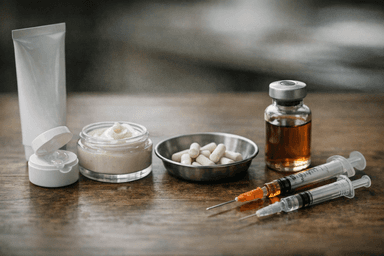
Prescriptions for TRT are available in various formulations, including creams, gels, solutions, patches, intramuscular injections, and subcutaneous pellet implantation. The choice depends on convenience, cost, insurance coverage and how stable you need your levels.
| Formulation | Frequency | Typical Cost Range |
|---|---|---|
| Daily gels/creams | Once daily | $100–$500/month |
| Patches | Once daily | $200–$400/month |
| Injections (IM) | Weekly to biweekly | $30–$100/month |
| Pellets (subcutaneous) | Every 3–6 months | $500–$1,500/procedure |
Injections are the cheapest and most studied. Gels and creams avoid needles but cost more and require daily application. Pellets are the least frequent but involve a minor surgical procedure every few months.
What TRT Does Not Include
TRT is not the same as anabolic steroid cycles, peptide therapy or over-the-counter testosterone boosters. It is a prescription treatment for a diagnosed hormone deficiency. Clinics that advertise TRT for "optimization" or "low-normal" levels are operating outside the FDA-approved indication.
Before choosing a formulation, you need two morning testosterone results showing levels below the reference range, plus symptoms that match hypogonadism. Without both, TRT is off-label. For more on evaluating clinics that offer these services, see Best Online TRT Clinic: How to Choose and What to Avoid.
Why Testosterone Replacement Therapy Matters for Men Over 40
Testosterone declines in most men after age 30, dropping roughly one percent per year. By 40, many notice fatigue, strength loss, mood changes and reduced libido. Not all of these symptoms come from low testosterone — weight gain, poor sleep and stress mimic the same pattern — but when the lab confirms low levels and symptoms match, TRT is prescribed more often now than at any point in the past decade.
The question is not whether testosterone drops with age. It does. The question is whether raising it back up improves health outcomes that matter, and whether the trade-offs are worth it for you.
What TRT Is Prescribed to Treat
TRT is approved for men with hypogonadism — persistently low testosterone confirmed by two morning blood draws and symptoms that interfere with daily function. Symptoms include low energy, reduced muscle mass, difficulty concentrating, mood swings and diminished sexual interest. The treatment replaces what the body no longer produces in sufficient quantity.
What it is not approved for: normal aging without symptoms, athletic performance, body composition goals in men with normal levels, or any use in men trying to conceive. Prescribing outside these boundaries happens, but it is off-label and changes the risk profile.
The Benefits Supported by Trials
Short-term trials show TRT improves lean muscle mass, bone density and mood in men with confirmed low testosterone. Energy and libido often improve within weeks. Sexual function improves in some men, though results vary and depend on whether low testosterone was the primary cause of dysfunction.
Longer trials are fewer and smaller. One meta-analysis covering multiple administration methods found no short-term increase in prostate cancer risk, though the authors noted that long-term data with clear endpoints are still needed. Another review focused on musculoskeletal outcomes in older men found benefits for bone and muscle, but called the balance of harms and benefits "uncertain" over extended periods.
The Risks That Matter
TRT shuts down sperm production in most men. If fertility is a goal now or in the next few years, TRT is the wrong choice. Enclomiphene, clomiphene and hCG preserve fertility by raising testosterone without suppressing the signal to the testes, though they raise testosterone less reliably than TRT does.
Other risks include elevated hematocrit (which increases clot risk), worsening sleep apnea, acne and mood swings. Prostate cancer has been a longstanding concern. Current evidence does not show that TRT causes prostate cancer, but men with existing prostate disease are typically excluded from trials, so the data do not settle the question for that group.
Cardiovascular risk is debated. Some observational studies suggest harm; others suggest benefit. The trials are not large enough or long enough to answer the question definitively. If you have a history of heart disease or stroke, discuss this gap with your doctor before starting.
Who Should Not Use TRT
TRT is contraindicated in men trying to conceive, men with untreated prostate or breast cancer, men with a hematocrit above 54 percent, and men with untreated severe sleep apnea. It is also a poor fit for men whose testosterone is low because of a reversible cause — obesity, uncontrolled diabetes, or alcohol use — that can be addressed first.
Before starting TRT, test twice. One low morning result is not a diagnosis. The panel should include total testosterone, free testosterone, LH, FSH, estradiol, hematocrit and PSA. Without LH and FSH, nobody can tell whether your low testosterone is primary (testicular failure) or secondary (pituitary signal problem), and that distinction changes which treatments are appropriate.
Short-term data show TRT does not promote prostate cancer development or progression, but long-term trials with justifiable endpoints are still needed.
Why This Decision Is Not Reversible
Stopping TRT does not always restore your baseline. Some men recover normal testosterone production after stopping; others do not. Fertility may return, but it can take months to years, and in some cases it does not return at all. The longer you stay on TRT, the less certain recovery becomes.
This is why the decision matters. TRT is not a trial you can walk away from cleanly. Once you start, you may be committing to lifelong therapy. If you are unsure, address the reversible factors first: lose weight if overweight, treat sleep apnea if present, reduce alcohol, fix your training program. How to Increase Testosterone Naturally: What Actually Moves the Number covers the non-medication levers that move the number without shutting down your own production.
How to Approach Testosterone Replacement Therapy
Before anyone prescribes testosterone, you need two morning results and a full panel. One low number is not a diagnosis. Testosterone varies by hour, by sleep quality, by stress. A single test taken at 3 PM or after a bad night tells you nothing reliable.
Test first, test twice. Draw blood between 7 and 10 AM on separate days, at least a week apart. The panel should include total testosterone, free testosterone, SHBG, LH, FSH, estradiol, hematocrit, and PSA if you are over 40. Without LH and FSH, nobody can tell whether your testicles are failing or your pituitary is signaling poorly—and that distinction determines which treatment fits you.
What the Numbers Mean
Total testosterone reference ranges run wide, often 300 to 1,000 ng/dL. A result of 320 ng/dL with symptoms is not the same as 320 ng/dL without them. Free testosterone—the fraction not bound to SHBG—matters more for how you feel, but many labs do not measure it directly. Calculated free testosterone from total and SHBG is acceptable if the lab uses a validated formula.
LH and FSH tell you where the problem lives. Low testosterone with low or normal LH suggests secondary hypogonadism—the pituitary is not sending the signal. Low testosterone with high LH suggests primary hypogonadism—the testicles are not responding. The first often responds to enclomiphene or hCG; the second usually requires TRT. Enclomiphene Citrate: What the Research Actually Shows covers how that option compares with TRT in mechanism and trade-offs.
Choosing a Clinician
Find a provider who orders the full panel before prescribing, not one who starts with a symptom checklist and a credit card. Telehealth clinics that advertise "low T treatment in 48 hours" are selling a subscription, not a diagnosis. A legitimate evaluation includes medical history, physical exam, at least two morning labs, and a discussion of risks, monitoring requirements, and fertility impact.
Ask what the monitoring schedule will be. Guidelines recommend checking testosterone, hematocrit and PSA at baseline and at least annually in men over 40. Some clinicians recheck at three months after starting, then every six to twelve months. If a provider says "we'll check when you feel like it," that is not monitoring—it is hoping nothing goes wrong.
What to Discuss Before Starting
Talk through fertility plans. TRT usually suppresses sperm production; the effect reverses in most men after stopping, but not all, and not immediately. If you want children in the next few years, enclomiphene or hCG may preserve fertility better. If fertility is not a concern, TRT offers more reliable symptom control.
Understand the delivery method. Injections, gels, patches and pellets all raise testosterone; they differ in cost, convenience, and how stable the levels stay. Injections are cheapest and require the least frequent dosing. Gels cost more, absorb variably, and transfer to others through skin contact. Pellets are expensive, inserted surgically every few months, and difficult to adjust if levels run too high.
Know what it costs you in money, monitoring and time. Monthly costs range from under $30 for generic injectable testosterone to over $500 for pellets or name-brand gels. Insurance covers some formulations for diagnosed hypogonadism; telehealth subscriptions rarely bill insurance and add membership fees on top of the drug cost. Monitoring labs run $100 to $300 per panel without insurance.
One low number is not a diagnosis, and a clinic that starts treatment without a second morning draw is guessing.
Best Practices for Monitoring and Managing TRT
Once you start TRT, the number that mattered before — your baseline testosterone — becomes less important than what happens next. Your doctor should order labs at baseline, then again at least annually. Men 40 and older need three tests tracked every year: serum testosterone, hematocrit, and prostate-specific antigen (PSA). That is the minimum.
The American Family Physician guideline says clinicians should monitor for symptom improvement, potential adverse effects, and adherence. Symptom improvement means asking whether the fatigue, mood or libido issues that led you to test in the first place are actually better. Adverse effects include rising hematocrit (your blood getting thicker), acne, sleep apnea worsening, and testicular shrinkage. Adherence means whether you are actually taking the medication as prescribed — injections, gels and patches all have different compliance patterns.
What Gets Measured and When
Total and free testosterone should be checked 3 to 6 months after starting, then yearly if stable. Your doctor is looking for a level in the mid-normal range, not the top of the reference interval. Higher is not better once you are above 450 ng/dL total.
Hematocrit rises on TRT because testosterone stimulates red blood cell production. A hematocrit above 54% increases stroke risk. If yours climbs that high, your doctor may lower your dose, switch your delivery method, or have you donate blood. Some men cannot tolerate TRT because their hematocrit will not stay below that threshold.
PSA should be measured at baseline and annually. A sharp rise — more than 1.4 ng/mL in a year, or more than 0.4 ng/mL if you started below 2 ng/mL — warrants a urology referral. TRT does not cause prostate cancer, but it can accelerate an existing tumor. That is why the baseline PSA matters.
Adjusting Dose and Delivery
If your symptoms do not improve after 3 months at a stable testosterone level in the normal range, adding more testosterone will not fix it. The problem is either that low testosterone was not the cause, or that another issue — sleep apnea, thyroid, depression, alcohol — is still present.
If side effects emerge, your doctor has three levers: lower the dose, change the delivery method, or stop. Gels cause more skin reactions and accidental transfer to partners or children. Injections cause more hematocrit rise and mood swings between doses. Pellets are harder to reverse if something goes wrong. No delivery method is universally better; the right one is the one you will use consistently and that keeps your labs in range.
Fertility and Future Planning
TRT suppresses sperm production in most men. If fertility matters now or might matter in the next few years, ask your doctor about enclomiphene or hCG instead. Both raise testosterone without shutting down your own production. You can read more about those options in Enclomiphene Citrate: What the Research Actually Shows.
If you are already on TRT and want to preserve or restore fertility, stopping TRT and starting hCG or clomiphene can bring sperm counts back in many men, but it takes 6 to 12 months and is not guaranteed. Plan ahead.
The three numbers that matter every year: testosterone, hematocrit, PSA.
When to Stop
Some men stop TRT because the side effects outweigh the benefits. Others stop because their symptoms did not improve. A smaller group stops because life circumstances change — a new partner, a desire for children, or a medical condition that makes TRT risky.
Stopping TRT means your testosterone will drop back to where it was before, or lower, for several months while your own production restarts. That transition period can feel worse than the original symptoms. Your doctor may prescribe a medication to help restart your natural production, or may just wait. Either way, expect it to take time.
Common Mistakes in Testosterone Replacement Therapy Decisions
Most men who start TRT without a clear diagnosis are working from one afternoon blood draw and a symptom list that matches fifty other conditions. That is mistake one. The second is signing up before asking what monitoring costs, how often labs are required, and whether the clinic bills insurance or requires cash every month.
Starting Without Two Morning Results
One low number does not confirm low testosterone. The Endocrine Society guideline requires two morning samples, collected before 10 a.m., showing total testosterone below 300 ng/dL. A single result can reflect poor sleep, recent illness, or the time of day the sample was drawn. Without a second test, you do not know if the number is stable or a temporary dip.
Many telehealth clinics will prescribe from one result. That is not malpractice, but it is not the standard either. If your first test is low, test again a week or two later before committing to lifelong therapy.
Ignoring LH and FSH
Total and free testosterone tell you the level. LH and FSH tell you why it is low. If LH is low or low-normal, the pituitary is not signaling the testes—that is secondary hypogonadism, and enclomiphene or hCG may work. If LH is high and testosterone is low, the testes are not responding—that is primary hypogonadism, and TRT is the only reliable option.
Starting TRT without checking LH means you may be suppressing a system that could have restarted with a different drug. Once you are on TRT, baseline LH is gone, and you will not know what you had.
Choosing a Clinic by Price Alone
The lowest monthly fee often hides the highest total cost. Some clinics charge $99 per month but require labs every eight weeks at $250 each, billed separately. Others include labs in the subscription but require you to visit a local draw site that does not take insurance. A third group includes everything but ships only one formulation, and if it does not work for you, switching costs extra.
Before you sign up, ask:
- How often are labs required, and what do they cost?
- Are follow-up visits included, or billed per call?
- If I need to adjust dose or switch formulations, what does that cost?
- Do you bill insurance, or is this cash-only?
Best Online TRT Clinic: How to Choose and What to Avoid covers the full pricing structure and what to verify before the first charge.
Skipping Hematocrit and PSA Monitoring
TRT raises red blood cell production. In some men, hematocrit climbs above 54%, which increases the risk of clot and stroke. Monitoring every three to six months catches this before it becomes a problem. If hematocrit is high, the fix is simple: donate blood, reduce dose, or switch formulations.
PSA (prostate-specific antigen) monitoring is required for men over 40 before starting TRT and periodically during treatment. TRT does not cause prostate cancer, but it can accelerate growth of an existing tumor. A baseline PSA and a digital rectal exam let your doctor track changes.
Clinics that do not require hematocrit and PSA are not following the guidelines. That is a red flag.
Treating Symptoms Without Ruling Out Other Causes
Fatigue, low libido, and weight gain are common in men with low testosterone. They are also common in men with normal testosterone and untreated sleep apnea, obesity, depression, or thyroid dysfunction. Starting TRT without addressing those conditions means you are treating one variable and ignoring three others.
If your testosterone is low-normal (300–400 ng/dL) and you have significant symptoms, check:
- TSH and free T4 for thyroid function
- Fasting glucose and HbA1c for insulin resistance
- Sleep study if you snore, wake unrefreshed, or have a thick neck
- Weight: losing 10–15% of body weight raises testosterone in overweight men by an average of 50–100 ng/dL in published trials
TRT will not fix untreated sleep apnea, and it may worsen insulin resistance if you do not address diet and activity.
Two morning samples below 300 ng/dL, plus symptoms, plus ruling out other causes—that is the standard before starting lifelong therapy.
Believing TRT Is Reversible
Some men start TRT thinking they can stop anytime and return to baseline. That is not how it works. TRT suppresses LH and FSH, which shuts down the testes. When you stop, it can take months for the pituitary-testicular axis to restart, and in some men it does not fully recover.
If fertility is a consideration now or in the next few years, starting TRT is a mistake. Enclomiphene, clomiphene, or hCG preserve sperm production while raising testosterone. TRT does not.
Assuming Off-Label and Compounded Means Unsafe
TRT is FDA-approved only for classic hypogonadism—testicular failure, pituitary tumors, genetic conditions. Prescribing it for age-related low testosterone is off-label. That does not make it unsafe; it means the FDA has not reviewed that indication. Most TRT prescriptions in the U.S. are off-label.
Compounded testosterone from a licensed U.S. pharmacy (503A or 503B) is legal and widely used. It is not FDA-approved, but it is regulated by state boards of pharmacy. The risk is consistency: compounded formulations are not batch-tested the way branded drugs are. If you use compounded testosterone, work with a clinic that sources from a 503B outsourcing facility, which has tighter standards than a 503A compounding pharmacy.
The mistake is assuming compounded is unregulated or that off-label is experimental. Neither is true, but both require informed consent and monitoring.
Frequently Asked Questions about Testosterone Replacement Therapy
Is TRT safe for long-term use?
Short answer: we don't have enough long-term data to say with certainty. Most trials run 6 to 12 months, and a 2018 systematic review found that the majority were at high or unclear risk of bias with short treatment duration and follow-up. A 2014 meta-analysis concluded that TRT shows short-term safety and does not promote prostate cancer development or progression, but long-term data are warranted with justifiable endpoints.
What we know: TRT does not appear to increase prostate cancer risk in the short term. What we don't know yet: cardiovascular outcomes beyond one year, effects on bone and metabolic health over decades, and whether risks change as you age on treatment.
Does TRT cause heart problems?
The cardiovascular safety of testosterone replacement therapy is controversial. Studies have produced conflicting results, and opinions on its safety vary significantly. Some trials show no increased risk; others raised concerns about arterial thrombosis and venous thromboembolism.
The 2018 review found no increased risk of adverse events when TRT was compared as a class against placebo, except for withdrawals due to adverse events with some formulations. If you have existing heart disease, high blood pressure, or a history of clots, your doctor will weigh those risks before prescribing.
Will TRT affect my fertility?
Yes. TRT suppresses your body's own testosterone production, which usually means your sperm count drops or stops entirely. This is not permanent for most men—fertility often returns after stopping—but it can take months to a year.
If you want to preserve fertility while on treatment, ask your doctor about enclomiphene citrate or hCG, which raise testosterone without shutting down sperm production. These options cost more and require different monitoring, but they keep LH and FSH active.
What are the most common side effects?
The most frequently reported side effects in trials include:
- Acne and oily skin
- Fluid retention and mild swelling
- Increased red blood cell count (hematocrit), which raises the risk of clots if it climbs too high
- Mood changes, including irritability or aggression in some men
- Testicular shrinkage (because your body stops making its own testosterone)
Most of these are manageable with dose adjustments or monitoring. The key is testing every three to six months so your doctor can catch problems early.
How long does it take to feel the effects of TRT?
Most men notice changes in energy, mood, and libido within 3 to 6 weeks. The 2018 review found that TRT improved quality of life, libido, depression, and erectile function when compared as a class against placebo. Physical changes—muscle mass, body composition, strength—take longer, usually 3 to 6 months.
If you feel nothing after 8 weeks, retest your levels. Your dose may be too low, or your SHBG may be binding most of the testosterone, leaving little free hormone available.
Can I stop TRT once I start?
Yes, but expect a rough transition. When you stop, your body's own production is suppressed, so your testosterone will drop below baseline for weeks to months. During that time, you may feel worse than you did before starting—fatigue, low mood, loss of libido.
Some men restart their natural production with hCG or a SERM like enclomiphene. Others taper the dose slowly. If you're considering stopping, work with your doctor on a plan rather than quitting cold.
Do I need a prescription, or can I buy testosterone online?
You need a prescription. Testosterone is a controlled substance in the United States (Schedule III). Clinics that sell it online still require labs and a physician evaluation, even if the process feels automated.
Avoid gray-market sellers offering testosterone without a prescription. You have no way to verify what's in the vial, and possession without a prescription is illegal. Legitimate telehealth clinics follow the same rules as in-person practices: test first, prescribe second.
What's the difference between testosterone injections, gels, and pellets?
Injections are the most common. You inject once or twice a week, levels are predictable, and it's the cheapest option. Gels are applied daily to the skin; they're convenient but can transfer to others through skin contact, and some men don't absorb them well. Pellets are implanted under the skin every 3 to 6 months; they're expensive, require a minor procedure, and dose adjustments are difficult once they're in.
Most men start with injections because they're easier to adjust and monitor.
Conclusion: Making Informed Decisions about Testosterone Replacement Therapy
The question is trt safe does not have a single answer that applies to every man over 40. The short-term safety data from randomized trials shows no increased risk of prostate cancer and modest improvements in quality of life, libido and mood. The cardiovascular safety remains controversial, with conflicting findings across studies and no long-term randomized data beyond a few years.
What matters before starting is two morning testosterone results below 300 ng/dL, symptoms that match low testosterone, and a full panel that includes LH, FSH, hematocrit and PSA. Without those numbers, nobody can tell you whether the benefits outweigh the risks for you specifically. Test first, test twice.
The trade-offs are real. TRT usually shuts down sperm production, raises hematocrit, and requires monitoring every three to six months for the duration of treatment. Enclomiphene and hCG preserve fertility in most men but raise testosterone less reliably than injections or gels. The free option—weight loss, sleep apnea treatment, reduced alcohol—moves the number in some men and costs nothing but time.
Before signing up with a telehealth clinic, ask what the monthly cost includes, how often labs are required, whether the provider monitors hematocrit and PSA, and what happens if you need to stop. The cheapest advertised price is rarely the all-in cost. For more detail on evaluating online providers, see Best Online TRT Clinic: How to Choose and What to Avoid.
The evidence supports short-term use in men with confirmed low testosterone and symptoms. Long-term data with clear endpoints—fracture, cardiovascular events, prostate cancer—are still missing. That is the gap you are working with when you decide.