Testosterone Gel vs Injections: Choosing Your Protocol

Updated
Top takeaways
- Testosterone gel and injections are the two most common TRT delivery methods, each with distinct trade-offs in convenience, cost, and blood-level stability
- Injections remain the most widely prescribed modality, but transdermal gel is gaining ground for patients who value daily dosing without needles
- Your choice depends on how much you care about stable levels versus ease of use, what you are willing to pay, and whether you can tolerate the administration method
- Neither option is universally better — the right protocol is the one you will actually follow for months or years
- Before choosing, you need two morning testosterone results and a full panel to confirm hypogonadism
Introduction
Testosterone replacement therapy comes in several forms, but two dominate the prescriptions written today: gel you rub on your skin and oil you inject into muscle. Injectables are still the modality of choice in most clinics, but gel and patches have grown popular because they deliver testosterone without needles and without the blood-level swings that older injection schedules produce. The question is not which one works — both raise testosterone when dosed correctly — but which trade-offs you can live with.
Gel goes on daily, absorbs through the skin, and keeps levels fairly steady. Injections go in weekly or every other week, spike higher right after the shot, and drop lower before the next one. Gel costs more per month and requires you to avoid skin contact with others for hours after application. Injections cost less but require you to stick a needle in yourself or visit a clinic. One fits people who want stable levels and do not mind a daily routine; the other fits people who want lower cost and do not mind the pharmacokinetic roller coaster.
Neither option preserves fertility on its own — both suppress your natural production when dosed at replacement levels. If you want to keep sperm production running, you need a different protocol or an add-on like hCG, which is a separate conversation. For a breakdown of testosterone gel, cream, pellets, and injections, see our full comparison of all TRT delivery methods.
This comparison covers how each option behaves in practice: what the trials measured, what it costs, what monitoring it requires, and who should pick which one. The short answer is that both work, both have downsides, and the best choice is the one you will stick with long enough to see results.
Explore the differences between Testosterone Gel and Injections to make an informed choice for your therapy protocol.
Overview of Testosterone Gel
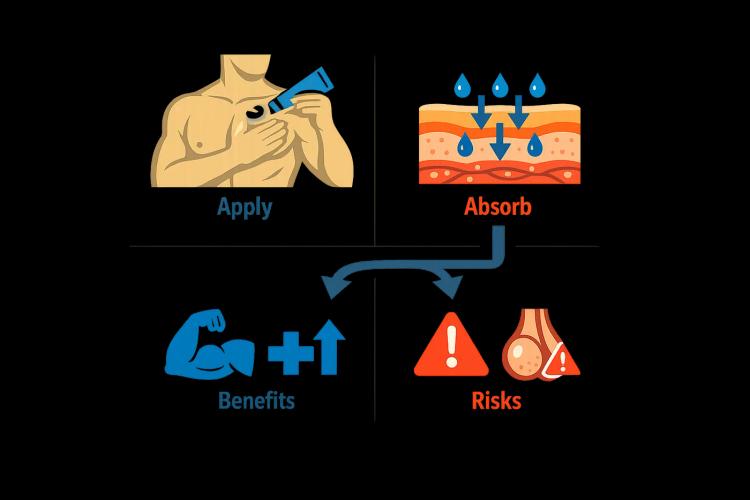
Testosterone gel is a transdermal preparation you apply to your skin once daily, typically to the shoulders, upper arms or abdomen. The alcohol-based gel dries within minutes and delivers testosterone through the skin into the bloodstream over 24 hours. Unlike injections, gel aims to maintain steady testosterone levels without the peaks and valleys that come with less frequent dosing.
Gels are FDA-approved for testosterone replacement therapy and come in metered-dose pumps, packets or tubes. Common brand names include AndroGel, Testim and Fortesta, though compounded versions are also prescribed. You apply the gel at roughly the same time each day, usually in the morning, and avoid skin-to-skin contact with others for several hours to prevent transfer.
How Testosterone Gel Works
The gel's testosterone absorbs through the outer skin layer and enters capillaries beneath the surface. Absorption varies by application site, skin thickness and individual metabolism. Most men see testosterone levels rise within hours of the first dose, with steady-state concentrations reached after a few days of consistent use.
A 93-patient study found that median serum testosterone increased from 230 ng/dL before treatment to 412 ng/dL after gel therapy. That final level was lower than what injections achieved in the same trial (1,014 ng/dL) but fell within the normal physiological range for most men. The gel's daily dosing avoids the supraphysiological spikes that can occur with biweekly or monthly injections.
Advantages of Testosterone Gel
Gels offer convenience and a gentler learning curve than self-injection. There are no needles, no injection-site reactions and no need to store syringes or dispose of sharps. Many men prefer the routine of a daily topical application over the commitment to inject every few days or weeks.
The transdermal route also delivers testosterone in a pattern closer to the body's natural rhythm. Research notes that gels and patches are gaining popularity as patient-friendly modalities, offering both convenience and physiological testosterone delivery. For men who dislike needles or travel frequently, a small tube or pump is easier to carry and use discreetly than vials and syringes.
Potential Drawbacks of Testosterone Gel
Skin transfer is the primary concern. Testosterone can rub off onto others through direct contact, which is why the FDA requires warnings on every gel product. You must cover the application site with clothing once the gel dries, avoid shared towels and wash the area before close skin contact. Parents of young children and men with female partners need to plan their routine carefully.
Absorption varies more than with injections. Some men absorb gel efficiently and reach target testosterone levels; others do not, even at maximum doses. Factors like skin thickness, body hair, sweating and application technique all affect how much testosterone enters the bloodstream. If your levels remain low after several weeks on gel, your doctor may increase the dose, switch application sites or move you to a different delivery method.
Daily adherence is non-negotiable. Missing doses or applying inconsistently leads to fluctuating testosterone levels, which can bring back low-T symptoms. Gel also costs more per month than generic injectable testosterone in many insurance plans, and some insurers require prior authorization or step therapy before covering it. For a detailed comparison of testosterone gel, cream, pellets and injections, see our breakdown of each option's trade-offs.
Overview of Testosterone Injections
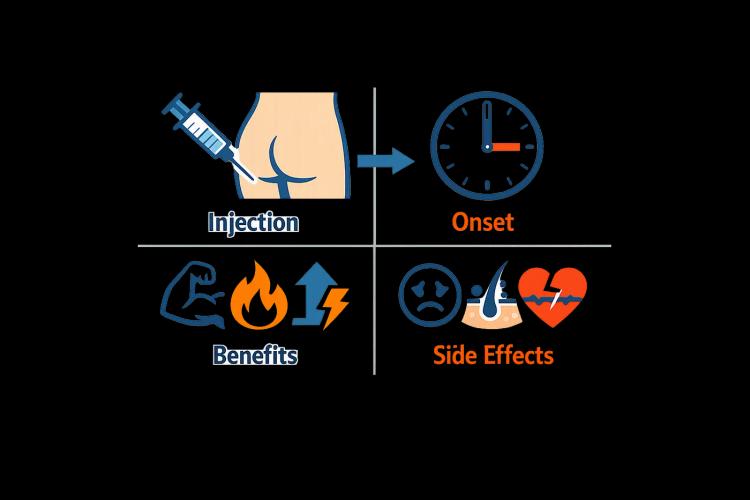
Testosterone injections deliver the hormone directly into muscle tissue, bypassing absorption variability. Testosterone enanthate is the most commonly prescribed ester for intramuscular testosterone therapy. The injection releases testosterone into the bloodstream over time, creating a peak-and-trough pattern that differs from the steadier levels seen with daily gel application.
Intramuscular testosterone esters require injections every 2-4 weeks, though some protocols use weekly or twice-weekly schedules to reduce fluctuations. The longer intervals between doses make this option less frequent than daily gel application, but the method itself requires either clinic visits or learning to self-inject.
How Injections Work and What They Deliver
The ester attached to testosterone controls how quickly the hormone releases from the injection site. Testosterone enanthate and cypionate are long-acting esters that provide sustained release, while shorter esters require more frequent dosing. The pharmacokinetics create a rise in testosterone levels shortly after injection, followed by a gradual decline until the next dose.
Intramuscular testosterone esters are effective in improving bone and muscle mass, but their pharmacokinetics result in fluctuations in mood, energy and sexual function. The peak occurs within the first few days after injection, and the trough arrives just before the next scheduled dose. Some men notice these swings; others do not.
Administration and Monitoring
Intramuscular injections go into the gluteal muscle or the thigh. Subcutaneous injection into fatty tissue is an alternative that some clinics now offer, using smaller needles and potentially reducing injection-site pain. Both methods require proper technique, sterile supplies and attention to injection-site rotation to avoid tissue damage.
Monitoring for injections follows the same lab schedule as other TRT protocols: baseline testosterone panel, follow-up at 3-6 months, then annually if stable. Hematocrit monitoring is critical because injections can raise red blood cell production more sharply than transdermal methods. PSA screening continues per age-appropriate guidelines.
Cost and Access
Testosterone injections are typically the least expensive TRT option when filled at a retail pharmacy with insurance. A vial of testosterone enanthate or cypionate costs $30-$80 without insurance and lasts one to several months depending on dose and frequency. Compounded formulations and telehealth subscriptions may price higher. Needles and syringes add a small recurring cost.
For a detailed look at how Clomid for Men raises testosterone and what it costs, see the comparison of oral and injectable options.
Feature Comparison: Testosterone Gel vs Injections
The trial data shows that testosterone injections produce higher serum levels than gels, but patient satisfaction scores run nearly identical. Here is what differs in practice.
Dosage Frequency and Administration
Gels require daily application to the shoulders, upper arms or abdomen — usually in the morning. Injections run weekly, biweekly or less often depending on the ester. Weekly protocols keep levels more stable; biweekly and monthly schedules produce a peak-and-trough pattern that some men notice as energy swings mid-cycle.
Missing a gel dose drops your level within 24 hours. Missing an injection dose keeps you covered longer, but the catch-up injection timing gets tricky.
Testosterone Levels Achieved
In a 93-man age-matched study, median total testosterone rose from 224 ng/dl at baseline to 1,014 ng/dl on injections, and from 230 ng/dl to 412 ng/dl on gels. The injection group reached levels 2.5 times higher than the gel group, a statistically significant difference.
That does not mean injections work better for every man. Some men absorb gels well and hit mid-range targets; others need higher doses or switch formulations. Injections deliver more predictable pharmacokinetics — the dose you inject is the dose that circulates, minus what your body clears.
| Feature | Testosterone Gel | Testosterone Injections |
|---|---|---|
| Dosing frequency | Daily | Weekly to monthly |
| Median peak level (ng/dl) | 412 | 1,014 |
| Level stability | Steady daily | Peak-trough cycle |
| Absorption variability | High (skin-dependent) | Low (direct IM) |
| Transfer risk | Yes (skin contact) | None |
Side Effects and Monitoring
Both routes raise hematocrit — the percentage of red cells in your blood. Higher testosterone stimulates erythropoiesis, and men on either protocol need a complete blood count every three to six months. If hematocrit climbs above 54%, most clinics pause therapy or recommend a blood donation.
Gels carry a transfer risk: skin contact with a partner or child before the gel dries can expose them to testosterone. Injections eliminate that risk but introduce injection-site soreness and, rarely, subQ nodules if technique is poor.
Estradiol rises on both routes. Some men aromatize heavily and need monitoring; others stay in range without intervention. The monitoring schedule is identical: total and free testosterone, estradiol, hematocrit and lipids at baseline, six weeks, then every three to six months.
Reported Satisfaction and Libido
The same 93-man trial measured satisfaction using the quantitative Androgen Deficiency in the Aging Male (qADAM) questionnaire. Scores were statistically indistinguishable: 39 for injections, 36 for gels, 35 for clomiphene and 34 for controls.
Libido scores told a different story. Men on injections reported higher libido (median score 4) than men on gels (3), clomiphene (3) or controls (3), with p-values of 0.04 for gels and under 0.01 for controls. That is a small numeric difference on a subjective scale, but it showed up consistently.
No mechanism explains why libido diverged while overall satisfaction converged. One hypothesis: higher peak levels drive libido more than stable mid-range levels do, even when both groups report feeling better overall.
Ease of Use in Practice
Gels fit invisibly into a morning routine once you solve the transfer risk — apply, wait, cover or shower. Injections require needles, alcohol wipes, a sharps container and either self-administration skill or clinic visits. Some men prefer the once-weekly ritual; others dislike needles enough to accept daily gel application.
For men interested in comparing testosterone delivery methods beyond injections and gels, pellets and nasal formulations add options with different trade-offs in convenience and cost.
Neither route is objectively easier — the question is which friction you tolerate better.
Pricing Comparison: Testosterone Gel vs Injections
The numbers look simple until you factor in the full year. Injections cost less per dose, but the monitoring, clinic visits and insurance fine print change the calculation.
What Testosterone Injections Cost You
Testosterone cypionate or enanthate runs $30 to $80 per 10 mL vial at a retail pharmacy without insurance. A typical protocol uses 100 to 200 mg per week, which means one vial lasts five to ten weeks. Over a year, you spend roughly $150 to $500 on the medication itself.
Insurance coverage depends on your plan and diagnosis code. Many plans cover injections when low testosterone is documented with two morning lab results below 300 ng/dL and symptoms match. Co-pays range from $10 to $50 per fill. High-deductible plans make you pay the full retail price until you hit the deductible, then coverage kicks in.
Telehealth clinics often charge $99 to $199 per month for injections, labs and provider access bundled together. That is $1,188 to $2,388 per year. The medication is included, but you are paying for convenience and no insurance paperwork. Compare that number to your insurance co-pay plus the cost of in-person follow-ups.
What Testosterone Gel Costs You
Brand-name gels like AndroGel and Testim cost $400 to $600 per month without insurance. Generic versions run $100 to $300 per month. Over a year, that is $1,200 to $7,200 depending on formulation and pharmacy.
Insurance coverage for gel is less predictable than for injections. Some plans require you to fail injectable therapy first—a step-therapy requirement. Others cover gel but with a higher co-pay tier. Expect $30 to $100 per month if your plan covers it, or the full retail price if it does not.
Compounded testosterone gel from telehealth clinics costs $150 to $250 per month, or $1,800 to $3,000 per year. The price includes provider visits and labs in most cases, but compounded formulations are not FDA-approved and insurance does not cover them. You pay out of pocket every month.
| Cost Factor | Injections | Gel |
|---|---|---|
| Medication (annual, no insurance) | $150–$500 | $1,200–$7,200 |
| Medication (annual, with insurance) | $120–$600 co-pays | $360–$1,200 co-pays |
| Telehealth bundled (annual) | $1,188–$2,388 | $1,800–$3,000 |
| Monitoring labs (annual, typical) | $200–$400 | $200–$400 |
| Clinic visit co-pays (annual) | $60–$200 | $60–$200 |
Insurance Coverage and What It Actually Pays For
Insurance covers the drug when the diagnosis is documented and the treatment is FDA-approved. Injections have been generic for decades, so most formularies include them. Gel is more expensive to the insurer, so plans often tier it higher or require prior authorization.
Labs are separate. Expect to pay for testosterone panels every three to six months. A full panel—total and free testosterone, SHBG, estradiol, hematocrit, PSA—costs $200 to $400 without insurance, or a $20 to $50 co-pay if your plan covers preventive monitoring. Not all plans do. Check the lab benefit before you assume it is included.
Provider visits add another layer. In-network endocrinology or urology co-pays run $30 to $100 per visit. Telehealth platforms bundle the visit into the monthly fee, but you lose insurance coverage entirely. The trade-off is speed and convenience versus paying the insurer's negotiated rate.
Long-Term Financial Implications
TRT is not a six-month trial. Most men stay on it for years, and the cost compounds. Over five years, injections with insurance cost $2,000 to $5,000 total including labs and visits. Gel with insurance costs $4,000 to $10,000. Without insurance, injections cost $3,000 to $6,000 and gel costs $10,000 to $40,000.
Telehealth subscriptions look cheaper up front, but the annual fee never drops. After three years, you have paid $3,600 to $7,200 for injections or $5,400 to $9,000 for compounded gel, with no insurance to fall back on if the clinic closes or changes terms.
The cheapest option is the one you can sustain without financial stress. A $50 monthly co-pay beats a $200 telehealth fee if your insurance covers the drug and you can get to the lab twice a year. A bundled telehealth plan beats fighting prior authorizations and step-therapy requirements if your insurance makes you jump through hoops for every refill.
For more on how insurance handles TRT coverage, including what diagnosis codes matter and how to appeal a denial, see the full breakdown.
Pros and Cons of Testosterone Gel and Injections
Before you choose, here is what each option actually gives you and what it costs in convenience, pain and monitoring.
Testosterone Gel: Advantages
Gels deliver testosterone daily through the skin. The absorption pattern is steady, which means your blood levels stay closer to a normal rhythm without the peaks and valleys that injections produce. You apply it once a day, usually in the morning, and you are done.
No needles. No pain. No clinic visits for administration. That matters if you dislike injections or travel frequently. Gels also avoid the injection-site soreness that some men report with intramuscular shots.
Testosterone Gel: Disadvantages
Transfer risk is the biggest practical problem. The gel sits on your skin for hours after application. If someone touches that area before it dries completely, they absorb testosterone too. That includes partners and children. You need to cover the application site, wash your hands, and time physical contact carefully.
Absorption varies. Some men absorb well; others do not. You will not know which group you are in until you test your levels a few weeks later. If absorption is poor, your doctor may increase the dose or switch you to a different option.
Daily compliance is required. Miss a day and your level drops. Miss several days and you are back where you started. Injections, by contrast, work whether you remember them or not once the shot is in.
Testosterone Injections: Advantages
Intramuscular injections raise testosterone reliably. A study comparing modalities found that median serum testosterone increased from 224 ng/dL pre-treatment to 1,104 ng/dL on injections, higher than the increase seen with gels (230 to 412 ng/dL). Men receiving testosterone injections also reported greater libido than men on gels (4 vs 3, p = 0.04).
You inject every one to four weeks depending on the ester. Once the dose is in, it works. No daily routine, no transfer risk, no wondering if you absorbed enough. For men who want to think about treatment as little as possible, injections win.
Cost is often lower. Generic testosterone cypionate and enanthate are inexpensive. Even without insurance, a vial lasts weeks to months.
Testosterone Injections: Disadvantages
Intramuscular injections can be painful, and many men do not self-administer. That means clinic visits every week or two, which adds time and sometimes cost if your provider charges an administration fee.
Fluctuations in mood, energy and sexual function are common with traditional esters that require dosing every two to four weeks. Levels peak a day or two after the shot, then fall steadily until the next one. Some men feel the drop as fatigue or irritability in the final days before the next dose.
Shorter-acting esters (cypionate, enanthate) require more frequent injections to smooth out the peaks and valleys. Longer-acting esters exist but are not yet in widespread use in the United States.
| Criterion | Gel | Injections |
|---|---|---|
| Administration | Daily, topical | Weekly to monthly, IM |
| Pain | None | Injection-site soreness |
| Transfer risk | High (skin contact) | None |
| Level stability | Steady | Peaks and valleys |
| Self-administration | Easy | Difficult for many |
| Compliance requirement | Daily | Weekly to monthly |
Neither option is wrong. The question is which set of trade-offs you can live with. Gels ask for daily discipline and caution around others. Injections ask for needles and level swings. Test your testosterone twice, read your insurance coverage, and decide which hassle you would rather manage.
Who Should Choose What: Testosterone Gel vs Injections
The choice between testosterone gel and injections is not about which is better — it is about which fits your life, your tolerance for needles, and what you can monitor.
Choose Gel If You Prioritize Daily Routine Over Injections
Gel works for men who prefer a daily application to periodic injections. It delivers a physiological amount of testosterone and avoids the mood and energy fluctuations that come with the peak-and-trough pharmacokinetics of short-acting esters. If you are disciplined about applying it at the same time each day, can afford the monthly cost, and do not have young children or a partner who shares your bed before the gel dries, gel may be the patient-friendly option.
Gel also suits men who are needle-averse or who travel frequently and prefer not to carry syringes. You apply it, wash your hands, cover the area, and move on.
Choose Injections If You Want Predictable Dosing and Lower Cost
Injections are the current modality of choice for testosterone replacement therapy. They cost less per month than gel, require no daily routine, and eliminate the risk of transferring testosterone to others. Short-acting esters like enanthate need to be injected every two to four weeks, and they produce fluctuations in mood, energy and sexual function as the level rises and falls. Longer-acting esters reduce that swing.
Injections fit men who are comfortable with self-injection or who have access to a clinic for administration, who want the lowest out-of-pocket cost, and who can tolerate the pharmacokinetic profile of the ester they are prescribed. If you are already injecting for another condition or have no issue with needles, injections remove the daily task and the skin-contact concern.
For a broader look at how gel compares to other delivery methods, see Testosterone Gel, Cream, Pellets or Injections: Choosing the Right.
Medical Considerations That Tip the Scale
Some medical factors narrow the choice. Men with skin conditions that interfere with gel absorption — eczema, psoriasis, or frequent rashes — may not achieve stable levels with a transdermal preparation. Men with a strong aversion to needles or a history of fainting with injections may find gel safer.
If you have young children, elderly parents, or a partner who could be exposed to the application site before it dries, injections remove the transfer risk. If you have a history of erratic hematocrit response to testosterone, your doctor may prefer one modality over the other based on how your labs trend.
Neither modality is universally safer or more effective. The trial data show both can raise testosterone into the normal range. The question is which one you will use correctly, month after month, without missing doses or creating exposure risk.
The best protocol is the one you will follow consistently and monitor correctly — not the one that sounds easier in the abstract.
Final Verdict: Testosterone Gel vs Injections
Neither option wins on every measure. Testosterone injections raise levels more reliably and cost less, but they require needles and produce swings between doses. Gels avoid the needle, keep levels steadier, and let you stop quickly if something goes wrong, but they cost more, transfer to others on contact, and raise levels less predictably.
The trial data shows injections hitting a median of 1,014 ng/dl versus 412 ng/dl for gels, yet satisfaction scores were statistically identical across both groups. Men on injections reported slightly higher libido scores, but the difference was narrow and the sample was small. The number that matters is whether your own levels reach the therapeutic range and stay there, which requires follow-up testing at eight weeks regardless of which option you start.
When Injections Make Sense
Choose injections if cost is a primary concern, if you need higher peak levels to reach the therapeutic range, or if daily application feels like too much friction. Injections also make sense when you live alone or can reliably control skin contact, and when the idea of a weekly or biweekly needle does not create enough resistance to derail adherence. They are the default in most insurance-covered protocols because the per-dose cost is lower and the dosing interval is longer.
If your hematocrit runs high or you have a history of polycythemia, more frequent smaller injections may give you better control than the larger swings from weekly dosing. That requires more needles, but it keeps the peak-to-trough range tighter and may reduce the risk of elevated red blood cell counts.
When Gels Make Sense
Choose gels if you cannot tolerate needles, if you live with a partner or children and cannot guarantee isolated application time, or if stable daily levels matter more to you than absolute peak concentration. Gels also make sense when you want the option to stop quickly without waiting for a depot to clear, or when your insurance covers the brand-name product and the copay is manageable.
The daily routine can be an advantage or a burden depending on how you structure your morning. If you already have a consistent wake time and a private bathroom, the gel fits in. If your schedule is chaotic or you travel frequently without reliable access to a sink, the injection interval may be easier to sustain.
The Decision Tree
Test first. Two morning results, drawn before 10 a.m., at least a week apart, with total testosterone, free testosterone, LH, and SHBG on the panel. If your levels are low and your LH is elevated, both options will work mechanically. If your LH is low or normal, you need to know why before starting either one, because that pattern suggests secondary hypogonadism and may point to a pituitary issue that TRT will not fix.
Once you start, retest at eight weeks. If your levels are in range and you feel better, the protocol is working. If your levels are in range and you feel the same, the protocol is working mechanically but low testosterone was not the primary driver of your symptoms. If your levels are still low, the dose is wrong or the absorption is poor, and you adjust from there. The follow-up test is not optional; it is the only way to know whether the option you chose is doing what you need it to do.
For a broader comparison that includes testosterone cream and pellets, see the linked guide. The principles are the same: test first, test twice, pick the option that fits your tolerance for cost and hassle, and confirm the result with labs before you commit to a long-term protocol.
Sources(27)
- The Journal of the American Board of Family Practice (2001)
- American Urological Association — Evaluation and Management of Testosterone Deficiency (AUA Guideline) (2018)
- Expert opinion on pharmacotherapy (2005)
- The journals of gerontology. Series A, Biological sciences and medical sciences (2012)
- DailyMed (U.S. National Library of Medicine) — FDA prescribing information: AZMIRO (testosterone cypionate) injection, solution [Azurity Pharmaceuticals, Inc.] (2025)
- Journal of the Endocrine Society (2017)
- Sexual medicine (2015)
- The aging male : the official journal of the International Society for the Study of the Aging Male (2015)
- U.S. Food and Drug Administration — Drug Safety Communication: FDA cautions about using testosterone products for low testosterone due to aging; requires labeling change to inform of possible increased risk of heart attack and stroke with use (2015)
- International journal of general medicine (2022)
- The Journal of clinical endocrinology and metabolism (2026)
- International journal of impotence research (2023)
- RSC advances (2026)
- The journal of sexual medicine (2015)
- RSC advances (2026)
- The journal of sexual medicine (2019)
- International journal of pharmaceutical compounding (2015)
- Andrology (2025)
- American family physician (2024)
- European journal of endocrinology (2024)
- F&S reviews (2020)
- Journal of Clinical Endocrinology & Metabolism — Testosterone Therapy in Men With Hypogonadism: An Endocrine Society Clinical Practice Guideline (2018)
- The journal of sexual medicine (2021)
- The lancet. Healthy longevity (2023)
- Health technology assessment (Winchester, England) (2024)
- Sexual medicine reviews (2021)
- Annals of internal medicine (2020)