Fadogia Agrestis Side Effects: Evidence and Safety Considerations
Updated
Top takeaways
- Fadogia agrestis is a plant used in traditional African medicine, now sold in supplements claiming to raise testosterone
- The evidence base is thin: no published human trials measure testosterone response or track side effects
- What we know comes from chemical analysis of the plant and animal studies, not clinical data
- Without human trials, claims about fadogia agrestis side effects remain speculative
- Anyone considering this supplement is working without the safety data that exists for prescription options
Introduction to Fadogia Agrestis
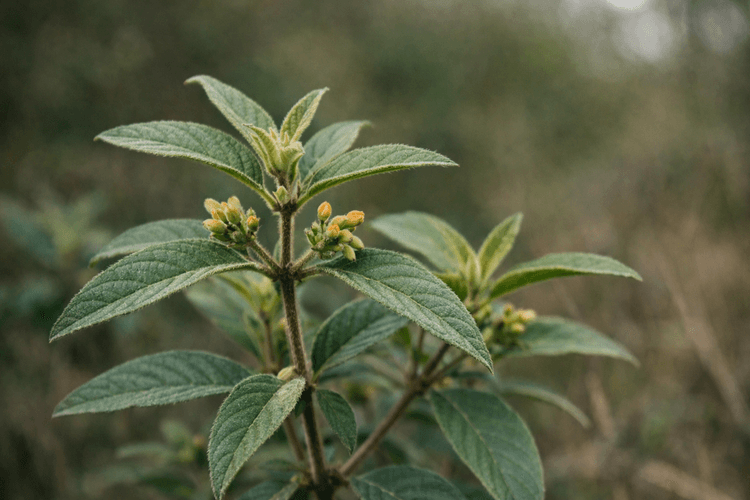
Fadogia agrestis appears in dietary supplements marketed for testosterone enhancement. The plant has a history in traditional African medicine as an analgesic, anti-inflammatory, and aphrodisiac. Supplement sellers now position it as a natural alternative to prescription testosterone treatments, often bundled with other botanicals in testosterone-support formulas.
The gap between marketing and evidence is wide here. Chemical analysis shows the plant contains multiple compounds, and researchers have developed methods to identify and confirm these constituents in plant samples and commercial supplements. But identifying what is in the plant is not the same as measuring what it does in the human body. No published study has given fadogia agrestis to men and tracked testosterone levels, sperm counts, or adverse events over weeks or months.
What we have instead: animal studies, mostly in rodents. These studies suggest a mechanism — the plant extract may stimulate luteinizing hormone, which in turn signals the testes to produce testosterone. That is a plausible pathway. It is also the same pathway targeted by prescription drugs like enclomiphene and clomiphene, which have been studied in thousands of men with measured outcomes and known side-effect profiles. For a detailed comparison of those options, see Enclomiphene Citrate: What the Research Actually Shows.
The result is a supplement sold on the strength of a mechanism observed in animals, with no human data to confirm the benefit or map the risks. That is not unusual in the supplement space, but it is worth knowing before you buy. The evidence is thin here, and the gap matters when you are deciding what to put in your body and what to expect from it.
The Safety and Efficacy Questions
Fadogia agrestis has no human trial data. The studies that exist tested rats, not men, and the findings point to safety concerns that nobody selling the supplement will tell you.
Two rat studies published in 2007 and 2009 tested aqueous extracts of fadogia agrestis stem at doses of 18, 50, and 100 mg/kg body weight for 28 days. The lower dose — 18 mg/kg — is close to what folklore medicine uses. The higher doses showed adverse effects on testicular function, and the recovery at the low dose suggests the damage is not permanent at that level. But these are rat studies with short durations, and the leap from rat to human is large.
What the Rat Studies Found
The 2009 study reported no clinical toxicity symptoms — no respiratory distress, bleeding, salivation, or abnormal activity — and no mortality during the experiment. That sounds reassuring until you read the 2007 study, which found that the extract caused adverse effects on male rat testicular function and potentially impacted the functional capacities of the testes. The exact mechanisms and long-term consequences in humans are unknown.
The problem is dose translation. A 200-pound man taking a 500 mg capsule of fadogia extract is not taking the rat-equivalent dose, because we do not know the concentration of active compounds in the commercial product, the bioavailability in humans, or whether the extraction method matches the studies. Most supplements do not report standardization, so you are guessing at what you are actually taking.
The Efficacy Gap
No published trial has tested fadogia agrestis in men for testosterone levels, free testosterone, LH, FSH, or sperm count. The marketing claims trace back to the rat studies and to traditional use, neither of which tells you whether it works in your body or what it costs you in risk. For comparison, testosterone supplements for men with human data exist — fadogia is not among them.
The evidence is thin here. If you are deciding between fadogia and an intervention with human trials, the choice is not close.
Steps to Evaluate Fadogia Agrestis
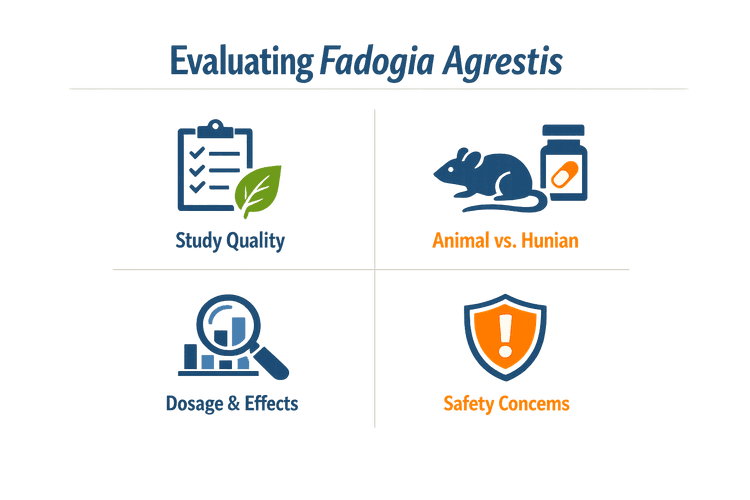
Before you buy a bottle labeled Fadogia agrestis, you need to know what is actually in it and what evidence exists for the dose you are taking. The steps below are the same ones you would use to grade any supplement that lacks FDA approval and human safety data.
Step 1: Check for Human Trials at Your Dose
Look for published studies in humans that used the same dose and extract type the bottle claims. Most Fadogia agrestis products cite animal studies, not human trials. If the label says 600 mg and the only trial you find used rats at 18 mg/kg body weight, you cannot assume the human dose is safe or effective. The dose, duration, and population matter. If you cannot find a human trial, you are taking it on speculation.
Step 2: Verify What Is in the Bottle
Supplements are not tested by the FDA before sale. Independent lab analysis using liquid chromatography-mass spectrometry can identify and confirm the chemical constituents in a product claiming to contain Fadogia agrestis. This method detects whether the bottle contains the plant material it claims and whether contaminants or unlabeled ingredients are present. Ask the manufacturer for a certificate of analysis from a third-party lab. If they do not provide one, you are trusting their word.
Step 1
Request third-party testing
Before purchasing, email the manufacturer and ask for a certificate of analysis (COA) from an independent lab. The COA should list the plant material, active constituents, and contaminants tested. If they do not respond or provide only in-house testing, consider that a red flag.
Step 3: Compare Against Established Alternatives
If you are considering Fadogia agrestis for testosterone support, compare it against options with established safety and efficacy data. Testosterone supplements for men that have been studied in humans offer a clearer risk-benefit picture. Ask yourself: does this supplement offer something the studied options do not, or are you paying for uncertainty?
| Option | Human trials | Safety data | Regulatory status |
|---|---|---|---|
| Fadogia agrestis | None | Limited | Unregulated supplement |
| Established supplements | Multiple | Available | Unregulated supplement |
| Prescription options | Extensive | FDA-reviewed | FDA-approved |
Step 4: Monitor for Changes
If you decide to try Fadogia agrestis, get baseline labs before you start: total testosterone, free testosterone, liver enzymes (ALT, AST), and kidney function (creatinine). Retest at four to six weeks. If testosterone does not move or if liver or kidney markers shift, you have data to make a decision. Without labs, you are guessing.
Tips for Responsible Supplement Use
Before you buy any supplement marketed for testosterone, ask what you are actually testing. One morning result is not a diagnosis. Two results, drawn before 10 a.m. on separate days, plus an LH and FSH level, tell you whether your pituitary is signaling normally or not. Without that, you are guessing.
If your LH is already high and your testosterone is low, no supplement that stimulates LH will help you. If your LH is low or normal and your testosterone is low, enclomiphene or clomiphene might raise it, and those are prescription drugs with published trials. Fadogia agrestis has no human trial showing it does anything to LH, testosterone or fertility. Choosing it over a tested option means you are paying for a guess.
Start with the Free Option
Weight loss, consistent sleep and reduced alcohol all raise testosterone in men who are overweight, sleep-deprived or drinking daily. The effect size in short trials is 50 to 150 ng/dL, depending on how much weight is lost and how disrupted sleep was at baseline. That is the same range sellers claim for most supplements, and it costs you nothing.
If you are already lean, sleeping seven hours and drinking rarely, those levers are exhausted. At that point, test twice and see where your LH sits. If it is low-normal and you want a medication, enclomiphene raises testosterone and preserves fertility in the published trials. If your LH is high, enclomiphene will not help, and TRT becomes the comparison.
What to Ask Before Signing Up
Telehealth clinics that sell testosterone treatment or testosterone supplements structure their pricing in three ways: per-prescription, monthly membership or bundled labs plus medication. The cheapest advertised price is rarely what you pay after labs, follow-up visits and shipping.
Ask whether the clinic requires follow-up labs and how often. Testosterone therapy requires monitoring hematocrit, PSA and estradiol every three to six months. Enclomiphene requires testosterone, LH and estradiol at similar intervals. A clinic that does not mention monitoring is not following the guidelines, and you will pay for those labs somewhere else or skip them.
Ask what happens if you want to stop. Some memberships lock you into a minimum term or charge a cancellation fee. Some ship three months at a time and do not refund unopened medication. Read the terms before the first charge posts.
The Supplement Evidence Standard
When a seller cites a study for a supplement ingredient, check three numbers: how many humans were studied, for how long, and what the study actually measured. A trial in 12 men for two weeks that measured one hormone one time is not evidence the supplement works. A trial in 100 men for 12 weeks that measured testosterone, LH and side effects at multiple points is stronger evidence, and even then you want to see it replicated.
Fadogia agrestis has no published human trial. The rodent studies dosed the extract at levels far higher than any commercial supplement contains, and they measured testicular enzyme activity, not circulating testosterone. Translating that to a human dose and a human outcome is speculation, not evidence.
If you want a supplement with human data, boron, zinc, magnesium and vitamin D all have small trials showing modest effects in deficient men. The effect disappears in men who are not deficient. Testing your levels first tells you whether supplementing makes sense.
Conclusion: The Future of Fadogia Agrestis Research
Fadogia agrestis sits in the gap between marketing promise and published human evidence. The animal studies that made it popular measured endpoints in rats, not men. The human trial that exists is small, short, and unpublished in a peer-reviewed journal. That leaves you with a supplement whose side-effect profile in humans is unknown, whose effective dose is unknown, and whose long-term safety is unknown.
The mechanism proposed — raising luteinizing hormone to stimulate natural testosterone production — is plausible. But plausibility is not data. Until controlled human trials measure testosterone response, sperm parameters, liver enzymes, kidney function, and cardiovascular markers over months or years, nobody can tell you what fadogia agrestis side effects look like at scale. The evidence is thin here, and the gaps matter.
If you want a supplement with human evidence behind it, testosterone supplements for men covers the ingredients that have been studied in controlled trials. If you want a prescription option that preserves fertility and has published human data, enclomiphene citrate is the closest mechanism to what fadogia agrestis is supposed to do — and it has been measured in men, with known side effects and known monitoring requirements.
The future of fadogia agrestis research depends on whether someone funds a proper human trial: randomized, placebo-controlled, with a sample size large enough to detect adverse events and a duration long enough to measure hormonal stability. Until that trial exists, you are choosing between a supplement with no human safety record and options that have one. That is the decision, and the reading you did here is what the evidence shows.
Related reading
Sources(27)
- Journal of ethnopharmacology (2007)
- Planta medica (2018)
- Asian journal of andrology (2005)
- Human & experimental toxicology (2009)
- DailyMed (U.S. National Library of Medicine) — FDA prescribing information: AndroGel (testosterone) gel [ASCEND Therapeutics U.S., LLC] (2025)
- DailyMed (U.S. National Library of Medicine) — FDA prescribing information: Clomid (clomiphene citrate) tablet [Cosette Pharmaceuticals, Inc.] (2025)
- American Urological Association — Evaluation and Management of Testosterone Deficiency (AUA Guideline) (2018)
- Medicina (Kaunas, Lithuania) (2022)
- The Journal of urology (2020)
- The aging male : the official journal of the International Society for the Study of the Aging Male (2015)
- F&S reviews (2020)
- Sexual medicine reviews (2017)
- The journal of sexual medicine (2013)
- International journal of general medicine (2022)
- European journal of endocrinology (2024)
- International journal of impotence research (2023)
- The journal of sexual medicine (2019)
- RSC advances (2026)
- RSC advances (2026)
- Journal of human kinetics (2014)
- The Journal of arthroplasty (2025)
- Expert opinion on pharmacotherapy (2005)
- U.S. Food and Drug Administration — Testosterone Information (2026)
- American family physician (2024)
- Andrology (2025)
- Kardiologia polska (2026)
- Progress in cardiovascular diseases (2024)