TRT and Prostate Cancer: What the Evidence Says Now

Updated
Top takeaways
- Testosterone replacement therapy (TRT) is widely used for late-onset hypogonadism, but concerns about prostate cancer risk have persisted for decades
- A 2014 meta-analysis of 22 randomized controlled trials involving 2,351 patients found no evidence that TRT promotes prostate cancer development or progression in the short term
- Current evidence shows TRT is not contraindicated in men with effectively treated prostate cancer or benign prostate enlargement
- Long-term data with clear endpoints remain limited, making ongoing monitoring essential
- The relationship between testosterone and prostate tissue is more complex than the simple "fuel for fire" model that dominated earlier thinking
Introduction
Testosterone replacement therapy is a widely accepted treatment for aging men with late-onset hypogonadism syndrome. The question of whether TRT increases prostate cancer risk has shaped prescribing decisions for years, often based on theoretical concerns rather than measured outcomes.
Urologists have long expressed caution about the potential link between TRT and prostate cancer development. That concern stems from early observations that prostate tissue is androgen-sensitive and that androgen deprivation can slow existing prostate cancer. The logical extension—that raising testosterone might promote cancer—became conventional wisdom without strong trial evidence to support it.
The evidence picture has shifted. A meta-analysis of randomized controlled trials found no increased risk of prostate cancer in men receiving TRT compared to placebo, regardless of administration method. The trials analyzed included short-term comparisons under 12 months and longer-term studies running 12 to 36 months, covering transdermal, oral, and injection protocols. The data show TRT does not exacerbate lower urinary tract symptoms or promote cancer progression in men with effectively treated disease.
What remains unsettled is the long-term picture. Most trials track patients for three years or less, and prostate cancer often develops slowly. Understanding whether TRT is safe requires looking at what the trials actually measured, who was studied, and what monitoring protocols were used. The short answer is that current evidence does not support the fear that TRT causes prostate cancer, but it also does not give us decades of follow-up data.
This article walks through the evidence on TRT and prostate cancer risk, the guidelines that have emerged from the trials, and the gaps that remain. It covers what the studies measured, what they did not, and what that means for someone deciding whether to start or continue therapy.
Problem Statement
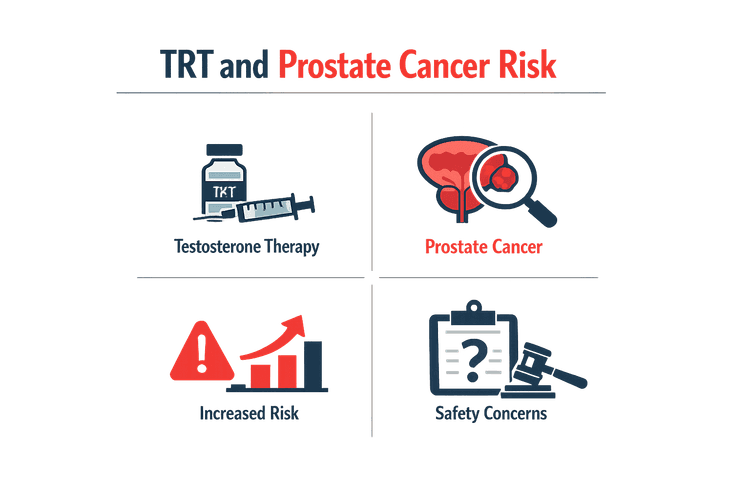
Urologists have worried about testosterone replacement therapy and prostate cancer for decades. The concern is straightforward: testosterone can fuel the growth of prostate cancer cells in laboratory settings, so raising testosterone levels in men might increase cancer risk or accelerate existing disease. That worry has shaped prescribing guidelines, patient counseling, and the decision to start or continue treatment.
The controversy centers on what happens when you give TRT to men with low testosterone. Does it raise the odds of developing prostate cancer? Does it worsen undetected cancer? And what about men who have already been treated for prostate cancer — is TRT off the table permanently? These questions matter because millions of men are candidates for treatment, and the stakes include both quality of life and cancer outcomes.
What the Early Concern Was Built On
The original worry came from older observations: castration (which drops testosterone to near zero) slows advanced prostate cancer, and giving testosterone to men with metastatic disease can make it worse. That led to the assumption that higher testosterone always means higher risk. For years, guidelines treated any history of prostate cancer as an absolute contraindication to TRT, and clinicians screened carefully before starting treatment.
But those observations were made in men with advanced, hormone-sensitive cancer — not in men with low testosterone considering replacement. The question is whether the same risk applies to men starting from a low baseline, and whether short-term or long-term TRT changes cancer incidence in the broader population.
The Gap Between Caution and Evidence
Recent analyses of randomized controlled trials have not found the expected increase in prostate cancer rates among men on TRT. One meta-analysis of trials involving over two thousand patients found no significant rise in cancer diagnoses, regardless of whether testosterone was given by injection, transdermal patch, or oral administration. The trials were a mix of short-term studies under twelve months and longer studies running twelve to thirty-six months.
Another review concluded that there is no evidence to suggest TRT is contraindicated in men with benign prostatic enlargement or effectively treated prostate cancer. That is a careful statement — it does not say TRT is proven safe in all contexts, but it does say the data do not support a blanket prohibition. For more context on how TRT safety is evaluated across different patient groups, the evidence base is growing but still has gaps.
The trials show TRT does not promote prostate cancer development or progression in the short term, but long-term data with clear endpoints are still needed.
What Remains Uncertain
The problem is duration and population. Most trials run for three years or less, and prostate cancer can take longer to develop or become detectable. The men enrolled in these studies were screened and monitored closely, with PSA testing and digital rectal exams at regular intervals. That level of surveillance is not always replicated in routine clinical practice, where men may start TRT through telehealth without baseline imaging or follow-up protocols.
There is also the question of men with a prior prostate cancer diagnosis. The recent reviews suggest TRT may be considered in men whose cancer has been effectively treated and who remain undetectable, but the evidence base is smaller and the guidelines remain cautious. No large trial has randomized men with a cancer history to TRT versus placebo and followed them for a decade.
Solution Steps
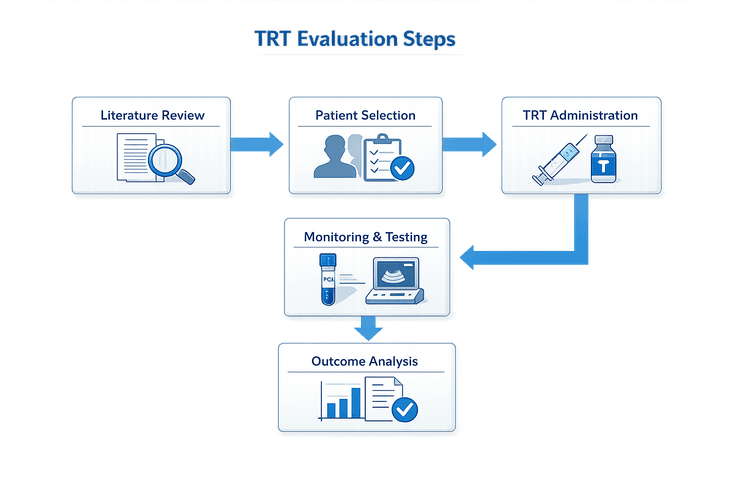
The question is not whether TRT and prostate cancer are linked — it is how to evaluate the evidence when you are deciding whether to start or continue treatment. Here is the systematic approach the research supports.
Step 1: Understand What the Meta-Analysis Actually Measured
Step 1
Read the trial population and duration
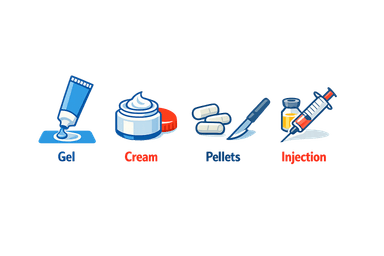
A 2014 meta-analysis pooled 22 randomized controlled trials with 2,351 patients. Eleven trials ran under 12 months; eleven ran 12 to 36 months. TRT was delivered by injection, transdermal gel or cream, or orally. The endpoint was prostate cancer incidence during treatment, not long-term progression or mortality.
The short answer: regardless of administration method, TRT did not promote prostate cancer development or progression in the short term. The authors stated plainly that long-term data with justifiable endpoints are still needed.
Step 2: Check the Evidence in Men Already Treated for Prostate Cancer
A randomized clinical trial gave TRT for 12 weeks to men who had undergone radical prostatectomy for low-grade prostate cancer. Compared to placebo, TRT significantly improved sexual activity, sexual desire, well-being, body composition, physical function, and aerobic performance — without biochemical recurrence.
Step 3: Evaluate the Active Surveillance Data
Historically, TRT was contraindicated in men undergoing active surveillance for prostate cancer. Recent studies have shifted that stance. Researchers examined the impact of testosterone on PSA levels and prostate biopsy progression in men with low testosterone on active surveillance. The data show a paradigm shift: TRT may be considered in select cases, with close monitoring.
What we don't know yet: the long-term progression rate, the ideal PSA threshold for stopping treatment, and which baseline tumor characteristics predict safe outcomes.
Step 4: Ask Your Doctor for Baseline and Monitoring Labs
Before starting TRT, test your testosterone levels correctly — total and free testosterone, SHBG, LH, FSH, estradiol, hematocrit, and PSA. Two morning results, not one. If your PSA is elevated or your digital rectal exam is abnormal, resolve that before considering TRT.
| Monitoring Item | Baseline | Follow-Up Frequency |
|---|---|---|
| PSA | Required | Every 3–6 months |
| Hematocrit | Required | Every 3–6 months |
| Total & Free T | Required | 3 months, then annually |
| Digital rectal exam | Recommended | Annually |
During treatment, PSA should be checked every three to six months for the first year, then at least annually. A rapid rise — particularly above 1.4 ng/mL in the first year after prostatectomy, or a velocity greater than 0.4 ng/mL per year — warrants urologic evaluation, not reassurance.
Step 5: Weigh the Gap Between Short-Term Safety and Long-Term Unknowns
The trials show short-term safety in controlled populations, but nobody selling TRT will tell you that the long-term cancer outcomes in unselected men are still being studied.
If you have a history of prostate cancer, low-grade disease after prostatectomy, or active surveillance, TRT is not automatically off the table — but it requires shared decision-making with a urologist who knows your pathology, your PSA trend, and your symptom burden. The evidence supports cautious use with rigorous monitoring, not blanket approval.
Tips and Tricks

Before you sign up for any clinic or start any treatment, you need two things: baseline numbers and a clear monitoring plan. Nobody selling TRT will tell you this, but the trials that found low risk all started with screening to exclude men at high risk of prostate cancer.
What to Ask Your Doctor Before Starting
Ask for a PSA test and a digital rectal exam before the first prescription. The guideline is clear: baseline evaluation of prostate cancer risk comes first. If your PSA is above 4.0 ng/mL or your exam is abnormal, you need a urology referral before testosterone. If your PSA is between 3.0 and 4.0 ng/mL, ask about risk calculators that factor in age and family history.
Ask what the monitoring schedule will be. The studies that tracked men on TRT used PSA checks at 3, 6, and 12 months, then annually. A clinic that does not mention PSA monitoring is skipping the part that keeps the risk low.
Ask what happens if your PSA rises. A jump of more than 1.4 ng/mL in one year or more than 0.4 ng/mL in six months triggered biopsy referrals in the published protocols. You want to know the threshold before you see the number.
What to Monitor During Treatment
PSA is the number that matters here. Track it at every interval your doctor sets, and keep a record. One elevated result is not a diagnosis, but a pattern of increase is a signal. The evidence shows that a standardized monitoring plan minimizes unnecessary biopsies while catching high-grade cancers early.
Symptoms matter too. New urinary hesitancy, weak stream, or blood in urine are reasons to call your doctor before the next scheduled visit, not wait it out.
Hematocrit is a separate monitoring point for TRT, but it is not about prostate cancer — it is about blood thickness and cardiovascular risk. Your doctor should check it alongside PSA.
How to Evaluate a Clinic Before Signing Up
Read the membership terms before you pay. Some telehealth clinics bill monthly whether you need a refill or not. Ask what monitoring labs are included in the price and what you pay out of pocket.
Ask if the clinic requires in-person PSA and exam, or if they rely on patient-reported numbers. The trials that found TRT safe in men with treated prostate cancer all used direct lab monitoring, not honor-system reporting.
Check if the prescriber is licensed in your state and if the clinic uses compounded or FDA-approved formulations. For more on choosing between delivery methods, see Testosterone Injections vs Gel: Testosterone Gel, Cream, Pellets. Compounded drugs are legal, but they are not reviewed for potency or sterility the way approved drugs are.
Ask what happens if your PSA rises or you develop symptoms. A good clinic has a referral pathway to urology, not a sales pitch to stay on treatment.
The cheapest clinic is the one whose monitoring plan you trust enough to hand the results to a urologist without flinching.
The Free Option: Weight and Sleep
Before any prescription, two levers raise testosterone without adding prostate risk: losing weight if you are overweight, and treating sleep apnea if you have it. Both are supported by trials, both cost less than a year of TRT, and neither require PSA monitoring.
Weight loss of 10–15% in men with obesity raises total testosterone by an average of 50–100 ng/dL. Sleep apnea treatment raises it by a smaller amount, but the effect is real. Neither intervention has been shown to increase prostate cancer risk.
If your total testosterone is under 300 ng/dL after addressing weight and sleep, that is when the TRT versus alternatives conversation starts. If it is still in the low-normal range, the evidence for benefit from TRT is thin.
Conclusion
The question of TRT and prostate cancer is simpler than it was a decade ago. The evidence does not show that testosterone treatment causes prostate cancer in men with normal prostates. It does not show that TRT accelerates existing cancer in men whose disease has been effectively treated. What it does show is that the old model — testosterone feeds cancer the way gasoline feeds fire — does not hold up in the trials.
That does not mean TRT is risk-free. It means the risk is not the one most men worry about. The real questions are monitoring, timing and honesty with your doctor. If you have untreated prostate cancer, TRT is off the table. If you had prostate cancer and it has been treated, the decision depends on your disease grade, your PSA trend, and how long you have been in remission. Those are not questions a telehealth intake form can answer.
Before starting TRT, get a baseline PSA and a digital rectal exam. During treatment, track your PSA and hematocrit every three to six months. If your PSA rises sharply or your prostate exam changes, pause and investigate. The monitoring is not optional, and it is not something you do once and forget.
If you are considering TRT and have concerns about prostate health, read Is TRT Safe? Testosterone Replacement Therapy for Men Over 40 for a broader look at the safety profile. The decision to start TRT should be made with a doctor who knows your full medical history, not with a clinic that sells subscriptions. The evidence has moved, but the need for careful monitoring has not.
Sources(27)
- The Journal of urology (2020)
- The Journal of clinical endocrinology and metabolism (2026)
- American family physician (2024)
- U.S. Food and Drug Administration — Drug Safety Communication: FDA cautions about using testosterone products for low testosterone due to aging; requires labeling change to inform of possible increased risk of heart attack and stroke with use (2015)
- Journal of Clinical Endocrinology & Metabolism — Testosterone Therapy in Men With Hypogonadism: An Endocrine Society Clinical Practice Guideline (2018)
- International journal of general medicine (2022)
- American Urological Association — Evaluation and Management of Testosterone Deficiency (AUA Guideline) (2018)
- F&S reviews (2020)
- The Journal of arthroplasty (2025)
- International journal of pharmaceutical compounding (2015)
- The journal of sexual medicine (2013)
- Sexual medicine reviews (2023)
- The Journal of the American Board of Family Practice (2001)
- European urology focus (2017)
- International journal of impotence research (2023)
- The journal of sexual medicine (2019)
- Journal of human kinetics (2014)
- RSC advances (2026)
- RSC advances (2026)
- The journal of sexual medicine (2021)
- The aging male : the official journal of the International Society for the Study of the Aging Male (2015)
- European urology (2015)
- The Journal of urology (2013)
- The journal of sexual medicine (2014)
- The Journal of urology (2015)
- The world journal of men's health (2015)
- Sexual medicine reviews (2016)