Hematocrit on TRT: Why It Rises and What Clinics Do

Updated
Top takeaways
- Hematocrit on TRT rises in most men because testosterone signals bone marrow to produce more red blood cells
- Clinics monitor hematocrit at baseline and every three to six months during treatment
- Elevated hematocrit above 54 percent typically triggers dose adjustment or therapeutic phlebotomy
- The number that matters is hematocrit, not hemoglobin alone — both appear on the same panel
- Test twice before making changes; one high result does not confirm a problem
Understanding Hematocrit Levels on TRT
Hematocrit on TRT is the percentage of blood volume occupied by red blood cells, and testosterone replacement therapy raises that percentage in nearly all men. Before TRT, most men sit between 40 and 50 percent. On TRT, that number climbs because exogenous testosterone signals bone marrow to produce more red cells.
The rise happens in nearly everyone. Small studies and large registries report the same pattern: hematocrit increases during the first six months, then stabilizes or continues to edge upward depending on dose, injection frequency and individual biology. Clinics that prescribe TRT without monitoring hematocrit are skipping the one lab value that predicts whether you will need intervention.
Before choosing a TRT clinic, ask how often they test hematocrit and at what threshold they act. The answer tells you whether they follow the guidelines or sell prescriptions.
This article walks through why hematocrit rises on TRT, what level triggers concern, and the steps clinics take when the number crosses the threshold. The short answer: most men stay below the action level with standard dosing. When hematocrit climbs too high, clinics lower the dose, increase injection frequency, or send you to donate blood. Nobody selling TRT will tell you that last part up front, but it is worth knowing before you sign up.
The Problem of Elevated Hematocrit on TRT
Testosterone replacement therapy raises hematocrit in most men. The mechanism is direct: exogenous testosterone stimulates erythropoietin production in the kidneys, which tells bone marrow to make more red blood cells. More red blood cells mean a higher percentage of your blood volume is cells rather than plasma — that is hematocrit.
The rise is not subtle. Research shows hematocrit climbing 3 to 5 percentage points in the first six months, with some men crossing the 54 percent threshold that most clinics flag as elevated. Injectable testosterone produces the steepest increases; gels and creams raise it less but still measurably. The higher your dose and the higher your resulting testosterone level, the higher your hematocrit climbs.
Why Elevated Hematocrit Matters
Thicker blood moves slower. When hematocrit exceeds 54 percent, blood viscosity increases enough to raise the theoretical risk of clot formation — deep vein thrombosis, pulmonary embolism, stroke. The word "theoretical" matters here: large observational studies have not conclusively shown that men on TRT with hematocrit between 52 and 54 percent have more cardiovascular events than men at 48 percent. The risk curve is debated, but guidelines still treat 54 as a hard stop.
Symptoms of very high hematocrit — headache, flushed skin, dizziness, blurred vision — overlap with other conditions and often appear only above 55 or 60 percent. Many men sail past 54 without noticing. That is why clinics test every three to six months: you cannot feel the difference between 50 and 54.
Who Is Most Likely to See a Spike
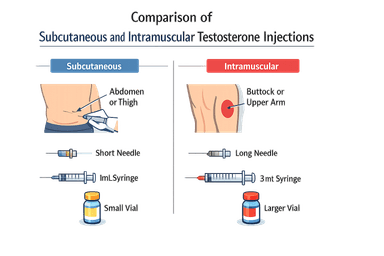
Certain factors push hematocrit higher on TRT. Older men, men at altitude, men who smoke, and men with sleep apnea start with higher baseline levels and climb faster. Injectable testosterone — especially cypionate or enanthate dosed weekly or biweekly — produces sharper peaks in serum testosterone, which translates to sharper hematocrit increases. Switching to more frequent injections or a transdermal route sometimes blunts the rise, but it does not eliminate it.
If your hematocrit was already 50 percent before starting TRT, you have less room to climb before hitting the clinic's cutoff. If it was 42 percent, you have more runway. That pre-treatment number matters when choosing a protocol and setting monitoring intervals.
The rise is dose-dependent and predictable — the question is not whether hematocrit will increase on TRT, but how much and how fast.
Managing Elevated Hematocrit Levels: Steps Clinics Take
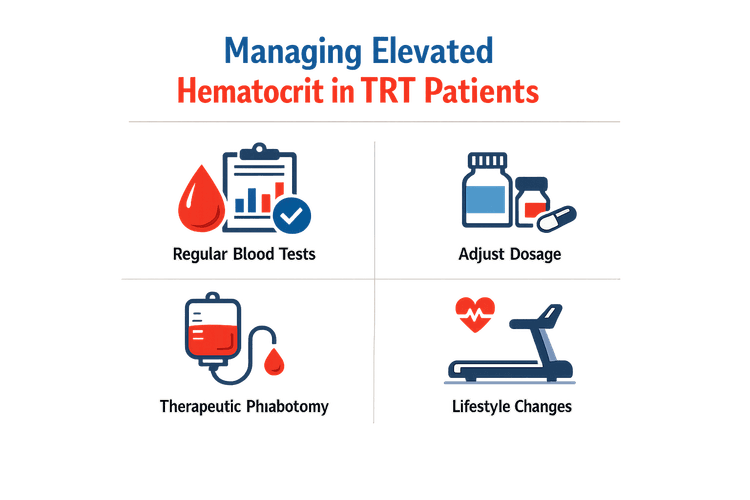
When hematocrit on TRT climbs above the threshold—typically 54 percent—clinics follow a short list of options. The first move is usually dose adjustment. The second is therapeutic phlebotomy. The third is stopping treatment. What happens next depends on how high the number is, how fast it rose, and whether you have other cardiovascular risk factors.
Dose Reduction and Protocol Changes
Most clinics lower your testosterone dose before they do anything else. A smaller dose means less signal to the bone marrow, which slows red blood cell production. Some providers also switch from weekly injections to twice-weekly or every-other-day protocols, smoothing out peak levels that can drive hematocrit higher.
If you are on a compounded cream or gel, the clinic may reduce the daily amount or ask you to apply it to a different site with lower absorption. If you are on injections, they may cut the weekly milligram total by 20 to 30 percent and recheck labs in two months.
After any dose adjustment, the clinic will order a complete blood count and a metabolic panel eight to twelve weeks later. Hematocrit takes time to respond, and one early recheck does not tell you whether the change worked.
Therapeutic Phlebotomy
When dose reduction is not enough—or when hematocrit is high enough to warrant faster action—clinics refer you for therapeutic phlebotomy. This is a blood draw, usually one unit (about 500 milliliters), done every few weeks until hematocrit falls below 54 percent.
Phlebotomy works immediately. Removing red blood cells lowers the percentage in circulation. The effect lasts until your bone marrow replaces what was removed, which is why repeat draws are common in the first few months.
Some patients tolerate phlebotomy well. Others feel fatigued for a day or two after each draw. If you need more than four or five draws in six months, the clinic will usually revisit your TRT dose or consider stopping treatment.
Ask your provider to add ferritin and serum iron to your next lab panel if you have had more than two therapeutic draws. Low iron can cause its own symptoms and may require supplementation or a pause in phlebotomy.
Hydration and Lifestyle Adjustments
Clinics also counsel on hydration. Dehydration concentrates red blood cells, raising hematocrit artificially. Drinking more water in the days before your blood draw can lower the reading by one to two percentage points, though it does not change the actual red cell mass.
Some providers recommend limiting alcohol, avoiding high altitudes, and stopping smoking—all of which can raise hematocrit independently of TRT. These are not primary treatments, but they reduce the total burden on your cardiovascular system.
Discontinuation of TRT
If hematocrit stays above 54 percent despite dose reduction and phlebotomy, most clinics stop TRT. The risk of stroke or clot formation outweighs the benefit of treatment. Hematocrit usually falls within three to six months after stopping, though it may not return to baseline if you had mild polycythemia before starting.
No clinic should keep you on TRT if hematocrit remains persistently elevated despite intervention—the cardiovascular risk is real and documented.
Some patients restart at a lower dose after hematocrit normalizes. Others switch to enclomiphene or hCG, which raise testosterone without the same magnitude of hematocrit increase. Before choosing a best online TRT clinic, ask how they handle elevated hematocrit and whether they have a protocol for dose reduction, phlebotomy referral, and discontinuation thresholds.
Monitoring Frequency
Clinics that follow published guidelines recheck hematocrit every three months for the first year, then every six months if stable. If your hematocrit is trending upward, they may order labs monthly until it plateaus or you adjust the protocol.
Confirm how often your clinic will recheck hematocrit and what threshold triggers a dose change or phlebotomy referral. If the clinic does not have a written protocol, ask for one or find a provider who does.
Tips for Patients on TRT to Monitor Hematocrit Levels
Your clinic should order a complete blood count every three to six months once you start TRT. That is the standard. The hematocrit number sits on the CBC panel, usually printed as a percentage beside a reference range — often 38.3 to 48.6 percent for adult men, though the exact range varies by lab.
Test First, Test Twice
One elevated result is not a diagnosis. Hematocrit shifts with hydration, altitude, sleep quality and the time of day you draw blood. If your first result comes back at 52 percent, your doctor will typically reorder the test before making changes. Drink normally the night before each draw and go at the same time of morning when possible. Consistency makes the trend visible.
If your hematocrit climbs above 54 percent on two consecutive tests, most clinics will adjust your protocol or refer you for therapeutic phlebotomy. The number that matters is the trend, not a single spike.
What to Tell Your Doctor
Bring three things to every follow-up: your symptom log, your dosing schedule, and any changes in weight, sleep, alcohol use or training volume. Hematocrit rises faster in men who dose daily, who live above 5,000 feet, who gained significant weight, or who added heavy strength training. Your doctor cannot see those variables in the lab report.
If you feel unusually fatigued, short of breath during normal activity, or notice morning headaches, mention it. These are not specific to elevated hematocrit, but they warrant a draw before your scheduled interval. Do not wait for the next quarterly check if something feels wrong.
The free option for managing hematocrit is hydration and blood donation, but only your clinic can tell you when donation is appropriate.
Between Clinic Visits
You cannot measure hematocrit at home. Finger-stick devices marketed for hemoglobin do not give you hematocrit, and conversion formulas are not reliable enough for clinical decisions. The only accurate method is a venous draw processed by a CLIA-certified lab.
What you can do: stay hydrated, donate blood if your doctor approves it, and avoid dehydration practices that artificially concentrate red cells before a test. Saunas, diuretics and multi-day fasts all push the number higher without changing your actual red cell mass.
If your clinic uses a telehealth model, confirm how they handle out-of-range results. Some require an in-person visit. Some adjust dosing by message. Choosing the right online TRT clinic means knowing their monitoring protocol before you sign up, not after your first high result.
Worth Knowing Before You Sign Up
Not every clinic monitors at the same interval. Some order labs every twelve weeks. Some stretch it to six months once you are stable. Some charge separately for each draw; others bundle it into the membership. Ask three questions up front: how often they test, what the lab fee is, and what happens if your hematocrit goes above 54 percent. The answer tells you whether the clinic has a plan or just a prescription pad.
Conclusion: Importance of Monitoring Hematocrit on TRT
Hematocrit on TRT rises in most men. The size of the rise and the timeline vary, but the pattern is consistent enough that no clinic should be surprised when your number climbs above the reference range. The question is not whether to monitor it — the question is how often, at what threshold you pause or adjust, and whether your clinic has a protocol or just reacts when the lab flags red.
The evidence for harm at specific hematocrit levels is thin. The evidence that testosterone raises hematocrit is not. That gap means you are managing a number that might matter, using thresholds borrowed from other populations, with monitoring intervals that differ across guidelines. Some clinics draw labs every three months in the first year. Others stretch it to six. Some donate blood at 52 percent; others wait for 54 or higher. None of those choices are random, but none are carved in stone either.
If your hematocrit rises, the first move is usually dose adjustment or donation. The second move, if the first does not work, is a longer pause or a switch to a different protocol. The third move is stopping TRT. Knowing that sequence in advance lets you track where you are in it and what comes next. It also lets you compare what your clinic does to what the guidelines say, which is worth doing if the gap is wide.
Monitoring is not expensive. A CBC costs less than the monthly prescription. Skipping it because you feel fine, or because the clinic does not remind you, is how men end up with a hematocrit in the high 50s and no record of when it started climbing. The number that matters is the trend, and you cannot see a trend from one data point. Test twice in the first six months, then every three to six months if stable. If it rises, test more often until it stops rising. That is the free option, and it works better than waiting for symptoms that might not show up until the number is already high.
If you want more detail on how to evaluate a TRT provider's monitoring protocol before you sign up, see Best Online TRT Clinic: How to Choose and What to Avoid. The short version: a clinic that does not mention hematocrit in the intake questionnaire or the first-year monitoring plan is not thinking about it. Find one that is.
FAQ
What causes hematocrit to rise on TRT?Testosterone stimulates erythropoietin production in the kidneys, which signals bone marrow to produce more red blood cells. This increases the percentage of blood volume occupied by red cells.
At what hematocrit level do clinics take action?Most clinics intervene when hematocrit reaches 54 percent on two consecutive tests. Some act at 52 percent depending on cardiovascular risk factors.
How often should hematocrit be tested during TRT?Every three months for the first year, then every six months if stable. More frequent testing is warranted if hematocrit is trending upward.
What is therapeutic phlebotomy?A controlled blood draw (typically 500 milliliters) performed every few weeks to lower red blood cell count when hematocrit remains elevated despite dose adjustments.
Sources
- Coviello AD, Kaplan B, Lakshman KM, Chen T, Singh AB, Bhasin S. Effects of graded doses of testosterone on erythropoiesis in healthy young and older men. J Clin Endocrinol Metab. 2008;93(3):914-919.
- Bachman E, Travison TG, Basaria S, et al. Testosterone induces erythrocytosis via increased erythropoietin and suppressed hepcidin: evidence for a new erythropoietin/hemoglobin set point. J Gerontol A Biol Sci Med Sci. 2014;69(6):725-735.
- Guo C, Gu W, Liu M, Peng B, Yao X, Yang B, et al. Efficacy and safety of testosterone replacement therapy in men with hypogonadism: A meta-analysis study of placebo-controlled trials. Exp Ther Med. 2016;11(3):853-863.
- Glueck CJ, Goldenberg N, Budhani S, Loftspring M, Lotfi R, Bowe W, et al. Thrombotic events after starting exogenous testosterone in men with previously low testosterone levels. Transl Res. 2011;158(4):253-261.
Related reading
TRT and Prostate Cancer: Current Evidence and Insights
Testosterone Injections vs Gel: Testosterone Gel, Cream, Pellets
Sources(10)
- testosterone-therapy (category_overview)
- testosterone-gel (safety_warning)
- testosterone-gel (safety_warning)
- testosterone-therapy (category_overview)
- testosterone-injection (safety_warning)
- hematocrit (clinical_finding)
- testosterone-therapy (clinical_finding)
- hematocrit (diagnostic_criterion)
- hematocrit (category_overview)
- hematocrit (clinical_finding)