TRT Blood Work: What Your Testosterone Lab Panel Should Include
Updated
Top takeaways
- A testosterone blood test measures total testosterone to determine if levels fall within the normal range for your age
- Hormone imbalances can cause low energy, reduced sex drive, mood changes, and shifts in physical health
- Testosterone influences sex drive, bone mass, fat distribution, muscle mass, and production of red blood cells and sperm
- One morning result is not a diagnosis — test first, test twice
- The testosterone lab panel should include markers beyond total testosterone that clinics often overlook
Introduction
Before choosing between treatment options or deciding whether you need one at all, you need two morning results and a full hormone panel. Without them, nobody can tell you which intervention works for you or whether intervention is warranted.
A testosterone blood test measures the total level of testosterone in your body to determine if it is within the normal range for your age. That number influences sex drive, bone mass, fat distribution, muscle mass, and the production of red blood cells and sperm. When levels fall outside the normal range, symptoms can include low energy, reduced sex drive, and changes in mood or physical health.
Most clinics order total testosterone and stop there. That leaves out the markers that explain why your number is what it is, whether the problem originates in the testicles or the brain, and how your body is processing the testosterone you already make. Best online TRT clinics vary widely in what they test before prescribing — worth knowing before you sign up.
This guide covers what your testosterone lab panel should include, the markers that reveal the full picture, and why each one matters when deciding what to do next.
Problem Statement
You walk into a clinic with low energy, poor sleep, and a vanishing interest in the gym. The doctor orders a testosterone test. One week later, you get a single number: total testosterone, 450 ng/dL. The reference range says 264–916 ng/dL. You're told everything is normal. The symptoms stay.
That single number is where most testosterone testing stops, and it is where the problem begins. Total testosterone measures the sum of three forms: tightly bound to SHBG, loosely bound to albumin, and free. Only the last two are biologically active. A man with total testosterone at 450 ng/dL and high SHBG may have less free testosterone than a man at 350 ng/dL with low SHBG. The first man's symptoms are real; the single number missed them.
Clinics that test only total testosterone leave out the markers that explain why symptoms persist despite a "normal" result. SHBG binds testosterone tightly, rendering it inactive. Estradiol rises when testosterone converts via aromatase, and high estradiol can worsen symptoms even when testosterone is adequate. LH and FSH reveal whether the problem originates in the testes or the pituitary. Hematocrit and PSA track the safety of treatment if you start it. Best online TRT clinics that skip these markers are selling subscriptions, not answers.
The Gaps in Standard Panels
Most insurance-covered panels test total testosterone and stop. Some add free testosterone by calculation rather than direct immunoassay, and the calculation is less reliable. SHBG is ordered only when a doctor suspects it, not by default. Estradiol, LH, and FSH are rarely included unless the patient requests them or the clinic specializes in hormone therapy. Hematocrit and PSA appear in annual physicals but not in targeted hormone workups.
The result: you get a diagnosis based on one morning sample and one incomplete marker. Guidelines from endocrine societies state that diagnosis requires symptoms and low testosterone on two separate morning tests, with total testosterone below 12 nmol/L (approximately 350 ng/dL). But even that threshold assumes you measured the right things. If your free testosterone is low and your total is borderline, the single number will not catch it.
Total testosterone concentrations less than 12 nmol/L combined with symptoms are required to initiate testosterone therapy, but total testosterone alone may not explain the full clinical picture.
Incomplete panels cost you time, repeat visits, and treatment delays. Worse, they push men toward therapy they may not need or away from therapy they do need, because the data set was too narrow to support a decision.
Solution Steps: What to Include in Your Testosterone Lab Panel
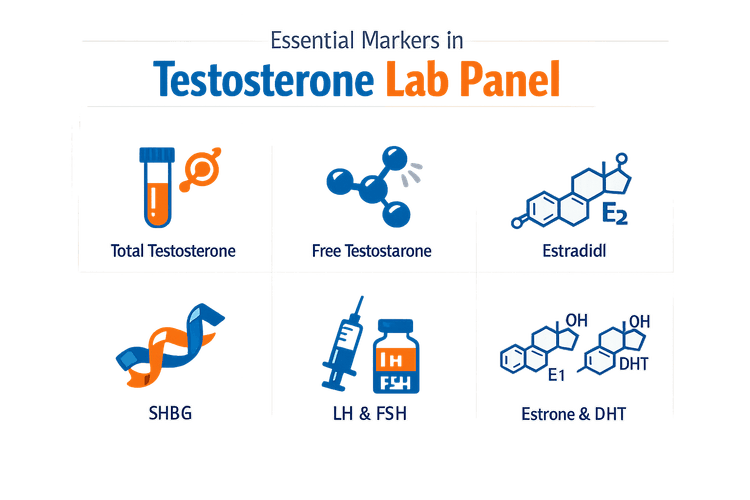
A complete testosterone lab panel requires more than a single total testosterone number. Here is what the research and clinical practice guidelines say you need.
Step 1: Total Testosterone and Free Testosterone
Step 1
Measure both total and calculated free testosterone
Total testosterone measures everything in your blood, bound and unbound. Free testosterone measures what is actually available to your cells. Trials that test testosterone interventions typically prespecify both total testosterone and calculated free testosterone as primary endpoints. One number without the other leaves you guessing.
Most labs report total testosterone in nanograms per deciliter (ng/dL). Reference ranges vary by lab, but values below 300 ng/dL typically trigger further evaluation. Free testosterone is often calculated from total testosterone and SHBG rather than measured directly, because the direct assay is less reliable.
Step 2: Sex Hormone-Binding Globulin (SHBG)
Step 2
Include SHBG to understand testosterone availability
SHBG binds most of your testosterone and makes it unavailable to tissues. High SHBG means your total testosterone may look normal while your free testosterone is low. Low SHBG does the opposite. Trials studying testosterone and bioavailability markers include SHBG as a standard component of the panel.
SHBG varies with age, weight, insulin sensitivity and liver function. Without it, you cannot calculate free or bioavailable testosterone accurately.
Step 3: Luteinizing Hormone (LH) and Follicle-Stimulating Hormone (FSH)
Step 3
Test LH and FSH to identify the cause
LH and FSH tell you whether low testosterone comes from your testes or your pituitary. Low testosterone with low or normal LH suggests a pituitary problem (secondary hypogonadism). Low testosterone with high LH suggests a testicular problem (primary hypogonadism). This distinction determines which treatments are appropriate and whether fertility is likely to be preserved.
Enclomiphene and clomiphene work by raising LH, so they only help when LH is low or normal to begin with. If LH is already high, raising it further does nothing.
Step 4: Estradiol
Step 4
Measure estradiol to monitor aromatization
Testosterone converts to estradiol through aromatization. Clinics often skip this marker, but trials measuring hormone panels after testosterone treatment routinely include it. High estradiol can cause breast tissue growth, water retention and mood changes. Low estradiol can cause joint pain, low libido and bone loss.
Estradiol levels matter more once you start treatment, but a baseline reading gives you a reference point.
Step 5: Hematocrit and Liver Markers
Step 5
Include safety markers before and during treatment
Hematocrit measures red blood cell concentration. Testosterone raises it, and values above 54% increase the risk of blood clots. Liver markers such as alanine aminotransferase (ALAT) and alkaline phosphatase track liver function, which matters for oral medications and for anyone with metabolic conditions.
These markers are not diagnostic for low testosterone, but they are required for safe monitoring once treatment starts. Best Online TRT Clinic: How to Choose and What to Avoid walks through what clinics should test before prescribing.
Tips and Tricks for a Comprehensive Testosterone Assessment
Before you schedule a test, ask the clinic what markers are included. Many advertise testosterone testing but run only total testosterone. That single number tells you almost nothing about why your level is where it is or what treatment fits you. A complete testosterone lab panel includes the markers listed above — total and free testosterone, SHBG, LH, FSH, estradiol, hematocrit and PSA. If the clinic cannot list them all, find one that can.
Test Twice, Test Early
One morning result is not a diagnosis. Testosterone varies day to day, and a single low number can reflect poor sleep, a recent illness or simple lab error. The guideline is two early-morning tests, taken on separate days, before anyone writes a prescription. Early morning matters because testosterone peaks in the first few hours after waking and drops through the day. A 4 p.m. result will be lower than an 8 a.m. result from the same person on the same day. If your clinic offers afternoon or at-home finger-stick kits with no time instruction, the result is less reliable.
Know What the Lab Actually Measures
Not all testosterone assays are the same. Immunoassays — the method most commercial labs use — can be inaccurate at low levels and in women. The CDC certifies certain assays to improve standardization, and some clinics specify which platform they use. If your total testosterone is borderline and your symptoms are clear, ask whether the lab used a CDC-certified method or liquid chromatography–mass spectrometry, which is more accurate. If the clinic cannot tell you, that is worth knowing before you sign up.
What to Ask Before You Pay
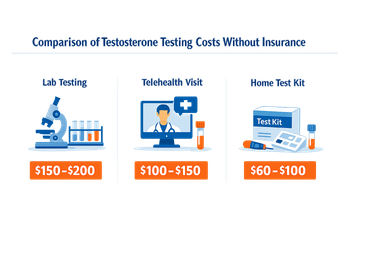
Most telehealth memberships bill monthly and include the initial panel in the signup fee. Ask what the panel covers, whether follow-up labs are included or billed separately, and how often monitoring is required. Best Online TRT Clinic: How to Choose and What to Avoid walks through the full cost structure. If the clinic quotes a flat rate but charges per test after the first month, the advertised price is not the real price.
At-Home Kits: When They Work and When They Don't
At-home testosterone kits let you collect a sample and mail it to a lab. They are convenient, but accuracy depends on following the instructions exactly. If you use one, confirm with your provider that the timing, sample type and lab meet clinical standards. A saliva test taken at noon is not equivalent to a fasted morning blood draw. If your result is abnormal, expect your provider to order a confirmatory lab draw before starting treatment.
Conclusion
A testosterone lab panel is not a single number. It is a set of markers that together tell you whether your testosterone is low, why it might be low, and what the risks are if you treat it. Total testosterone alone misses half the picture. Free testosterone, SHBG, LH, FSH, estradiol, hematocrit and PSA fill in the rest.
Most clinics will order the basics. Some will skip LH and FSH because those tests cost more and do not change what they planned to sell you. Ask for them anyway. If your LH is already high, your testicles are not responding and TRT is the only option that works. If your LH is low or normal, you have other choices that preserve fertility and cost less. You cannot know which category you are in without the number.
Test twice before you start anything. Morning draws, fasted if possible, at least a week apart. One low result is not a diagnosis. Two low results with symptoms are. If the first result is borderline, the second one often is not.
Monitoring matters as much as the initial panel. Testosterone therapy changes hematocrit, estradiol and PSA over time. Large randomized trials show testosterone therapy is not associated with increased cardiovascular or prostate cancer risks, but monitoring for symptom response and biochemical abnormalities is essential after you start. A clinic that does not recheck those markers every three to six months is not following the guidelines.
The panel is cheap. The information it gives you is not. Before you sign up for a subscription, before you commit to injections or pills, get the full set of numbers and read them with someone who knows what they mean. If you are comparing clinics or wondering what else to check, see our guide on how to choose an online TRT clinic for what to look for in monitoring, pricing and transparency.
Test first. Test twice. Test everything that matters. Then decide.
Related reading
Sources(21)
- Quest Diagnostics (questhealth.com) (2026)
- The aging male : the official journal of the International Society for the Study of the Aging Male (2015)
- The Journal of clinical endocrinology and metabolism (2026)
- European journal of endocrinology (2024)
- Medicine and science in sports and exercise (2006)
- U.S. Food and Drug Administration — Drug Safety Communication: FDA cautions about using testosterone products for low testosterone due to aging; requires labeling change to inform of possible increased risk of heart attack and stroke with use (2015)
- MedlinePlus (U.S. National Library of Medicine) (2025)
- American Urological Association — Evaluation and Management of Testosterone Deficiency (AUA Guideline) (2018)
- The Journal of clinical endocrinology and metabolism (2018)
- Clinical biochemistry (2019)
- Journal of Clinical Endocrinology & Metabolism — Testosterone Therapy in Men With Hypogonadism: An Endocrine Society Clinical Practice Guideline (2018)
- American family physician (2024)
- Current opinion in endocrinology, diabetes, and obesity (2024)
- Annals of internal medicine (2020)
- Andrology (2025)
- The Cochrane database of systematic reviews (2024)
- Labcorp OnDemand (2026)
- The world journal of men's health (2026)
- International journal of pharmaceutical compounding (2015)
- The journal of sexual medicine (2021)
- Urology (2025)