12 Signs You Need Testosterone Therapy: Key Symptoms of Low

Updated
Top takeaways
- Low testosterone affects physical health, mental state, and sexual function in measurable ways
- Symptoms like low sex drive and difficulty with erections often prompt testing, but the full picture includes energy, muscle, mood and cognition
- One symptom alone does not mean you need therapy — you need two morning blood draws and a full hormone panel before anyone can tell you what fits
- Recognizing the pattern early lets you test first and avoid guessing
Introduction
Signs you need testosterone therapy include persistent fatigue, reduced sex drive, difficulty maintaining erections, muscle loss, and mood changes that do not resolve with sleep or stress management. Low testosterone shows up in your body, your head, and your bedroom. The signs overlap with other conditions — stress, poor sleep, weight gain, depression — so a single symptom is not a diagnosis. But when several appear together and persist, they form a pattern worth checking.
Most men notice sexual changes first: low sex drive and difficulty getting an erection. Those symptoms trigger the conversation with a doctor, but testosterone affects more than libido. It influences muscle mass, bone density, fat distribution, red blood cell production, mood, and cognitive sharpness. When levels drop below the normal range, the effects ripple across multiple systems.
The challenge is that low testosterone mimics other problems. Fatigue could be sleep apnea. Mood changes could be depression. Weight gain could be diet. That is why the first step is not treatment — it is testing. You need two morning total testosterone results, ideally with free testosterone, SHBG, LH, and estradiol on the same panel. Without those numbers, you are guessing.
This article walks through twelve signs you need testosterone therapy, explains what each one means, and shows you how to evaluate whether your symptoms warrant a blood test. The goal is not to diagnose yourself — it is to recognize when the pattern justifies a conversation with your doctor and what to ask for when you get there. Before choosing between enclomiphene, hCG, or TRT, you need to know where you stand.
Understanding Low Testosterone
Low testosterone is defined as total testosterone below 300 ng/dL by the American Urologic Association. That number comes from two morning blood draws, not one — a single result is not a diagnosis. The definition also requires symptoms, not just a number on a lab report.
The condition is called hypogonadism when it is diagnosed formally. It splits into two types. Primary hypogonadism means the testes are not producing enough testosterone. Secondary hypogonadism means the brain is not signaling the testes to produce it. Measuring LH and FSH alongside testosterone tells you which type you have, and that matters for treatment choice.
What Low Testosterone Does
Low testosterone affects sexual function, muscle and bone, and energy. The list from the FDA guidance includes decreased libido, fewer spontaneous erections, smaller testicular volume, gynecomastia, hot flashes, decreased bone mass, height loss, decreased pubic or axillary hair, decreased muscle mass, and decreased energy and motivation. Not everyone gets every symptom, and some symptoms overlap with other conditions.
Erectile dysfunction and low sex drive are the most commonly reported. These are also the symptoms that drive most men to test in the first place. Other signs — like bone loss or height loss — show up later and are harder to notice without measurement.
Testing for low testosterone is straightforward. You need total testosterone measured in the morning, ideally before 10 a.m., on two separate days. If the results are low and you have symptoms, the next step is LH and FSH to determine whether the problem is in the testes or the brain. That distinction changes which treatments preserve fertility and which do not. For more on how high SHBG in men affects free testosterone and testing accuracy, see the linked guide.
What Are the Signs You Need Testosterone Therapy?
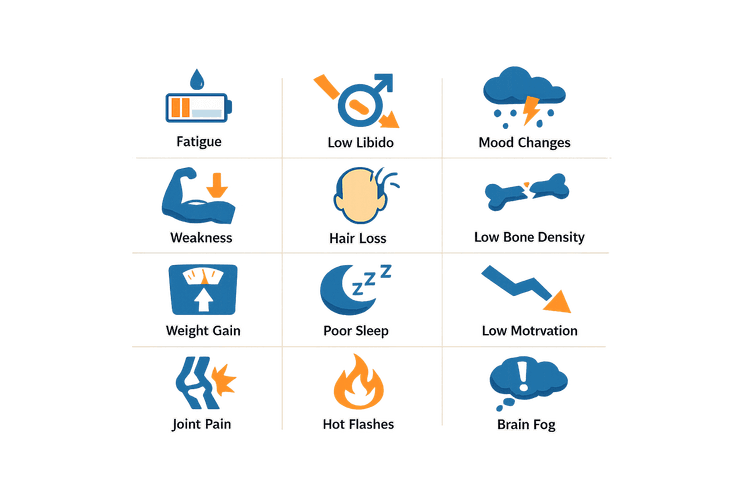
The signs you need testosterone therapy come from FDA guidance and published clinical criteria for diagnosing low testosterone. They are not a self-diagnosis checklist. Two morning blood draws below 300 ng/dL total testosterone, plus symptoms, are what the American Urologic Association uses to define the condition. One symptom alone does not mean you need therapy.
1. Low Sex Drive
Decreased libido is one of the most common signs you need testosterone therapy. If your interest in sex has dropped noticeably and stays low for weeks or months, and you cannot tie it to stress, medication or relationship factors, it may point to low testosterone.
2. Difficulty Getting or Maintaining Erections
Decreased spontaneous erections — the kind that happen without physical stimulation — can signal low testosterone. Morning erections that become rare or absent are particularly relevant. Erectile difficulty has many causes; testosterone is one piece, not the whole picture.
3. Decreased Muscle Mass
Loss of muscle size and strength, even when you are training and eating the same way, can indicate low testosterone. The hormone plays a direct role in muscle protein synthesis. If your lifts are dropping and recovery is slower, and nothing else has changed, it is worth checking.
4. Increased Body Fat
Low testosterone can shift body composition toward more fat, particularly around the abdomen. Some men also develop gynecomastia — breast tissue growth. If your waist measurement is climbing and muscle definition is fading, testosterone may be part of the cause.
5. Decreased Energy and Motivation
Persistent fatigue that does not improve with sleep, and a drop in drive or ambition, are common signs. This is different from temporary tiredness. If you feel drained most days and lack the push to start projects or workouts, low testosterone is one possible explanation.
6. Hot Flashes
Hot flashes are not just a female symptom. Men with low testosterone can experience sudden warmth, sweating and flushing. They are less common than other signs, but when they occur alongside other symptoms, they add weight to the diagnosis.
7. Decreased Bone Mass
Testosterone supports bone density. Low levels can lead to bone loss, which shows up as osteopenia or osteoporosis on a DEXA scan. Height loss over time, or fractures from minor trauma, may be late signs of this process.
8. Loss of Body Hair
Decreased pubic or axillary (underarm) hair can indicate low testosterone. This is not about male-pattern baldness on the scalp, which is driven by DHT and genetics. It is about body hair thinning or disappearing in areas that depend on androgens.
9. Decrease in Testicular Volume
Shrinking testicles can be a sign of primary hypogonadism, where the testes themselves are not producing enough testosterone. This is less common in secondary hypogonadism, where the pituitary is the problem. Either way, it is a physical finding that a doctor can assess.
10. Unexplained Anemia
Testosterone stimulates red blood cell production. Low levels can cause anemia, which shows up as low hemoglobin or hematocrit on a blood test. If you have unexplained anemia and other symptoms, testosterone should be measured.
11. Mood Changes
Irritability, depression and difficulty concentrating can accompany low testosterone. These are not specific to the condition — many things cause mood changes — but when they cluster with physical signs, they support the diagnosis.
12. Sleep Disturbances
Poor sleep quality, trouble falling asleep or waking frequently can be linked to low testosterone. Sleep apnea, which is more common in men with low testosterone, can worsen the problem. Treating the apnea sometimes improves testosterone levels on its own.
When to Test
If you have three or more of these signs, and they have been present for weeks or months, ask your doctor for a testosterone panel. The test should be done in the morning, ideally before 10 a.m., because testosterone levels peak early in the day. One low result is not a diagnosis. The guideline calls for at least two morning samples below 300 ng/dL.
The full panel should include total testosterone, free testosterone, SHBG, LH and FSH. Those last two help distinguish primary hypogonadism (testicles not responding) from secondary hypogonadism (pituitary not signaling). That distinction changes which treatments make sense. For more on how these options compare, see Enclomiphene vs hCG: Compare Two Options for Testosterone Production.
How Do You Evaluate Your Symptoms?
One morning result is not a diagnosis. If you recognize several of the signs you need testosterone therapy above, the next step is structured evaluation — not guessing, and not ordering a test panel from a clinic ad before you know what you need.
Test Twice, Early Morning
Testosterone varies through the day. The guideline standard is two fasting morning samples, drawn between 7 and 10 a.m., at least a week apart. A single low result can reflect poor sleep, recent illness, or the time of day. Two consistent low results give your doctor something to work with.
When Symptoms Persist But Total Testosterone Looks Normal
Some men report fatigue, low libido, and difficulty with erections despite total testosterone in the reference range. In those cases, an SHBG test can clarify whether free testosterone — the biologically active fraction — is actually low. High SHBG in Men: Causes and Questions to Ask Your Doctor walks through how SHBG binds testosterone and what to ask when total and free results do not align.
What to Bring to the Appointment
Write down your symptoms with rough start dates. Note patterns: Do you feel worse in the afternoon? Has your weight changed? Are you sleeping through the night? Have you started or stopped any medications in the past year? This log gives your doctor context that a single lab value cannot.
When to Seek Medical Advice
Seek evaluation if you have persistent fatigue, mood changes, or sexual symptoms that interfere with daily life, especially if they have worsened over several months. Do not wait for a crisis. Early evaluation identifies reversible causes — sleep apnea, thyroid dysfunction, medication side effects — that are not testosterone deficiency and do not require hormone therapy.
Conclusion
Recognizing the signs you need testosterone therapy is the first step. The second is getting two morning results and a full panel before choosing a treatment. One random reading is not a diagnosis, and no clinic ad can replace the numbers that tell you whether your pituitary is signaling correctly or whether something else is holding testosterone down.
If you identify with several of the symptoms above — low energy that does not respond to sleep, muscle loss despite training, mood shifts, reduced libido — ask your doctor for total testosterone, free testosterone, SHBG, LH and FSH, drawn before 10 a.m. on two separate mornings. Those results show whether you have primary hypogonadism, secondary hypogonadism or normal testosterone with symptoms from another cause. The treatment that fits one does not fit the others.
Before signing up for a telehealth subscription or starting any protocol, know what you are trading. TRT raises testosterone reliably but usually stops sperm production. Clomid for Men: How It Raises Testosterone and What It Costs You and Oral Testosterone: Kyzatrex, Jatenzo, and Tlando Explained walk through the alternatives that preserve fertility, their trial data and what they cost in monitoring and money. If you are considering children in the next few years, that trade-off matters more than the monthly price. Understanding Does Insurance Cover TRT? What You Need to Know also helps you plan for the financial commitment.
The evidence says testosterone therapy corrects symptoms when the cause is genuinely low testosterone. It does not fix fatigue from sleep apnea, depression or poor training recovery in men with normal levels. Test first, test twice, and make the decision with the full picture in front of you.
Frequently asked questions
What are the most common signs you need testosterone therapy?
The most common signs you need testosterone therapy include decreased sex drive, difficulty getting or maintaining erections, persistent fatigue, loss of muscle mass, increased body fat (especially around the abdomen), mood changes such as irritability or depression, and reduced motivation. These symptoms often appear together rather than in isolation.
How is low testosterone diagnosed?
Low testosterone is diagnosed with two morning blood tests (drawn before 10 a.m.) showing total testosterone below 300 ng/dL, combined with symptoms. A single low reading is not sufficient. The full panel should include total testosterone, free testosterone, SHBG, LH, and FSH to determine whether the cause is primary (testicular) or secondary (pituitary).
Can one symptom alone mean you need testosterone therapy?
No. One symptom alone does not confirm low testosterone or indicate a need for therapy. Many conditions produce similar symptoms — sleep apnea, thyroid disease, depression, and medication side effects can all mimic low testosterone. Blood testing is required to confirm the diagnosis.
When should I see a doctor about possible low testosterone?
See a doctor if you have three or more signs that have persisted for weeks or months and interfere with daily life. Bring a written log of your symptoms, their start dates, and any patterns you have noticed. Early evaluation can identify reversible causes that do not require hormone therapy.
Sources(22)
- The Journal of urology (2020)
- American family physician (2024)
- U.S. Food and Drug Administration — Drug Safety Communication: FDA cautions about using testosterone products for low testosterone due to aging; requires labeling change to inform of possible increased risk of heart attack and stroke with use (2015)
- The Journal of clinical endocrinology and metabolism (2018)
- American Urological Association — Evaluation and Management of Testosterone Deficiency (AUA Guideline) (2018)
- European journal of endocrinology (2024)
- The Journal of clinical endocrinology and metabolism (2026)
- U.S. Food and Drug Administration — Enclomiphene Citrate: FDA presentation to the Pharmacy Compounding Advisory Committee, June 8, 2022 (Madeline Wolfert, MD, CDER)
- Journal of Clinical Endocrinology & Metabolism — Testosterone Therapy in Men With Hypogonadism: An Endocrine Society Clinical Practice Guideline (2018)
- MedlinePlus (U.S. National Library of Medicine) (2025)
- Annals of internal medicine (2020)
- F&S reviews (2020)
- International journal of pharmaceutical compounding (2015)
- Sexual medicine reviews (2017)
- The journal of sexual medicine (2013)
- Medicines (Basel, Switzerland) (2025)
- International journal of general medicine (2022)
- Actas urologicas espanolas (2020)
- Andrologia (2014)
- MedlinePlus (U.S. National Library of Medicine) (2026)
- Public health reports (Washington, D.C. : 1974) (2015)
- The Cochrane database of systematic reviews (2024)